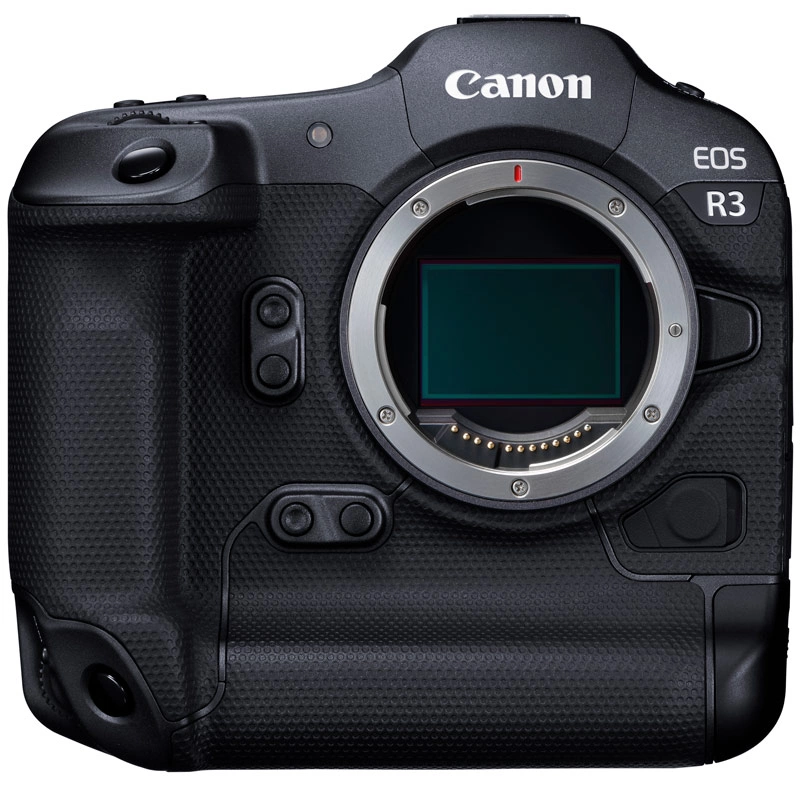
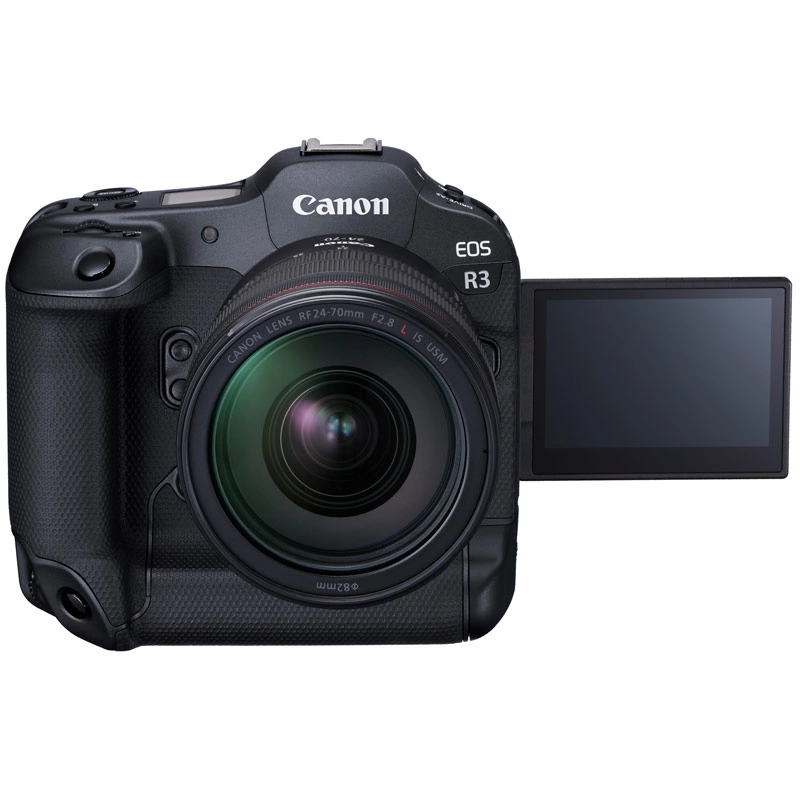
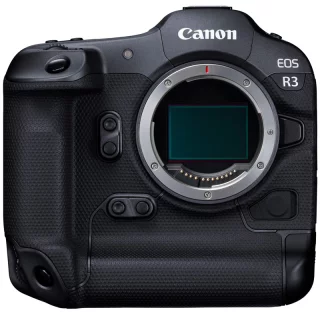
Canon EOS R3 camera body




Compatible accessories
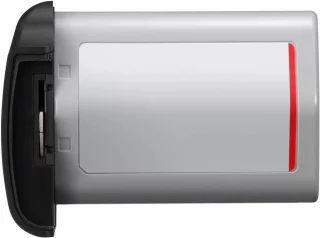
Canon LP-E19 original battery (2750mAh)
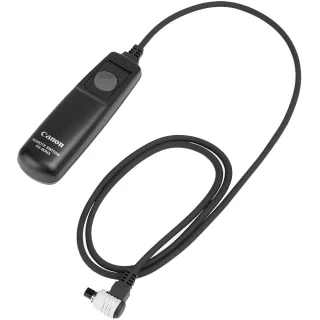
Canon RS-80N3 remote release (e.g. R3, R5, R7, 5D, 7D)

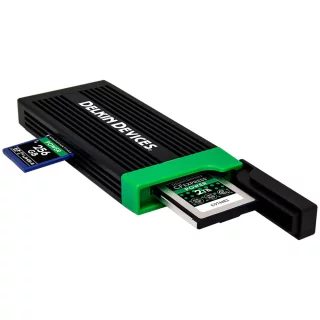
Sandisk Extreme Pro 256GB CFexpress Type B memory card

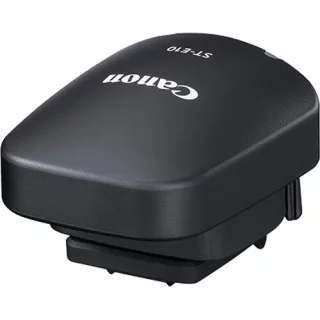
Canon ST-E10 Flash Transmitter
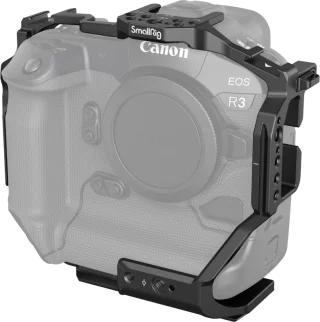
SmallRig 3884 Cage For Canon EOS R3
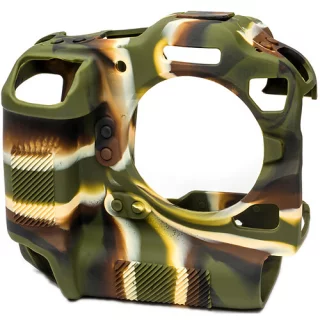
easyCover Camera Case for Canon EOS R3 (Camo)
Canon EOS R3 system camera
'Mini-sized R1, with a magnesium body'
Learn about leasing financing for companies and ask for an exchange offer if you wish!
The Canon EOS R3 is a completely new model in the series, positioned between the mirrorless EOS 1DX III and the EOS R5, and is the manufacturer's most robust professional mirrorless camera.- New autofocus system, according to Canon the best in the world, surpassing the R5 system
- Helmet and vehicle detection and tracking
- Focus control with your eyes
- Up to 1/64000 shutter speeds with electronic shutter
- 30FPS burst shooting with full-size RAW images
- In-cell image stabilization - every 8 stops of aperture stabilization
- 5.76 million dot blackout-free viewfinder - viewfinder image is also visible in continuous shooting
- Fast: 0.4 sec start-up and 20ms trigger delay
- Video recording without time limit, 4K video for up to 6 hours straight!
- 6K 60P RAW video recording
- Same large battery as in EOS 1D X cameras
The camera has so many improvements and innovations in every area that we'll divide the list into several parts, starting with autofocus and ending with usability. Both of these are important for professional photographers, but there's also a lot of focus on sensor technology and videography, which makes the camera an interesting option for video productions as well.
Autofocus
- New autofocus system, according to Canon the best in the world, surpassing the R5 system
- Selecting the focus point by eye!
- Dual Pixel AF II - 60 focus and exposure updates per second
- Prioritizing cars and motorcycles in focus!
- Bird identification improved from R6/R5 model
- Focus lock in as little as 0.03s
The most striking innovation is the eye-controlled focus point and subject tracking. This is not the first time for Canon, as the EOS3 film camera already included eye-controlled focus point movement, and this will also be the model number of the R3.
According to initial experiences, the eye control for focusing works great. You can move the focus point or select an object to track with your gaze, and pressing the button confirms your selection. This means that the focus does not constantly jump when you move your gaze. The technology works reliably because it can be calibrated to suit your own eye. Focus control is also possible when wearing contact lenses and glasses!
In addition to the gaze control, the EOS R3 includes the Smart control elevation pin familiar from the 1DX III. By swiping with your thumb, you can move the focus point freely and pressing the pin confirms the selection. This touch pin also works when wearing gloves! Touch technology always feels uncertain, but this feature had received a lot of good feedback from photographers. In addition to the touch pin, there is a traditional joystick, so now there are several options for complete control of the focus.
The Canon EOS R5 and R6 have been further developed to detect objects (birds, dogs, cats and people) and are now even faster. The camera also includes a dedicated focus mode for shooting motorsports.
- Works with, for example, formula cars, track cars, rally cars and motorcycles
- Prioritizes the car/motorcycle and as the subject gets closer, focuses on the driver's helmet
- Helmet focus also works in other sports - for example, winter sports!
In the example videos, this focus creates a similar wow effect as the bird's eye detection. The focus sticks directly to the driver's helmet and maintains focus even at high speeds and on winding tracks. Often cars and helmets are colored similarly, but the body's deep learning focus is very good at detecting the helmet in the image area and even if it is behind glass.
It will also be interesting to test whether this works mainly with full-face helmets or whether it would also be useful for filming cycling and even equestrian sports.
Since the Canon EOS R3 features extremely fast continuous shooting, the continuous focus speed had to be improved. Focus samples are now taken twice as often as on the EOS R5, meaning that the camera reacts to subject movement in half the time.
It is now possible to freely define the area of the image where the focus will work. That is, you define an area on the touchscreen and the camera will only track objects found within this area.
The Canon EOS R series' autofocus is very sensitive, meaning it captures subjects even in low light, and the R3 focuses down to -7.5 EV (at F1.2 / ISO 100). Taking a normally exposed image in this dark requires about 4 minutes of exposure time! In this light, the human eye needs about a minute to adjust to even see outlines.
Sensor and burst shooting
- Sensor developed and manufactured by Canon
- 24.1 megapixels, ISO 100-102400 (204800)
- 1/64000 - 30s exposure times with electronic shutter
- Continuous shooting at 30 frames per second - raw images at full resolution and bitstream
- Full continuous shooting even with flash sync
The Canon EOS R3 features the manufacturer's first stacked sensor. The technology is similar to that used in the Sony A1 and Nikon Z9 flagship models. This technology achieves an electronic shutter with very low distortion, flash synchronization also with the electronic shutter, and better video capabilities.
Those who take series photos will also appreciate the viewfinder image, which remains even during series shooting, meaning you can see exactly what is being saved in the image files and can react immediately to changes in the bird's movement, for example.
Canon chose a resolution of 24.1 megapixels for the R3, which is more than the 1D X body but less than the EOS R5. The choice was made to offer the best possible combination: fast continuous shooting, top-class high sensitivity, and a large buffer size.
When shooting in artificial light, the Flicker detection and anti-flicker shooting features help by shifting the exposure time by milliseconds to ensure the best possible exposure. This is especially helpful when shooting indoor sports and events.
The image stabilization is the same as in the EOS R5, meaning that depending on the lens, stabilization is effective up to 8 stops. And even with the 50mm F1.2 lens, which does not have stabilization, the effect reaches 7 stops, making these the best IBIS body stabilizers on the market.
Video recording
- 6K 60P 12bit Raw video recording! 720-2600Mbps
- 4K H.265/MP4 4:2:2 10-Bit
- 4K 4:2:2 10-Bit for external recorder
- No 30min time limit
- Up to 6 hours of recording time in basic 4K video, 1.5 hours in slow motion
- 4K video upsampling from 6K footage (up to 60P)
- 4K 120P slow motion videos
- Canon Log 3 and HDR PQ
- Many options for recording, multiple files in different formats at the same time
- New autofocus modes work in all video modes!
The Canon EOS R3 is the manufacturer's number one in system cameras in terms of video capabilities. Raw video recording is possible internally at 6K resolution and 60P frame rate. Recording is done internally directly to the memory card. Video recording in 4K quality is a suitable solution for everyday use. The video file is made using oversampling technology, meaning a 4K video is created from a 6K image.
Thanks to the new sensor technology, the video image quality is better, meaning that rolling shutter is minimized thanks to the better read speed.
The thermal issues of the EOS R5 series have also been resolved. Cooling is improved by the honeycomb structure of the body . Basic 4K video recording is possible every six hours! When shooting slow-motion videos, the recording time is about one and a half hours. This makes the EOS R3 also suitable for wider production use for video professionals.
Accessories and expandability
- New Multi-function accessory port
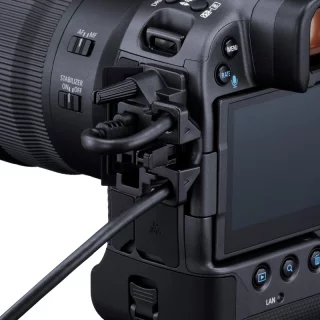
- Apple MFI certified, iPhone connection directly via USB cable
- Firmware updates via phone
- GPS
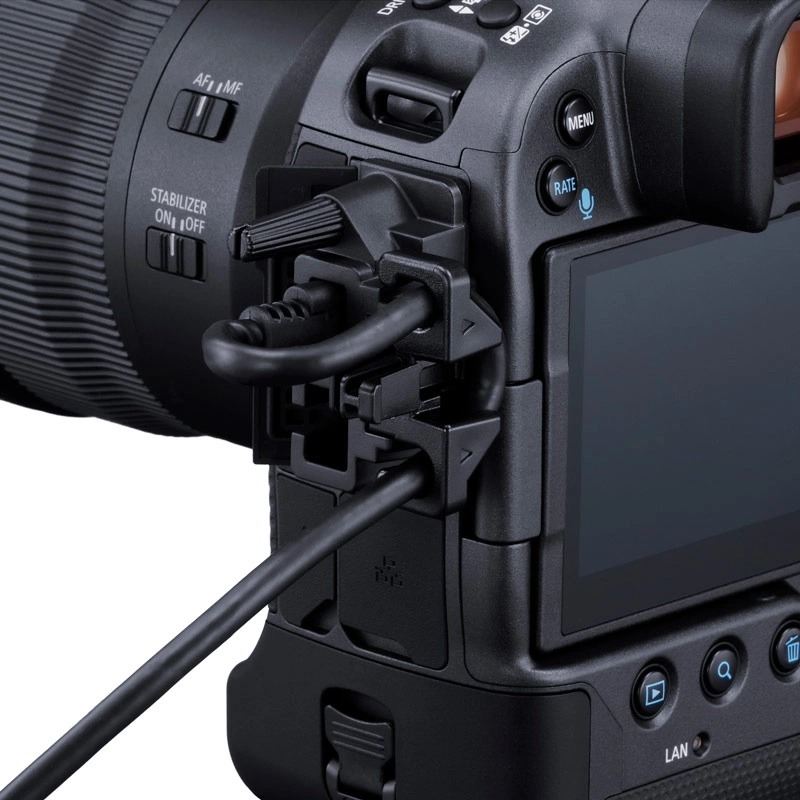
- Wifi, Bluetooth and Ethernet connections
The biggest innovation is the Multi-function accessory connector on the hot shoe. This connector enables power and data transfer between the camera body and the accessory. Canon has announced several accessories such as a digital microphone, a wireless radio flash trigger and an Android smartphone adapter. Previous flashes can be weather-protected with a hot shoe adapter. The XLR microphone adapter previously announced for Cinema EOS cameras also works with the EOS R3.
These accessories do not require batteries, just plug the device in. Settings can be adjusted by pressing the button on the accessory with the camera menus. When using microphones, sound is transmitted digitally, which reduces the number of wires and improves sound quality.
The big update is better mobile compatibility, you can connect your iPhone directly with a USB cable and transfer photos to your phone with the new Mobile File Transfer App.
Frame and professional-grade usability
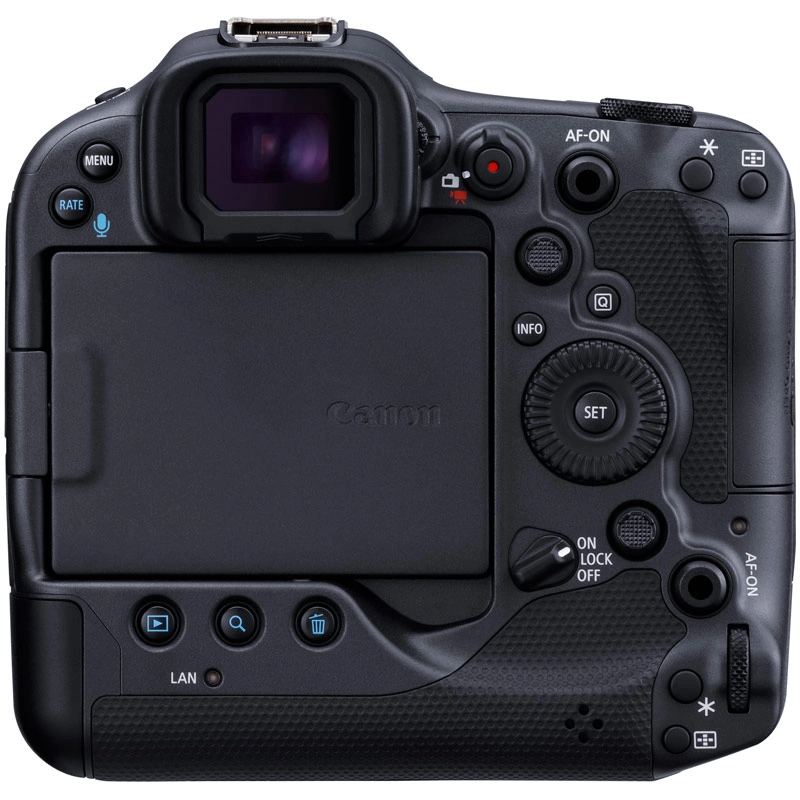
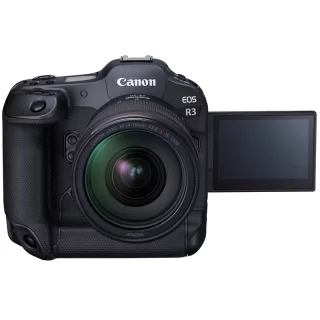
- Vari angle monitor: a swivel display for the first time in such a sturdy body
- Touchscreen resolution 4.2 million dots
- Elektron OLED viewfinder: resolution 5.76 million dots, refresh rate 120fps
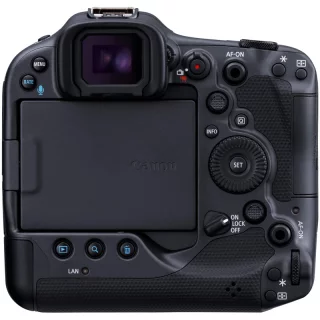
- Three adjustment wheels and a touch pin for focus selection
- Same large battery as in EOS 1D X cameras
- 1D level weather protection
- Integrated handle and mechanically even better than the R5 frame
As we said in the first sentence, this is a sturdy professional device and the mechanical quality is close to the EOS 1DX III prime body.
There are brand new features at this level, such as a tilting touchscreen and the first viewfinder from Canon that does not darken during shooting. A lot of attention has been paid to the level of the viewfinder, the refresh rate is high and for those switching from SLR cameras, there is an optical viewfinder simulation mode. The simulation mode aims to display the image as if it were an optical viewfinder, without the shadows blending together and the highlights burning through. According to DPreview, this is the closest thing to a high-quality optical viewfinder that any previous camera model has been able to offer.
The camera is fast and all delays are minimized. The startup is very fast and the camera is ready to take a picture in less than half a second. The delay from pressing the shutter button to taking a picture is 20ms. This is intended to capture surprising moments in nature and extremely fast-paced sports performances.
The EVF is large and clearly protrudes from the camera, which means that viewing ergonomics are good. There are two different viewfinder models available, small and large.
The camera's first seam is above the battery compartment and the tightness is top-notch around the buttons. This is not intended to be left at home in bad weather, but to get pictures regardless of the conditions.
The integrated shooting grip includes completely duplicated controls, meaning the touch pin, joystick and weather rollers are in exactly the same place on the grip. This means that when taking portrait photos, your fingers hit the same points. The programmable function keys on the front of the camera have also been duplicated. Of course, the camera can be turned upright with your wrist, but with larger professional lenses and for long periods of time, for example when shooting a sporting event or in a hideout, you can keep the ergonomics in order and your hands will not be strained.
What about battery life? A story from the Tokyo Olympics tells of a photographer who took 14,000 photos on a single charge. This of course depends on settings and usage, but it tells you that battery life is not an issue with this body.
Specifications:
- Compatibility: Canon RF
- Sensor: new stacked, back-illuminated full-frame CMOS sensor, 24.1 megapixels
- Digic X processor
- Focus points: 1053 phase-detection pixels
- Sensitivity: ISO 100-102400 (expanded to ISO 50-204800)
- Shutter speeds: 1/8000 - 30s with mechanical shutter, 1/64000 - 30s with electronic shutter + Bulb
- Flash sync: 1/250 s (with electronic front curtain), 1/180 s with electronic shutter
- Continuous shooting with electronic shutter: 30/15/3 fps, 150 RAW or 540 JPG
- Continuous shooting with mechanical shutter at max. 12 fps, equivalent to 1000 RAW images
- Viewfinder: OLED 5.7M dots, 0.76x magnification
- Display: 3.2' vari-angle touchscreen, 4.15M dots
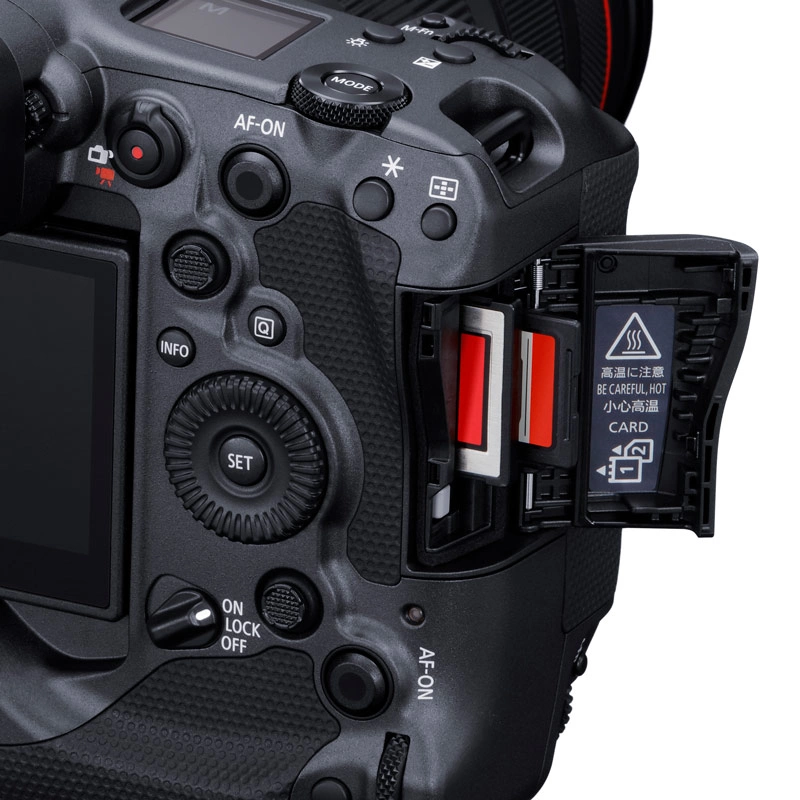
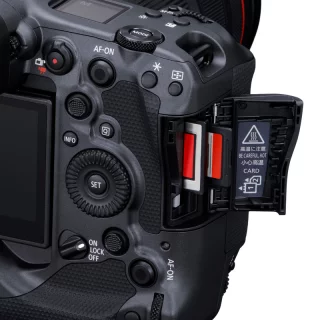
- Memory card slot 1: CFExpress Type B
- Memory card slot 2: SD (HC/XC) UHS-II
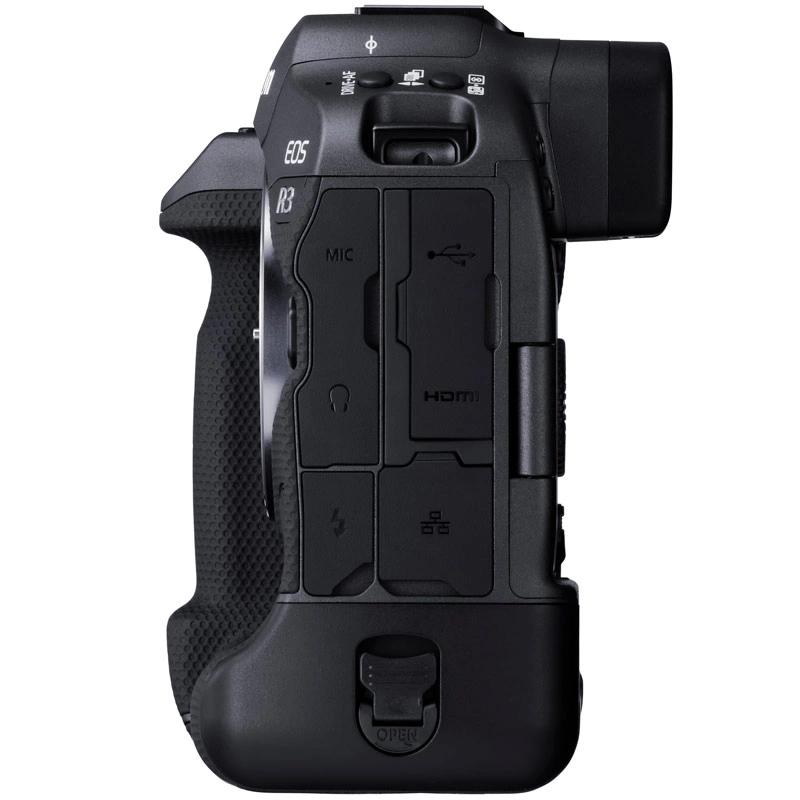
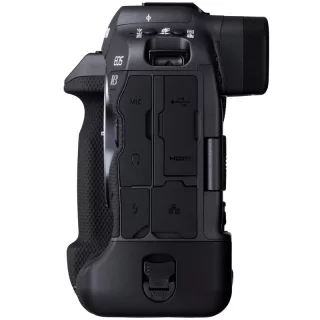
- Connections: microphone jack: 3.5 mm, headphone jack: 3.5 mm, USB 3.1 Type-C connector, HDMI Micro, RJ45, PCsync, Multi function accessory shoe
- Wi-Fi 5Ghz, Bluetooth
- GPS
- Size: 150 x 142.6 x 87.2mm
- Weight: 1015g (with battery and memory card)
Sales package includes: Canon EOS R3 body, ER-h small eyecup, ER-L1 strap, LC-E19 charger, LP-E19 battery. USB cable, accessory shoe weather cap
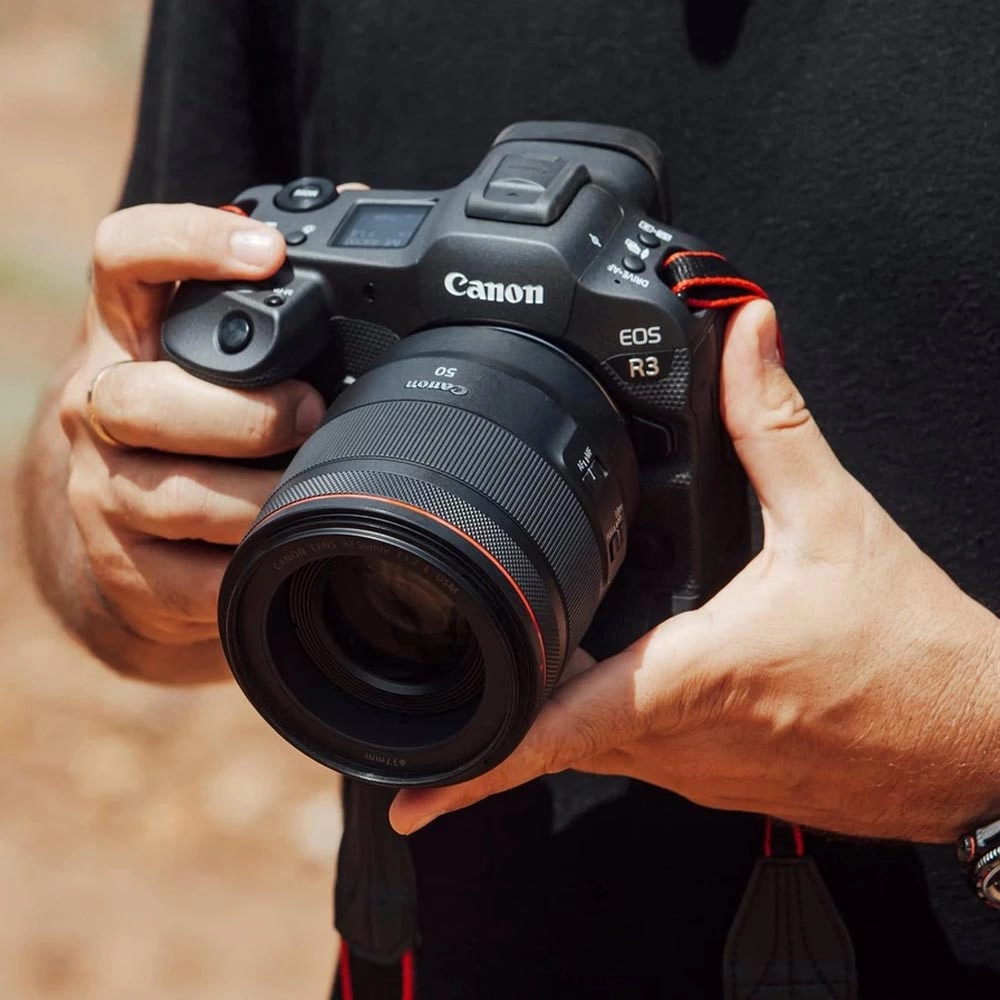
Featured
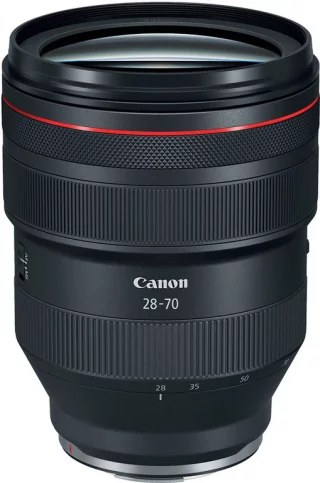
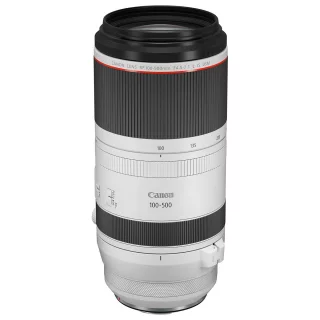
Canon RF 100-500mm f/4.5-7.1 L IS USM
Summary of reviews
Ask about product

Mon-Fri 9-17 and Sat 10-14
INFO