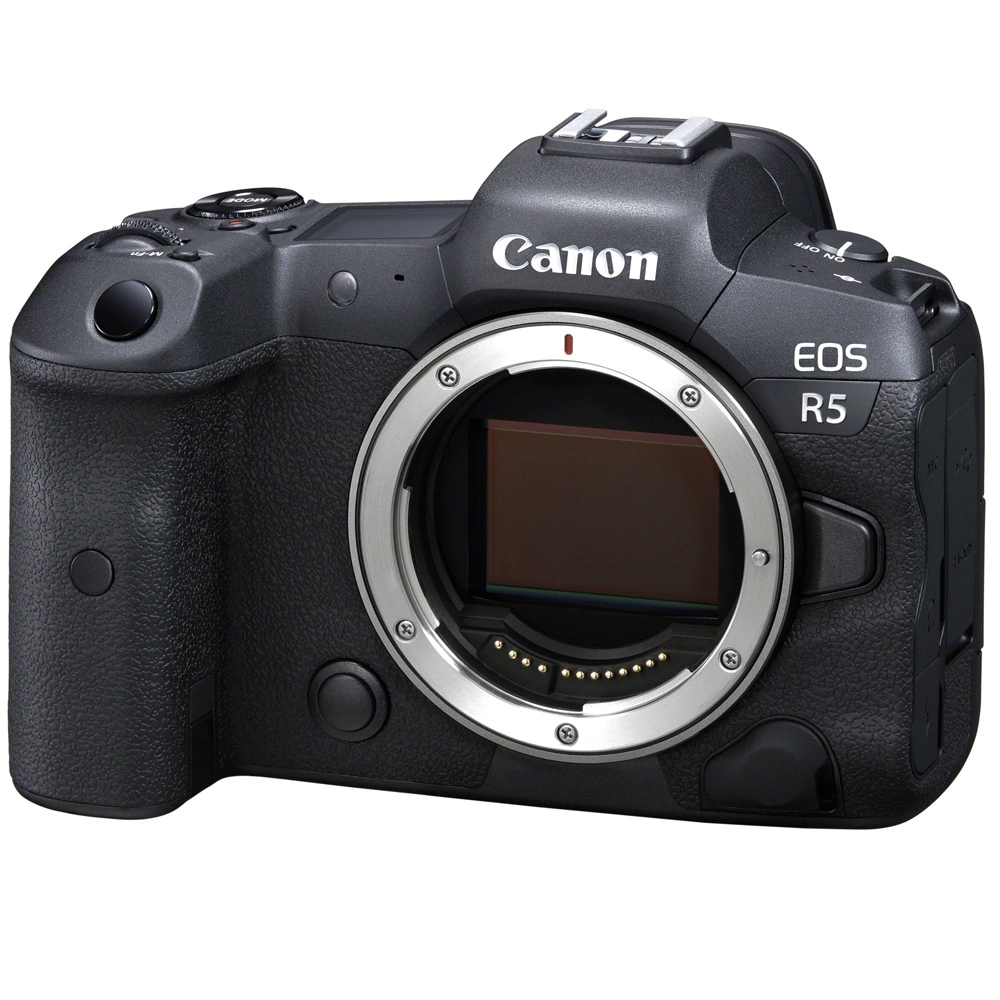
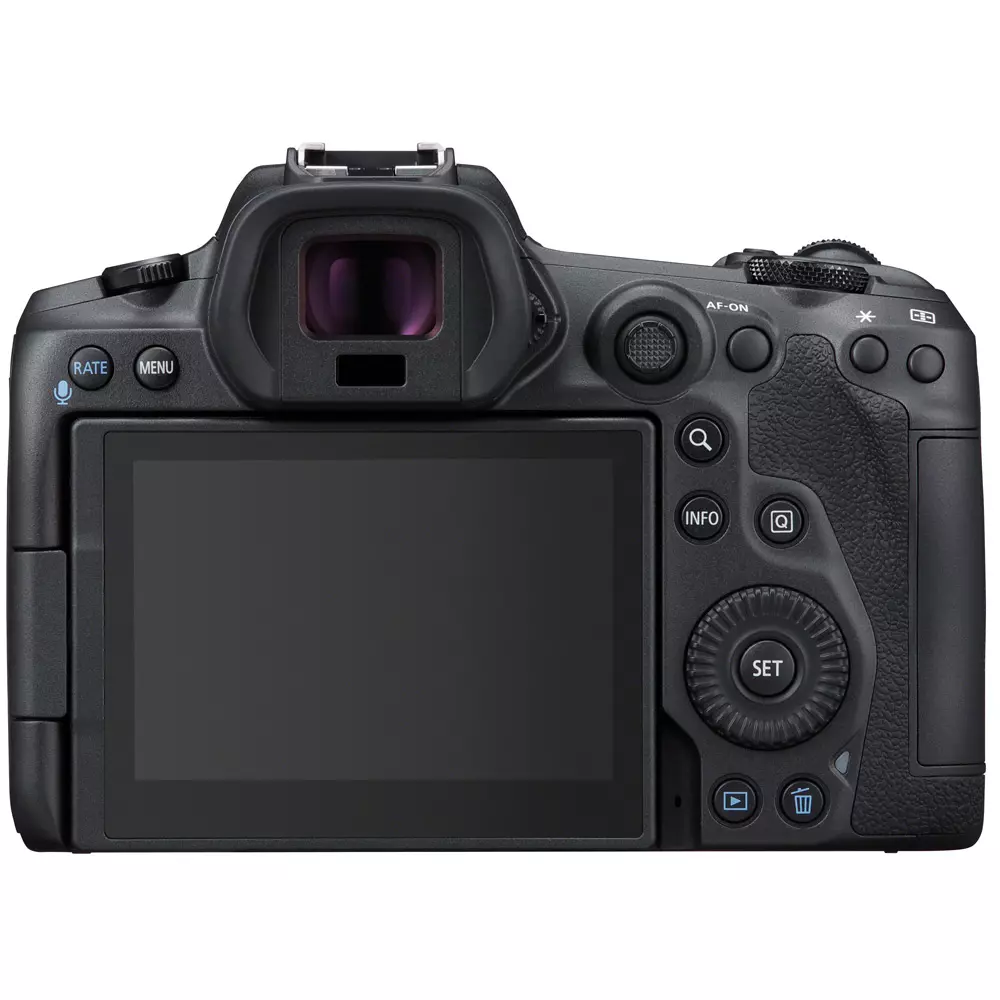
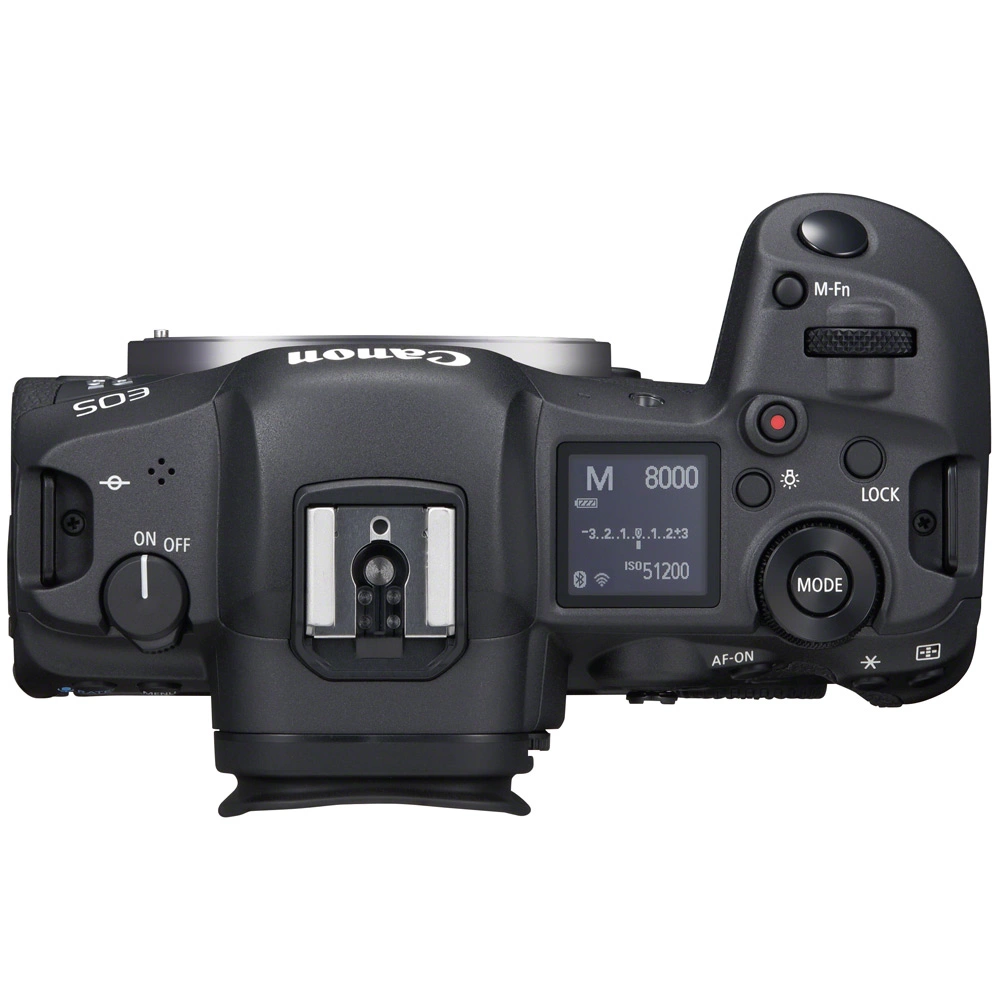
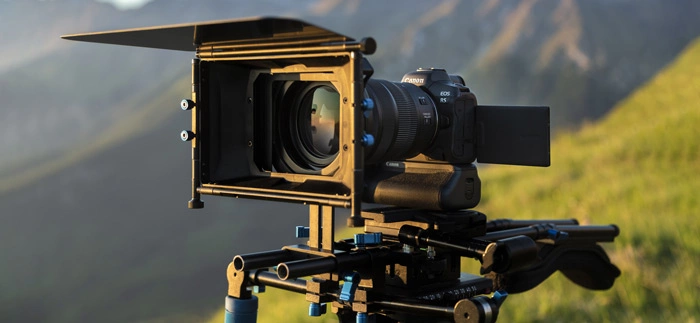
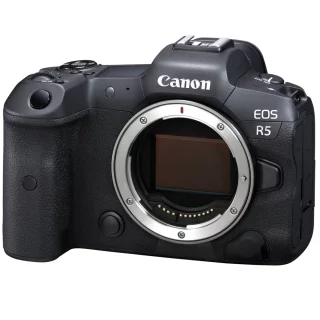
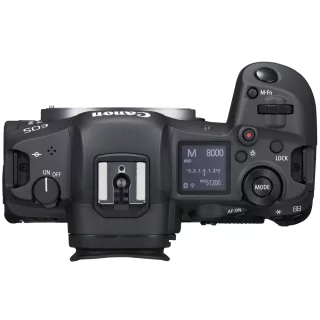
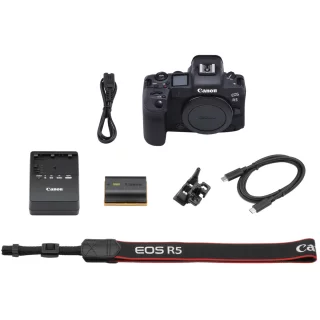
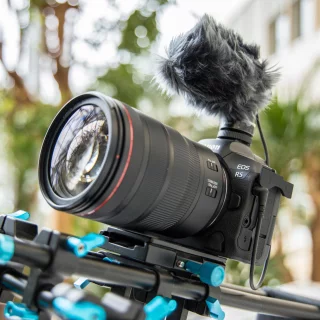
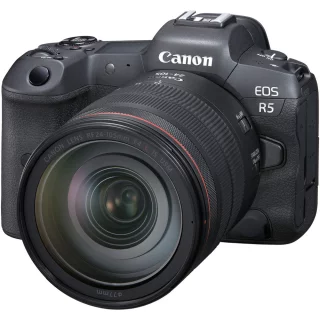
Canon EOS R5 body

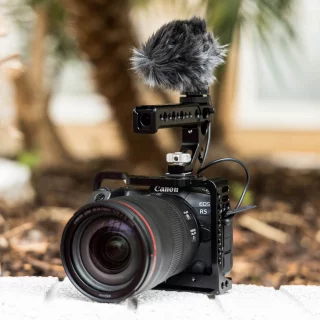
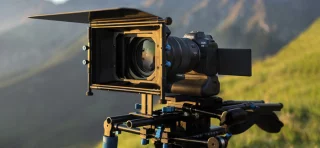



Bundle Deal
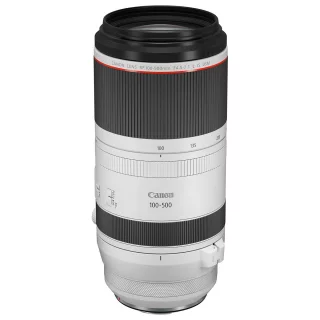

Compatible accessories


Canon WFT-R10B (EOS R5) Battery
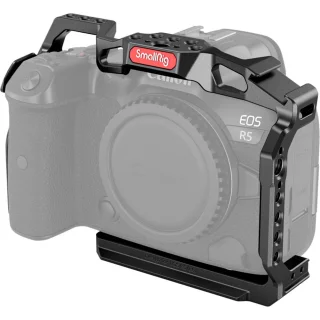
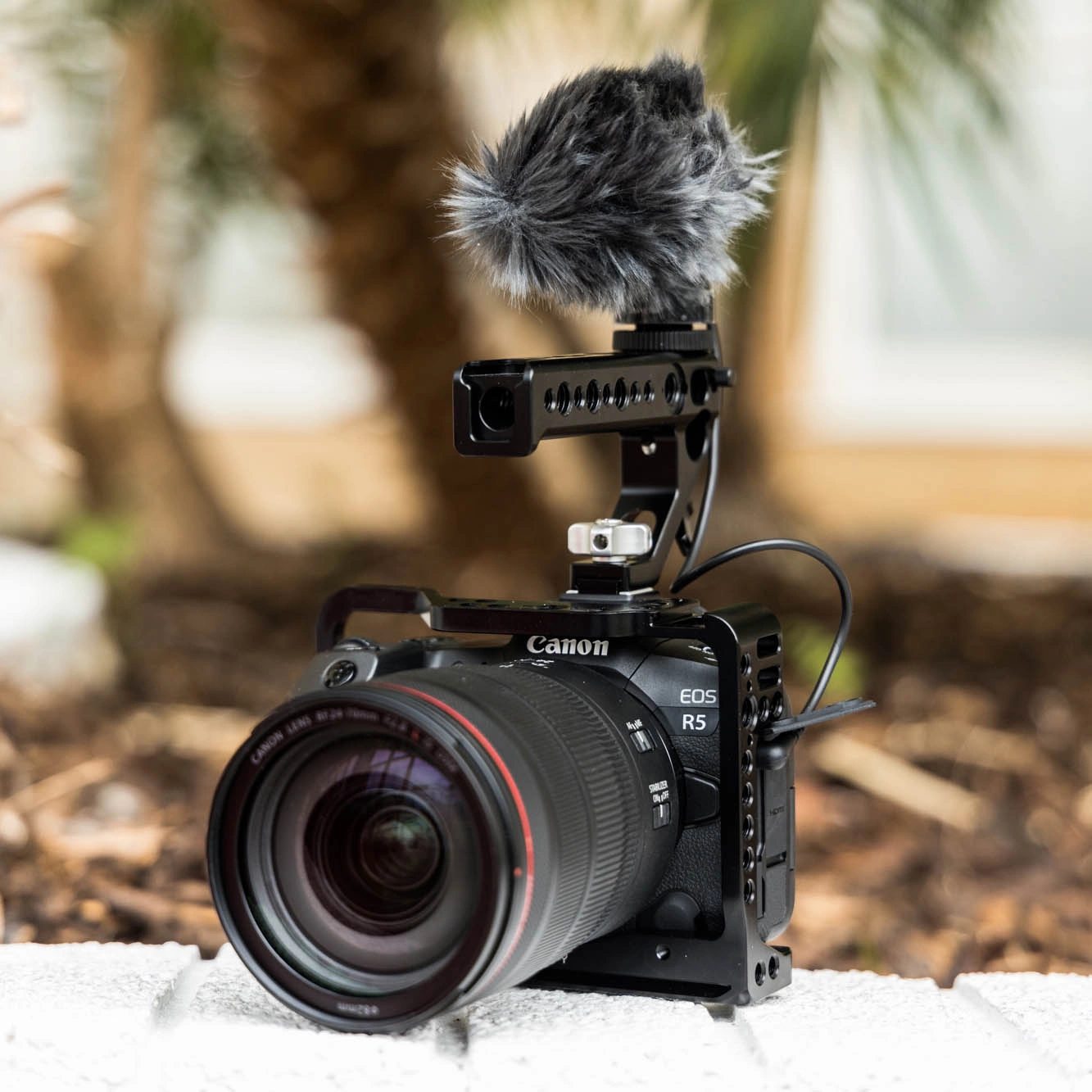
SmallRig 2982 Camera Cage for Canon R5 / R5C / R6
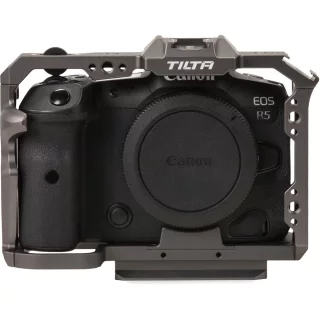
Tilta Full Camera Cage For Canon R5/R6 - Harmaa
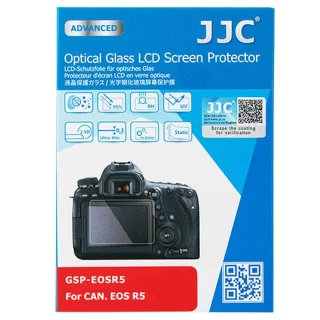
JJC GSP-EOSR5 Optical Glass Protector (Canon EOS R5)
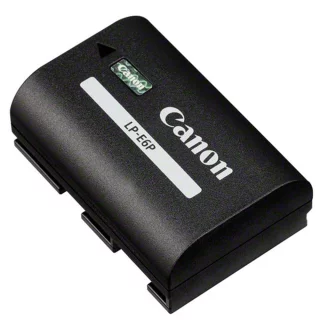
Canon LP-E6P battery
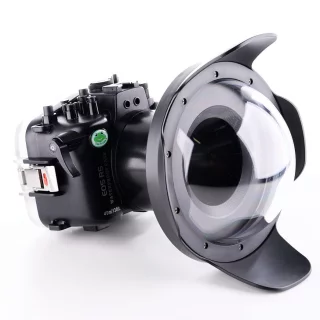
Canon EOS R5 body
This was as big a release as the EOS 5D Mark II was back then, as it packs unprecedented features for both photographers and videographers in the same package. In addition, completely new autofocus functions and a very effective built-in stabilizer. The Canon EOS R5 is the first mirrorless system camera that is also aimed at sports and wildlife photography.
- 8K Raw video recording directly to memory card - without cropping
- Same information with 4K video but also 120P slow motion videos are possible
- Autofocus automatically focuses on and tracks animals - even birds!
- IBIS built-in sensor-shift image stabilization, up to 8 stops of power
- 20fps continuous shooting with electronic shutter and 12fps with mechanical shutter
- 45 megapixels, sensitivity 100-51200
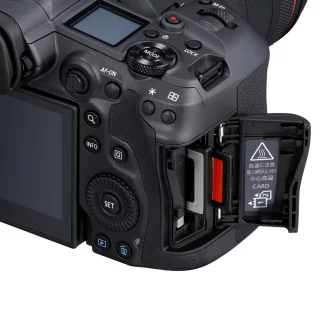
- 1x CFExpress and 1x SD UHS-II memory card slots
- High-resolution 5.69 million-dot viewfinder
Continuous shooting on this camera is on par with the EOS 1D X III, with 20 frames per second using the electronic Silent Shutter and 12 frames per second using the mechanical one. This is a great achievement considering the 45 megapixel resolution.
iTR AF X Animal tracking AF
A complicated name, but this is what it means: The Canon EOS R5 can detect dogs, cats and birds in addition to people. According to Canon, the focus also works on flying birds. The entire figure, head, face and eyes are used to help focus and track, depending on how the subject is in the picture. The focus now also detects faces that are sideways.
In the video above, the closest swan to the Camera Shop is the test subject, we didn't wait for the swan to be over and took boring posing photos. We knew the feature worked because it recognized Finnish waterfowl from the nature photos hung on the walls of our shop, but the focus response speed still surprised us positively!
The Canon EOS R5 we used was a production version, with a Canon EF 70-200mm F2.8L IS II lens with an adapter. Image captured with an Atomos Ninja V recorder directly from the camera.
- Real-time and next focus
- iTR AF X Animal tracking AF: detects people, animals such as dogs and birds
- Works in lighting as low as -6.5EV (i.e. very low light)
- Focus covers 100% of the frame in automatic mode
Built-in powerful image stabilization
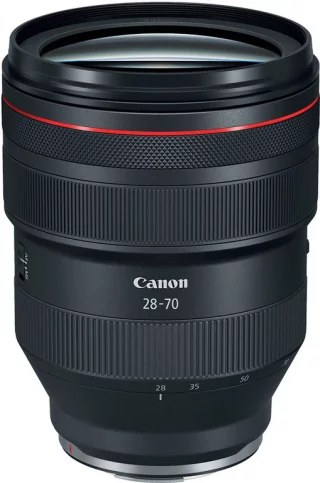
As you can see from the table, the stabilizer power in most combinations is tremendous compared to what is usual in full-frame cameras. The Canon RF mount includes very fast data transfer between the lens and the body, so the body stabilizer and the stabilizers in the lens work together. It is especially noteworthy that the stabilizer power alone, for example with the RF 28-70mm F2 zoom, also reaches the full 8 stops promised, even though the lens does not include IS stabilization.
- Up to 8 stops of power
- works together with the lens stabilizer
- Also works with manual focus and other special lenses fitted with an adapter
| Lens | Focal length used | Lens stabilizer power | Total power |
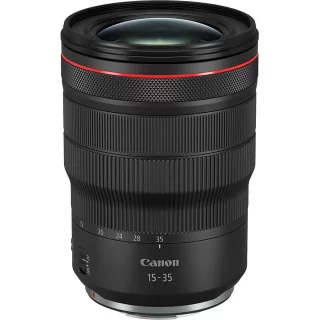
| RF 15-35mm F2.8L IS USM | 35mm | 5 openings | 7 holes |
| RF 24-70mm F2.8L IS USM | 70mm | 5 openings | 8 holes |
| RF 24-105mm F4L IS USM | 105mm | 5 openings | 8 holes |
| RF 24-240mm F4-6.3 IS USM | 240mm | 5 openings | 6.5 openings |
| RF 28-70mm F2 L USM | 70mm | - | 8 holes |
| RF 70-200mm F2.8L IS USM | 200mm | 5 openings | 8 holes |
| RF 100-500mm F4.5-7.1L IS USM | 500mm | 5 openings | 6 holes |
| RF 35mm F1.8 IS Macro STM | 35mm | 5 openings | 7 holes |
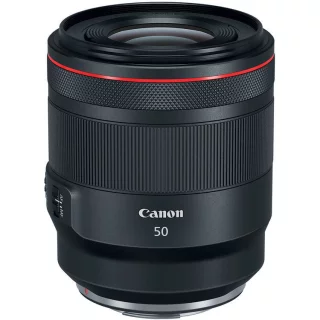
| RF 50mm F1.2L USM | 50mm | - | 7 holes |
If you use lenses from a different manufacturer with an adapter or even old manual focus optics, you can program the focal length of the lens into the camera and the stabilization will work in the best possible way.
This is the first Canon system camera with built-in image stabilization. Canon has stubbornly stuck to the idea that image stabilization is smarter and safer to implement in the lens. However, Canon now feels that the stability and power of the stabilizer are definitely in order. And now the implementation is at least in terms of numbers the best on the market. This camera will probably be used by most people as a hybrid device to combine video production and photos. In video use, such an effective stabilizer is a desired feature.
Canon EOS R5 video shooting
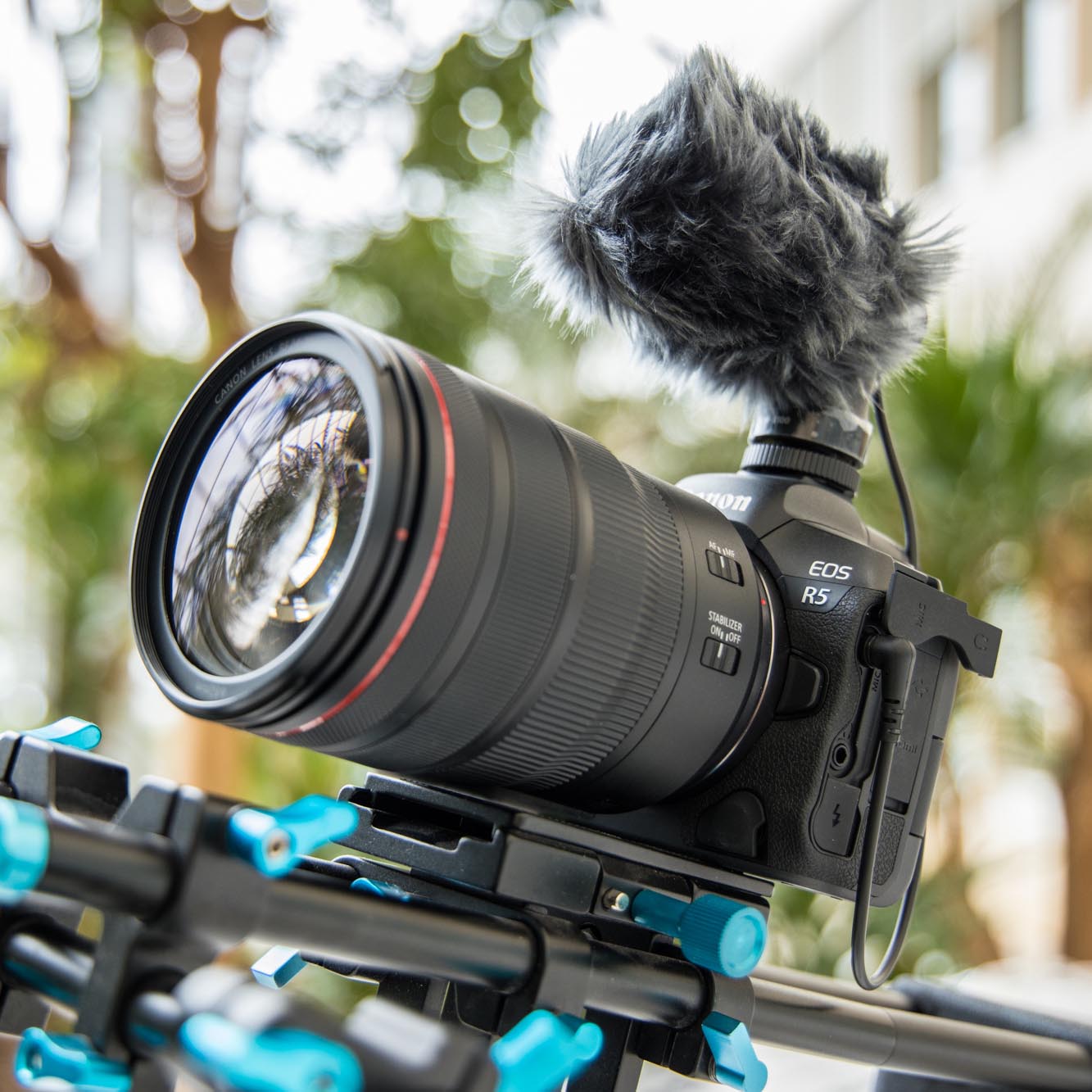
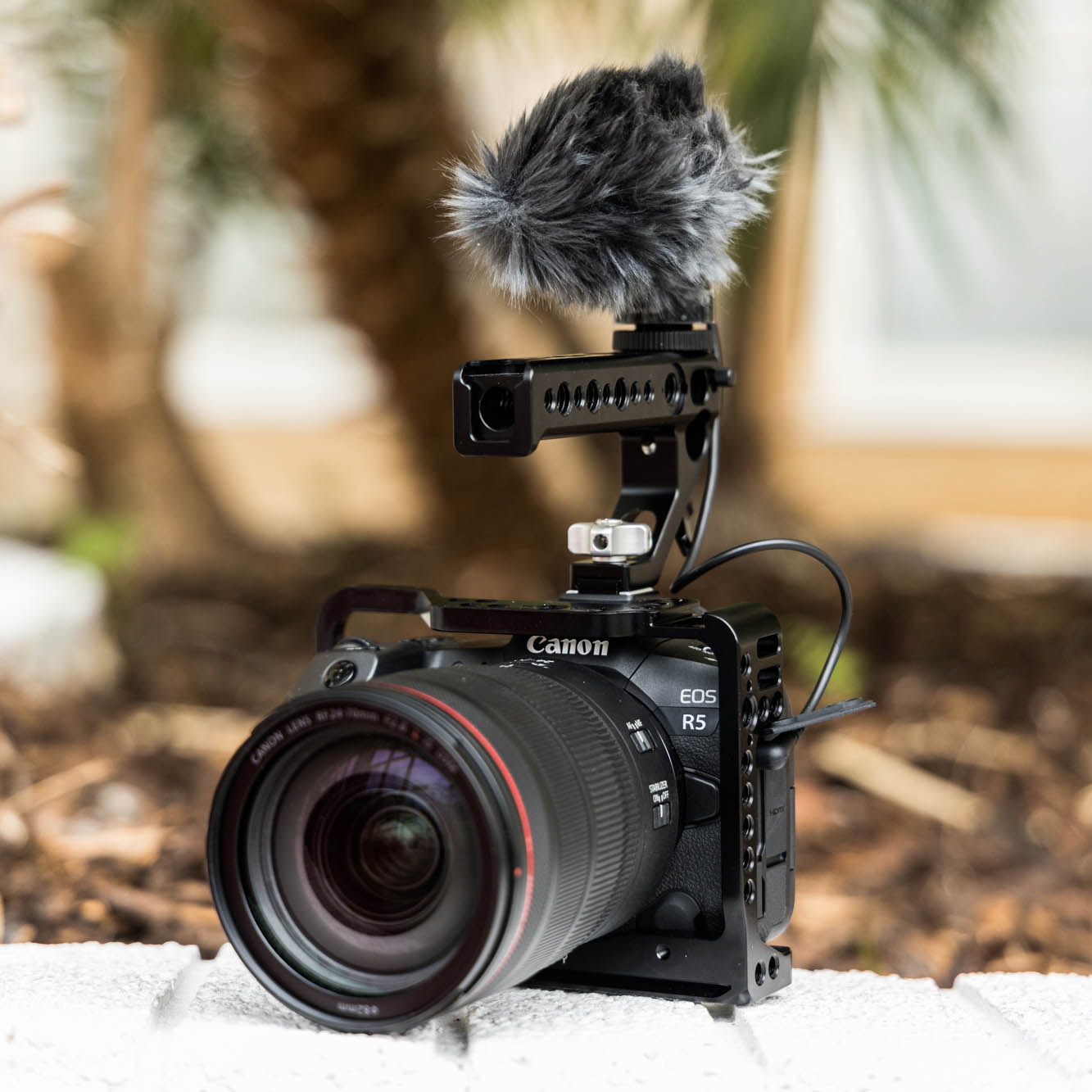
Pay attention to the time limits for video filming. Gerald Undone, known from YouTube, has made precise measurements of the duration of video filming.
Whether this is a problem depends entirely on the intended use. If you're shooting fast shots, for example in advertising production, and leaving long interview clips to be shot with a different setting, the EOS R5 offers exceptionally great image quality.If the shooting day is hectic and you want to shoot all your footage in the best quality, the camera's scheduled cooldown can be an extra wait. In these tests, 8K video was recorded for 19 minutes (i.e., in terms of data volume, this is probably around a terabyte..). The recording time of a 4K 24P HQ video created by supersampling was 27 minutes on a memory card and up to 75 minutes on an external recorder. There are no time limits for basic 4K and 1080P qualities.
The Canon EOS R5's most striking display of power is its 8K video recording. 8K 30P videos are recorded from the entire sensor area without cropping. Recording is possible internally directly to a memory card. This 8K resolution video is four times the file size of the corresponding 4K video, meaning fast and large memory cards are needed. Canon's fast Dual Pixel AF autofocus also works in 8K shooting modes.
The camera's 8K video can capture 35.4 megapixel still images (compare 4K video to 8.8 megapixel images)! This says a lot about the file size. And this makes it possible, for example, to film two interviewees at the same time, and you can fake a 4K multi-camera production. Of course, a more realistic use is for cropping or panning the image. The resolution also offers an incredible amount of data for software stabilization.

Let the numbers speak:
8K video 30P:
For today's needs and basic use , the EOS R5 oversamples this 8K footage to 4K video on the memory card. This oversampling technique is used in several high-end models, improving the sharpness of the video file and reducing the importance of noise because the file is compiled from a larger amount of data.
Professional-level usability
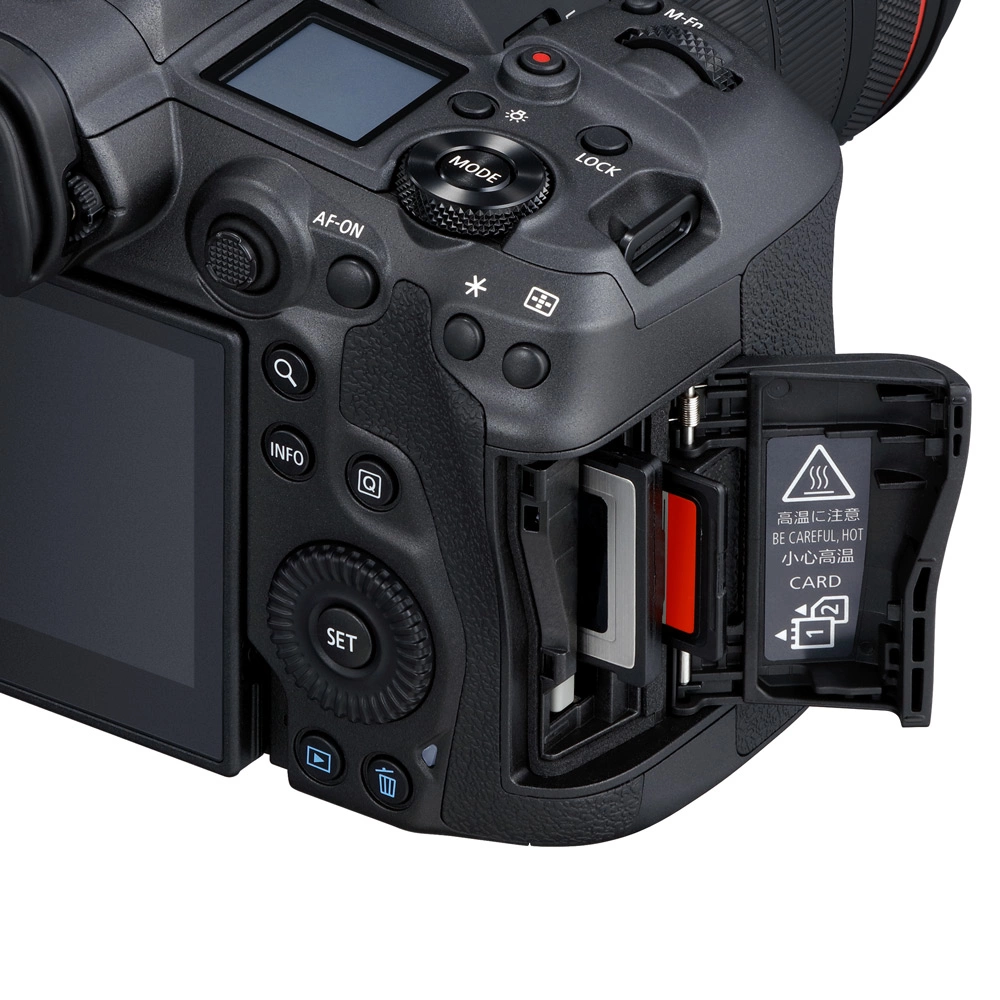
There are two memory card slots, which is a pleasure for professional photographers! A CFExpress card is used as the memory card for video files and very fast burst shooting requirements, while there is an SD UHS-II card slot for photos and smaller video files.
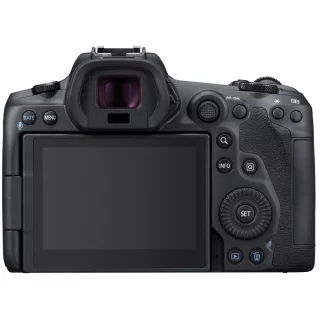
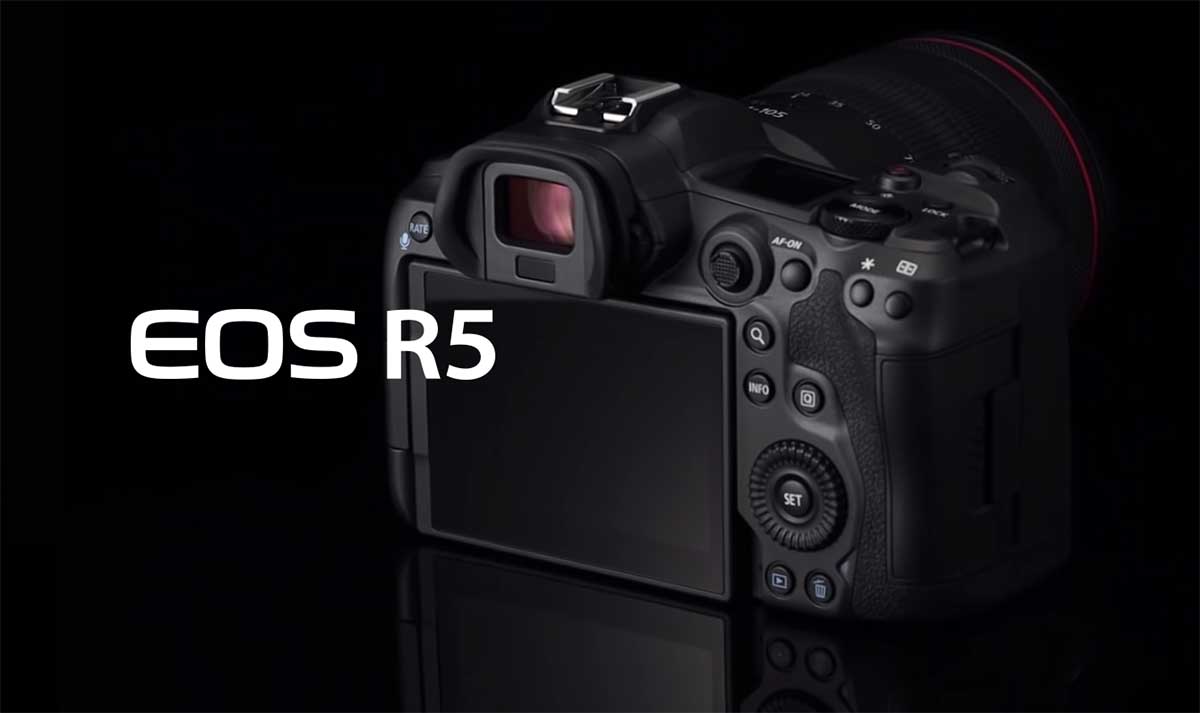
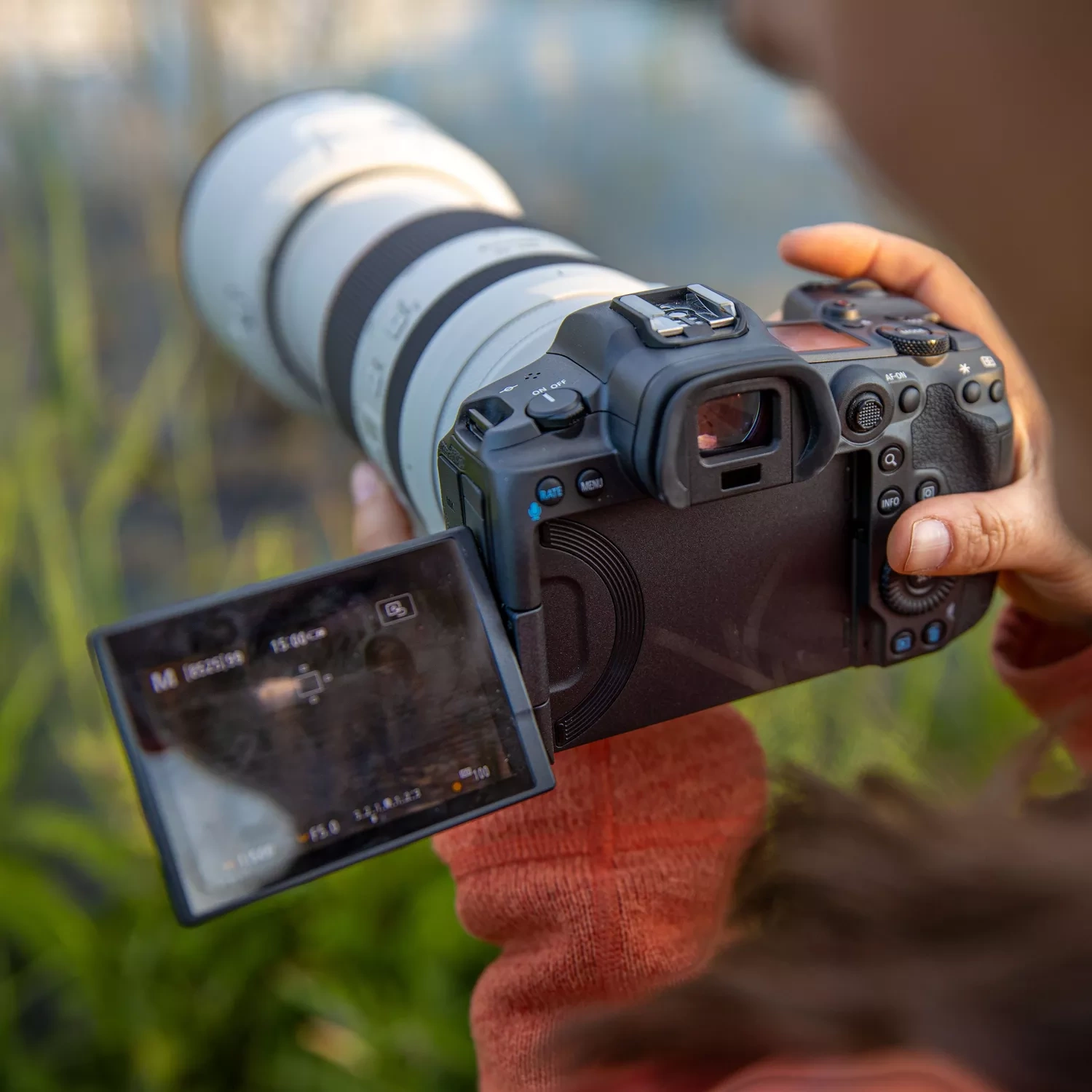
Judging by the pictures, the usability returns to the EOS 5D series roots, i.e. the M-Fn touch panel has been replaced with a rotating wheel and a traditional joystick! There is also a dedicated button for switching Liveview / movie mode. Otherwise, the good aspects of the EOS R model seem to have been preserved, the place for the electronic viewfinder, the tilting screen and probably one of the best-designed handles among mirrorless cameras.
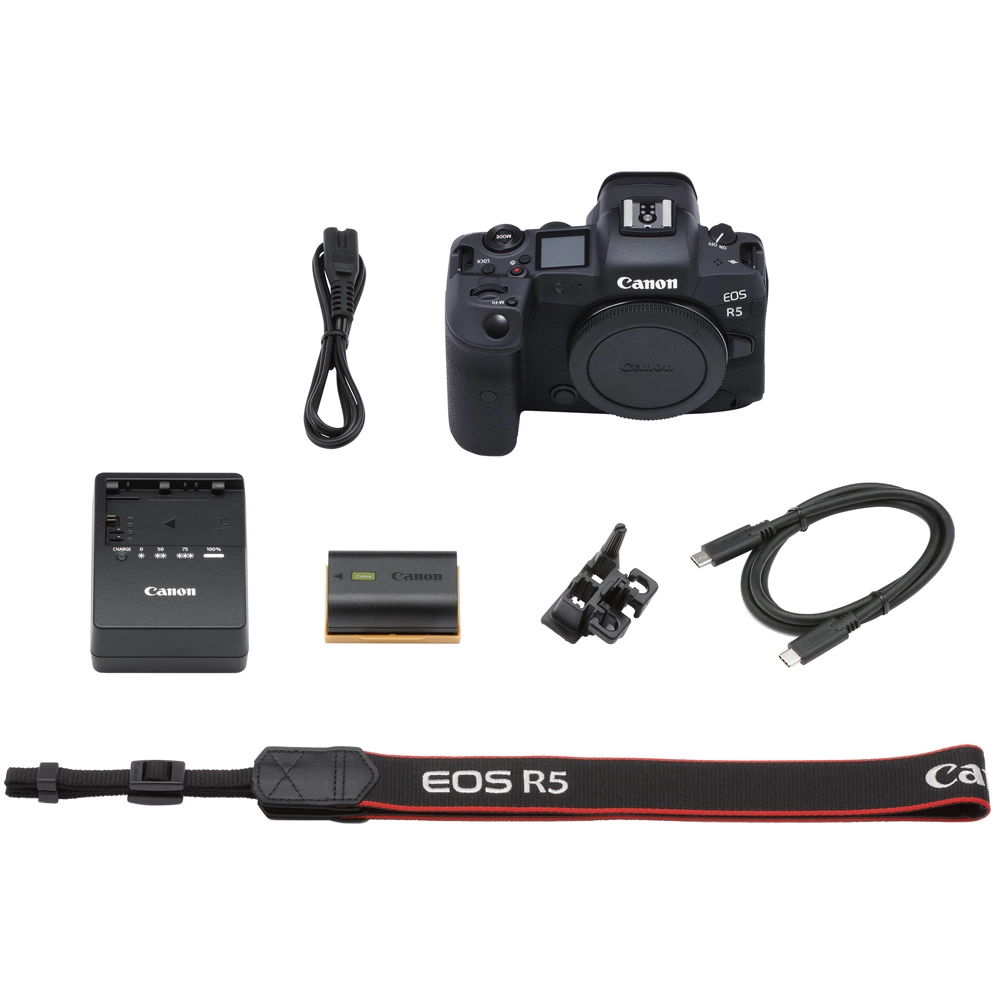
The Canon EOS 5R uses a new LP-E6NH battery type, which is about 17% more efficient than the old model. The estimated number of shots according to CIPA practice is 320 (EFV) or 490 (via rear monitor) on a full charge. For example, with the EOS 1DX III and EOS R models, you can actually achieve much higher shooting numbers than promised. Charging is possible with a High Power compatible USB charger directly in the camera, meaning you can get plenty of use time when traveling, for example with a power bank. And with the battery grip, you can also charge the grip batteries through the camera.
Wifi and Bluetooth connections are found directly on the camera. Wifi also supports the newer 5Ghz frequency. The camera's construction represents Canon's best expertise. Weather protection is in order and the body is designed for heavy use.
Specifications:
- Compatibility: Canon RF lenses
- Sensor 45 megapixels, sensitivity 100-51200
- Digic X processor and Deep Learning AF
- Internal 5-axis image stabilization, up to 8 stops of performance according to CIPA standards
- Electronic viewfinder, resolution 5.69 million dots
- 8CM swivel touch screen
- 20FPS continuous shooting with electronic viewfinder, 12 with mechanical. Cache capacity 350 JPG or 180 Raw images
- Two memory card slots: 1x CFExpress and 1x SD UHS-II
- HDMI Micro connector
- SuperSpeed USB 3.1 Gen 2 USB-C port
- Wireless Lan 5GHz & 2.4GHz and Bluetooth 4.2
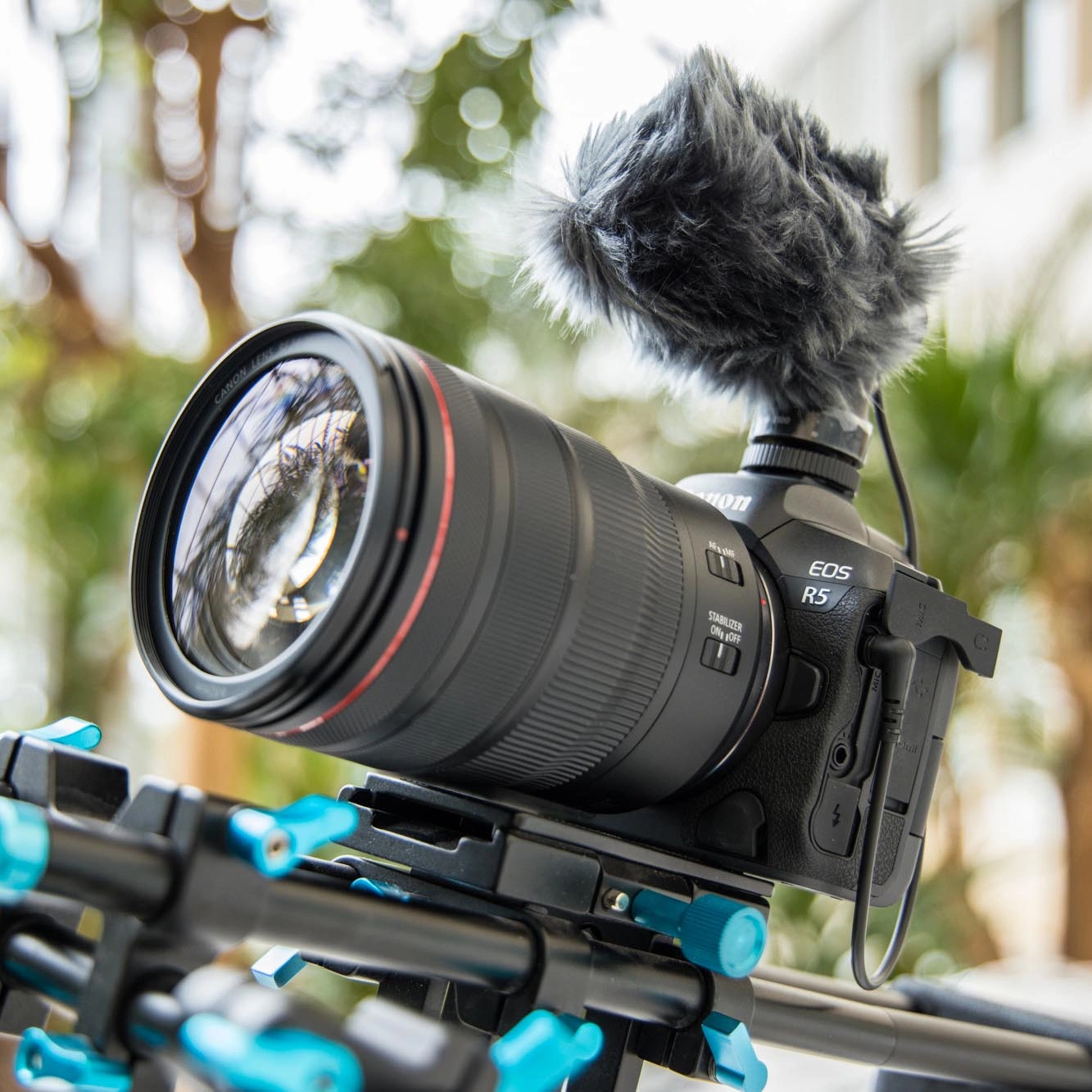
- 3.5mm microphone jack, headphone jack
- N3 remote release terminal and Flash Sync terminal
- Size: 135.8 x 97.5 x 88mm
- Weight: 738g (without battery and memory card 650g)
Featured
Summary of reviews
Pekka S.
Ask about product

Mon-Fri 9-17 and Sat 10-14
INFO