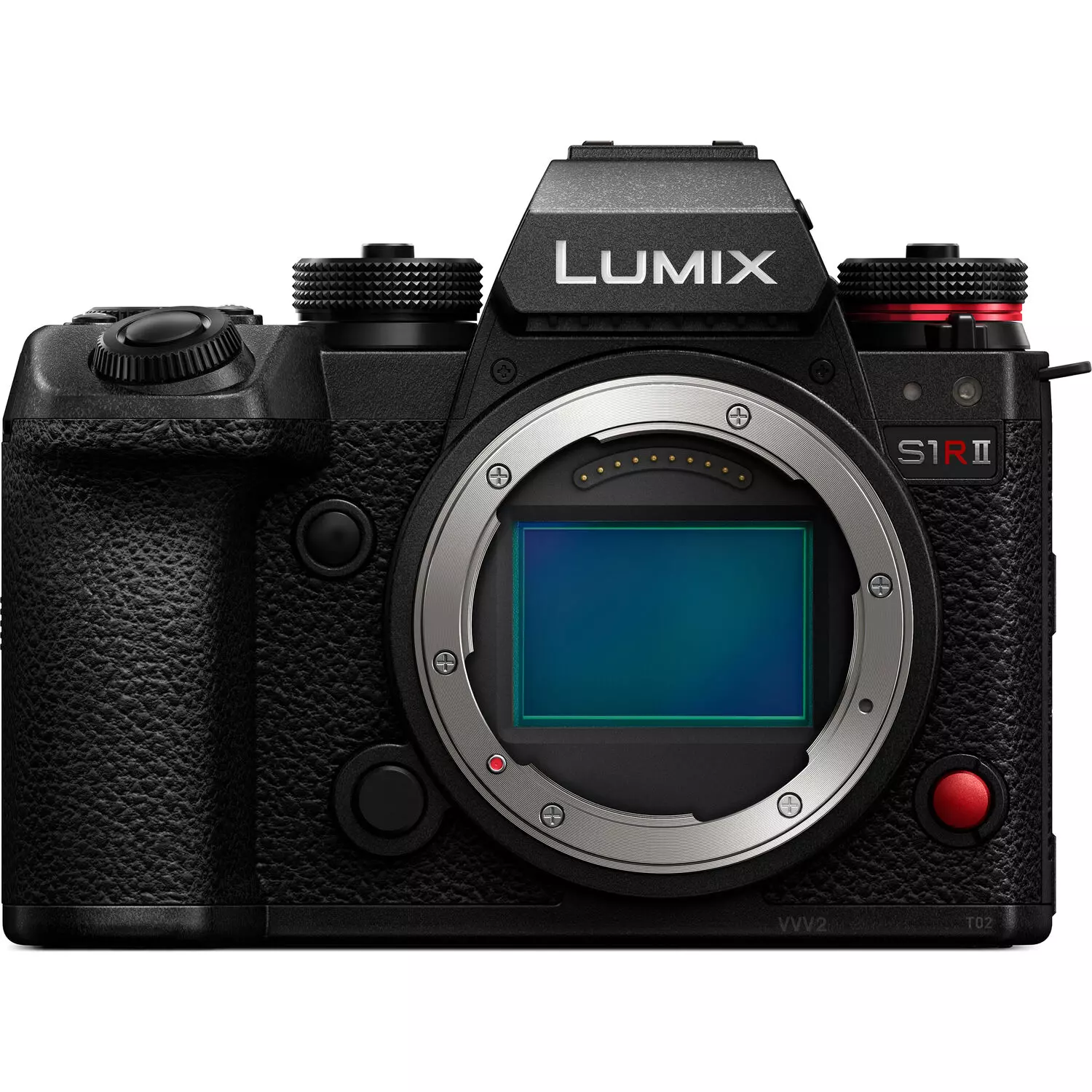
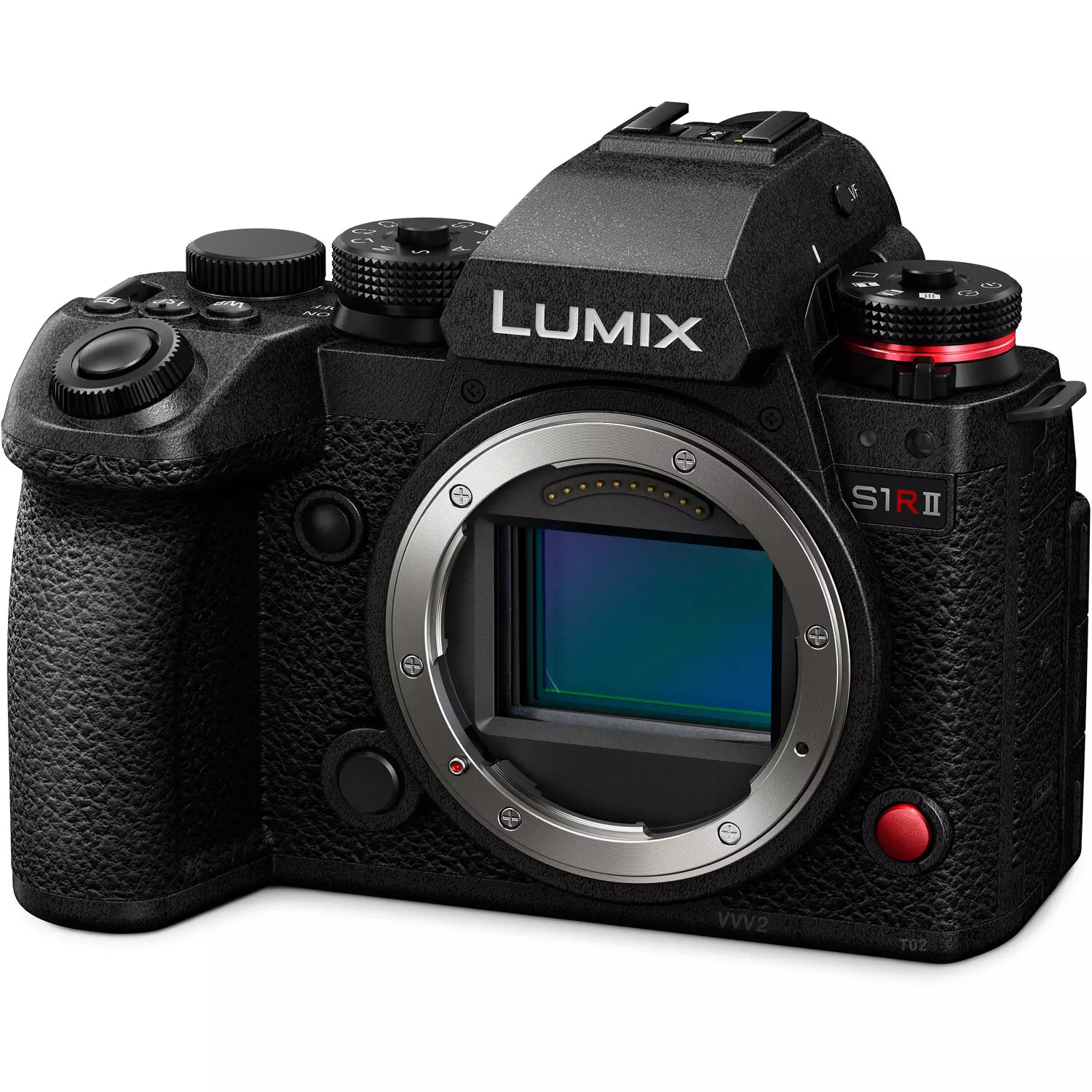
Panasonic Lumix S1R II body





Active campaigns


Bundle Deal
Compatible accessories

Panasonic DMW-BLK22 (Panasonic GH6/S5) battery
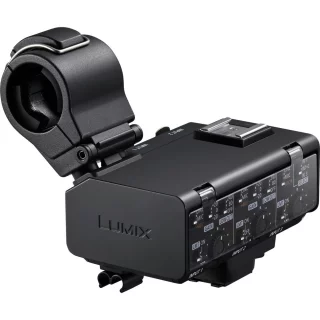
Panasonic DMW-XLR2 microphone adapter

Panasonic BLK22 Dummy Battery USB-C battery adapter
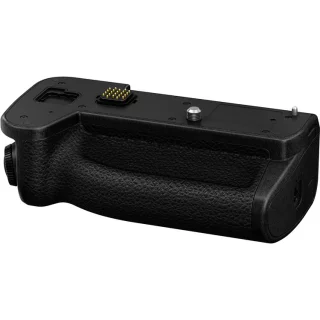
Panasonic DMW-BG2 battery grip (S1R II)
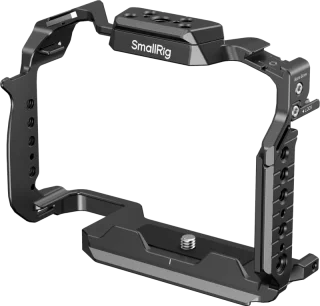
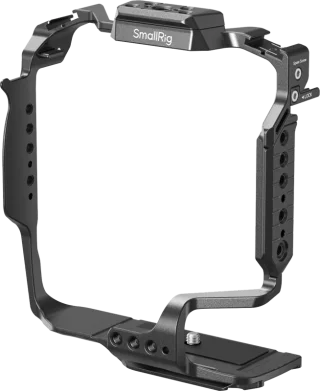
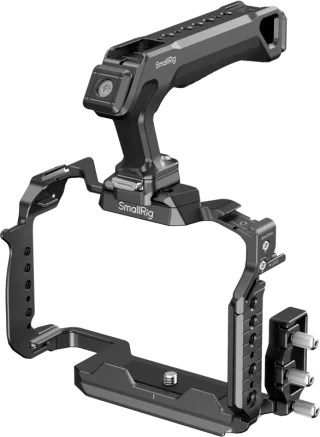
SmallRig 4903 Cage Kit for Panasonic LUMIX S1R II
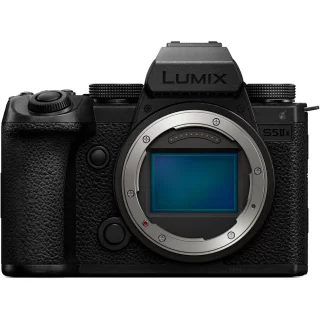
Panasonic Lumix S1R II body
Trade in your digital system camera and receive an extra €500 trade-in bonus!
Fill out the trade-in offer form on our website or contact us by email at asiakaspalvelu@kameraliike.fi
Campaign period: 18.8.2026 - 13.11.2026
The Panasonic S1R II is the manufacturer's best hybrid camera. Panasonic has released new features in the S5 and GH series, but now it was time to update its first L-mount body. And the updates are very comprehensive, this device combines the features of all the cameras released so far.
The Panasonic S1R II features an all-new sensor, the most advanced autofocus, and much-anticipated features such as 8K Open gate video recording, CFExpress memory card slots, 32-bit audio recording, and highly effective image stabilization. In addition to cutting-edge video technology, the resolution is sufficient for even demanding still photography at 44.3 megapixels.
As you can see from this product description, this is a truly versatile device and technically very competitive compared to all manufacturers. But behind the numbers, like Panasonic, is also a mechanically durable and easy-to-use device.
Even if you're not familiar with Prores Raw HQ, False Colour or Open Gate, this camera still allows you to get impressive video material and high-quality photos right away, and on the other hand, the camera opens up new possibilities as your skills and level of demands increase!
- 44.3 megapixel full-frame sensor
- Dual Native ISO
- 6.4K Open Gate recording. Later with update 8.1K Open Gate
- 14 aperture dynamic range
- Internal 5.8K ProRes RAW HQ recording
- 4K 120P slow-motion videos with 1.1X cropping
- Continuous shooting 40fps, with mechanical shutter 10fps
- 1.5 second PreBurst shooting
- 32-bit float audio (requires DMW-XLR2 microphone adapter)
- 177 megapixel High-resolution mode - also works for handheld shooting
- New 779-point phase-detection AF with subject detection
- Up to 8 stops of 5-axis in-body image stabilization
- Active cooling means reliable even during long shooting sessions
- Real-time LUT function, False colour
- Frame.IO and Capture One support
- Compatible with the new Lumix Flow app
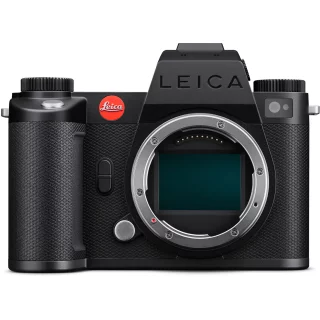
Panasonic and Leica have generally followed similar technical lines when it comes to image sensors. Now Leica's latest model SL3 features a 61 megapixel sensor and the video version SL3-S has 24 megapixels, while Panasonic opted for 44.3 megapixel technology.
So now we have chosen a middle ground, the chosen resolution is still very sufficient in this day and age, meaning if the dynamics and other features of the camera are in order, this is enough for landscape photography. More on photography later.
Panasonic S1R II in photography
In addition to the increased resolution, the S1R II features Panasonic's latest autofocus. In addition to phase-detection pixels, it also features object detection, like the top models of its competitors, meaning the camera can recognize and focus on people, animals and vehicles. People are also divided into body, face and eyes, and in the same way, for example, vehicle focus recognizes both motorcycles and drivers' helmets.
And when 44 megapixels isn't enough, the camera has a High-Resolution function that combines 8 separate images into a single 177 megapixel image file. The image is saved in Raw or JPEG format, and thanks to the powerful stabilizer, this mode also works for handheld shooting.
In addition to resolution, the S1R II is also the fastest Lumix system body in terms of continuous shooting. At its maximum, the camera can shoot at 40fps with the electronic shutter, in which case the raw images are in 12bit color depth. With the mechanical shutter, the raw images are in full 14bit quality and continuous shooting is possible at a speed of 10fps.
The electronic shutter also features a 0.5, 1 or 1.5 second Pre-burst, which allows for perfect recording of fast-moving situations because the camera has already captured the moments that occurred before the shutter was pressed.
Panasonic S1R II in video shooting
- Dynamic range of about 12-14 apertures, i.e. quite good
- Dual ISO sensor
- False colour exposure aid - first time on Lumix cameras
- V-Log recording and Real Time LUT feature
- Very effective image stabilization - it's worth watching the test videos!
- New stabilizer modes: Cropless which eliminates lens warping on wide-angle lenses without cropping
- 32bit audio recording via XLR module
- Hybrid zoom - a smart seamless zoom combining zoom and cropping like the Panasonic S9
- Comprehensive range of recording codecs, Apple Proress RAW 5.9K direct to memory card
- Open Gate will also support 8K video in the future after a software update
- Very comprehensive settings for shooting with anamorphic lenses, including a dedicated stabilization mode
- Live streaming via phone via Wifi or USB connection
- Recording directly to SSD via USB-C connection (this requires a battery grip or dummy power supply for 8K and 6K settings!)
- Active cooling, i.e. battery life, limits shooting more than heating
So a breathtaking number of features, a few years ago this would have been more of a videographer's wish list than what a camera could do.
A high megapixel count is not always a good thing for video recording, for example due to the sensor's read speed. It takes a while for the camera to record all the pixels and fast camera movements can cause distortion in the image.
The Panasonic S1R II's read speed is slower than the Panasonic S5 II X camera at almost all settings, especially when dynamic range expansion is on, and slower than the Sony FX3 and A7S III models, i.e. closer to the same level as the Blackmagic Pyxis. This can be a big minus for some uses, but for many photographers it may be quite insignificant.
It has many features familiar from the S5 II series, the same active cooling, meaning the body is still weatherproof. The codec selection is very comprehensive and there are a lot of settings.
And if you want a ready-made image instead of a V-log video, you can save the video to another card as a small file and it comes with the Real Time Lut feature. Other cameras have presets, but Real Time Lut allows the camera to have very versatile settings that can be used to get the tone exactly the way you want. For example, how about a Kodak Gold simulation with a small grain? It works.
Panasonic also announced a very interesting Lumix Flow app, which allows you to create storyboards, organize video clips, edit videos, and use your smartphone as an external monitor when connected to the camera. Frame.Io support is standard on the camera.
Major innovations include, for example, the false colour exposure aid familiar from film.
According to the camera shop, one of Panasonic's biggest advantages is its very good image stabilization. Other manufacturers promise the same aperture values, but watching videos shows that the technology is one of the best on the market, if not the best. When you combine the Active IS mode of the camera stabilization with the slightly image-limiting electronic EIS stabilization, you don't need separate gimbals and you don't have to be a ninja walking master - the image is really smooth.
This S1RII body also has new stabilization modes, a new cropless setting has been added to the so-called wobble phenomenon that disturbs wide-angle video shooting, the image looks stable even at the edges and you don't have to compromise on the wide-angle. EIS electronic stabilization now also works with anamorphic lenses.
Professional camera usability
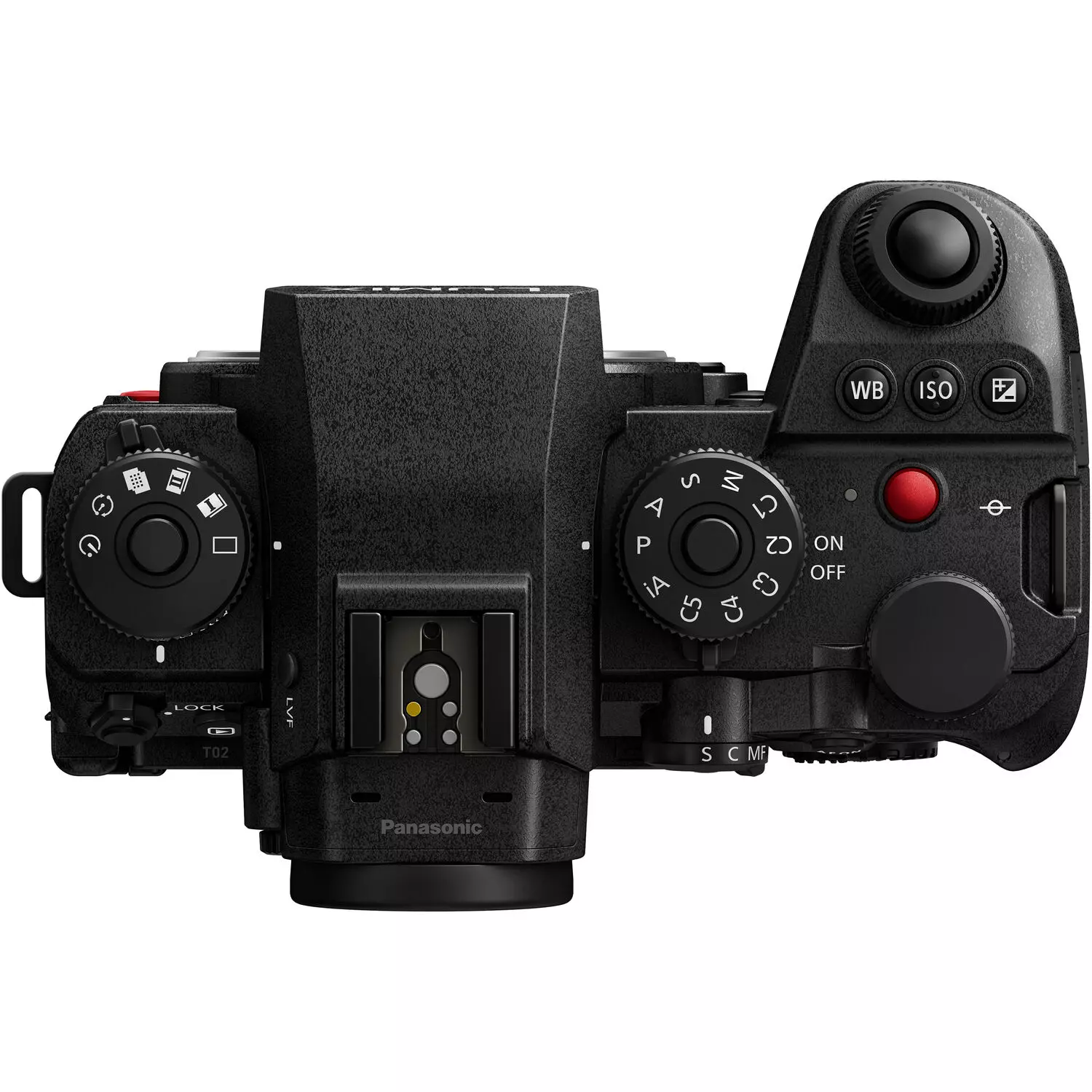
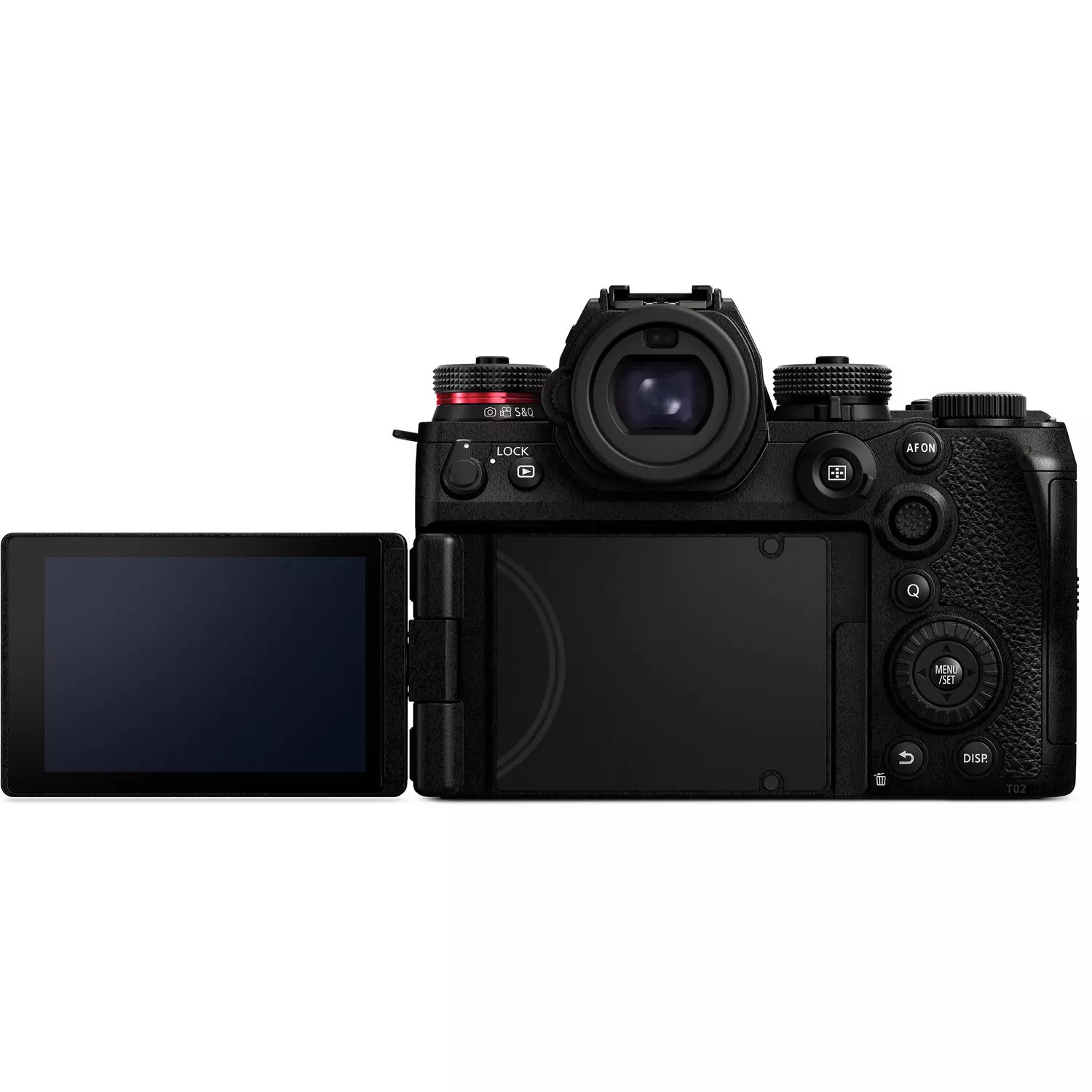
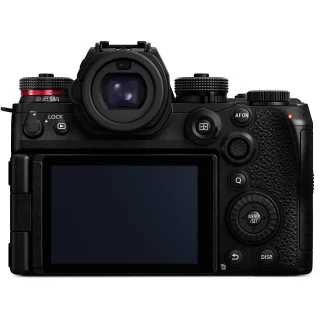
Panasonic has always made mechanically fine and durable cameras. The original S1 series was perhaps designed to be a bit heavy, and the S1R II is about 20% lighter. There have also been changes to the ergonomics, and for those accustomed to Panasonic, there is a lot of familiarity here, as well as some welcome changes.
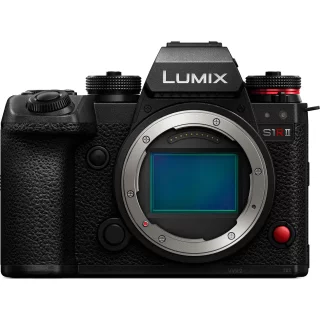
- The mechanical shutter acts as a sensor protector when the camera is closed.
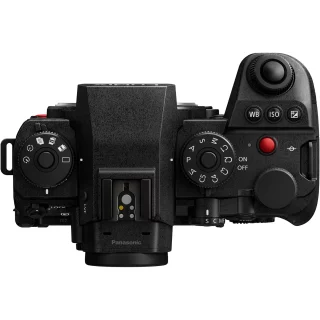
- The top adjustment wheel has moved forward - no more accidental adjustments to the shutter speed
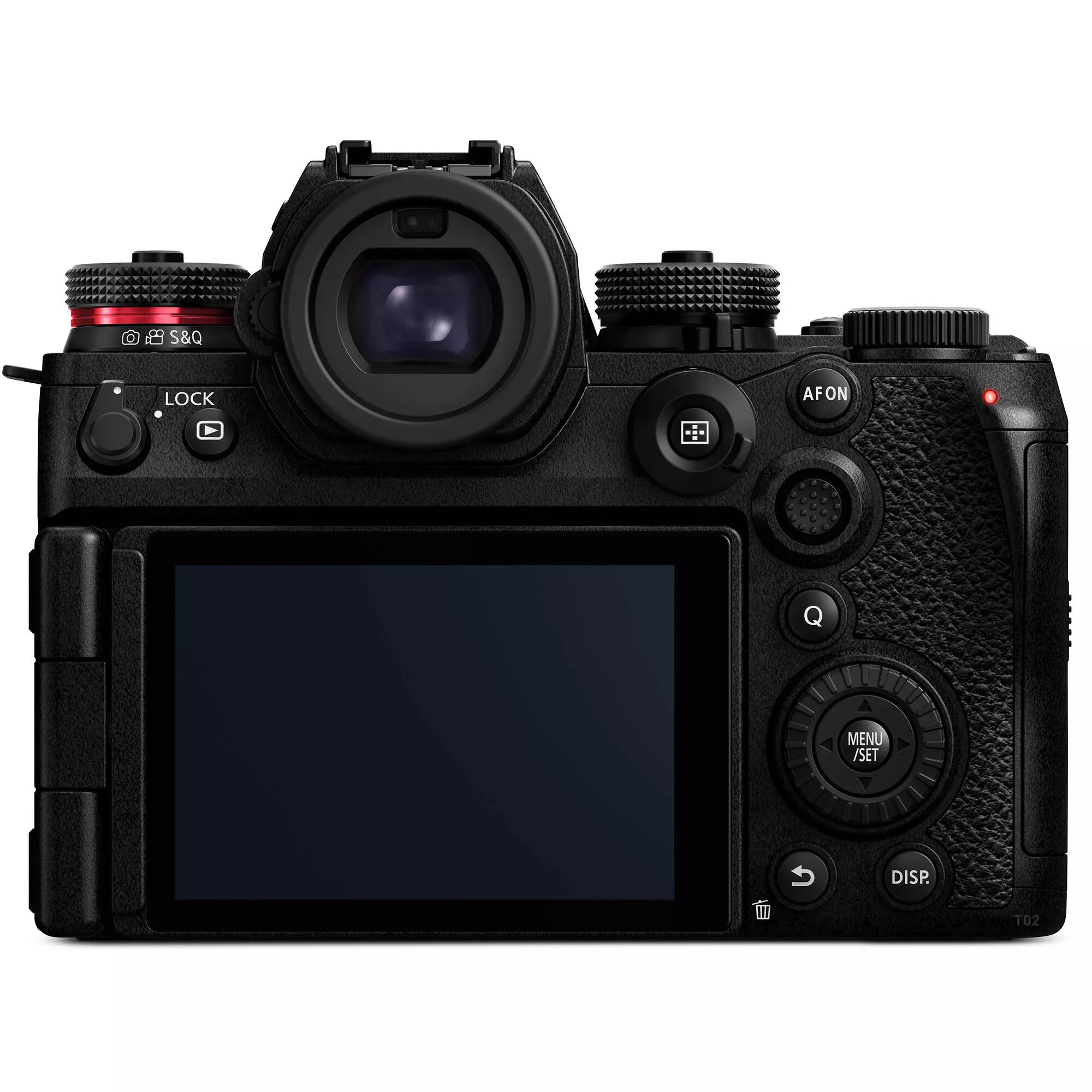
- 5.76 million dot viewfinder that displays the image continuously
- Switch between photo, video and S&Q slow-motion videos with a dedicated switch
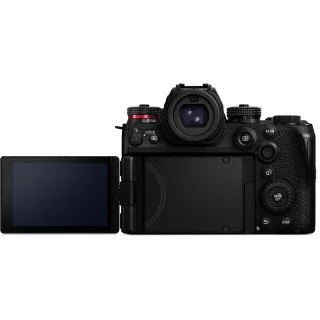
- The multi-directional folding and rotating touchscreen mechanism, familiar from the highly praised S1H model (but updated to be even better!)
Specifications:
- Lens mount: L-mount
- Full-frame 44.3 megapixel sensor
- ISO sensitivity 80-51200 (expanded 40-102400)
- Continuous shooting 10fps mechanical, 40fps electronic shutter
- Flash sync: 1/250, PC-sync connection and hot shoe
- 5-axis in-body image stabilization
- Video: 8K (16:9) 30p 10-bit, 4K 10 bit 4:2:2, larger resolutions 4:2:0
4K 60P with a small 1.1x crop, 4K 120P 1.17x and line skipped with a slight loss of quality
ProRes 422 and ProRess RAW (1.31x crop) directly to memory card or SSD
6.2K Open gate video recording, 8.1K recording coming after firmware update - Electronic viewfinder 5.76 million pixels, magnification 0.78x
- Connections: Microphone, headphone, HDMI A, USB-C. WiFI
- Battery type: DMW-BLK22, approx. 350 shots per charge (CIPA)
- 3.2 inch foldable touchscreen
- 2 memory card slots: SD and CFexpress Type B
- Size: 134.3 x 102.3 x 91.8mm
- Weight: 795g (with battery and memory card)
Featured
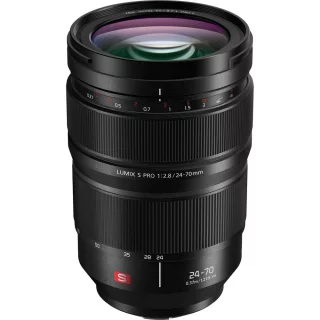
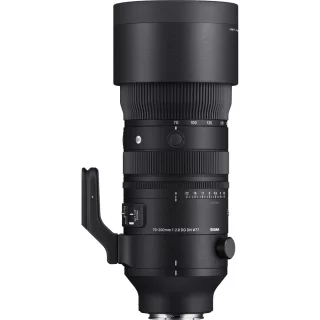
Sigma 70-200mm F2.8 DG DN OS Sports (L-Mount) lens
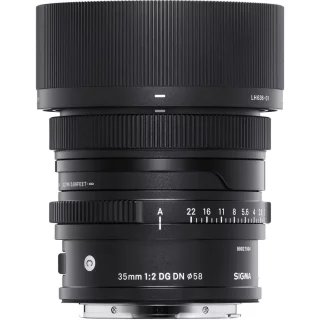
Sigma 35mm f/2 DG DN Contemporary (L-Mount) lens
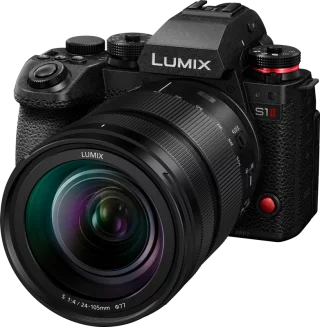
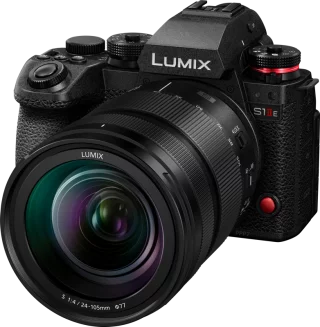
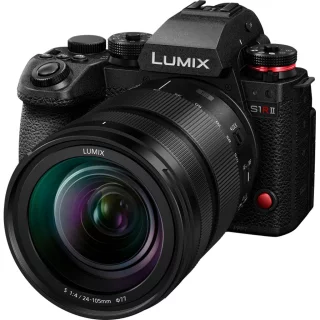
Panasonic Lumix S1 IIE + 24-105mm F4 OIS Kit
Summary of reviews
Taneli L.
- Akku ei kestä kuin ehkä reilut pari tuntia sekalaista valokuvausta ja hieman yli tunnin videota.
- Joulukuun säässä ja sisätiloissakin laite lämpenee ja tuuletin pyörii etenkin videota kuvatessa. Kuin pitelisi lämmintä kahvikuppia kaksin käsin. Kesäkuumalla toimiminen jää nähtäväksi. Testausajankohdan firmware 1. 4.
- Oman kappaleen 3,5mm mikrofoniliitännän etuaste on ehkä viallinen.
Mikin etuasteessa voi olla yksilöllinen vika tai sitten kyseessä on ominaisuus. Tallennetun äänen voimakkuus on selvästi matalampi, kuin kamera itse antaa kuvatessa ymmärtää. Äänessä on myös enemmän kohinaa kuin esim. S5 II -mallissa.
Kysymykseen etuasteen normaaliudesta ei saanut selkeää kommenttia Kameraliikkeestä. Ehkä eivät tiedä riittävästi, mutta senkin myöntäminen olisi mielestäni osa hyvää asiakaspalvelua. Panasonic customer service ei sekään ottanut etukäteen mitään kantaa, vaan varasi yksin tein laitteelle takuuhuollon Puolasta, jonne se on nyt toimitettava UPS:n välityksellä.
Lyhyen akunkeston ja lämpenemisen osalta kannattaa harkita, onko niistä liikaa haittaa omalle käytölle. Eli kuvaako pitkiä videoita tai kantaako mielellään vara-akkuja laukussa. Vastineena saa loistavaa kuvanlaatua. Mahdolliset ääniongelmatkaan eivät haittaa, jos ei mikrofoneja käyttele.
Jos etuaste huollossa korjaantuu, sanoisin, että hyvä hybridikamera 3000 eurolla (tai alle). Enempää en tästä lippulaivasta uutena maksaisi.
Ask about product

Mon-Fri 9-17 and Sat 10-14
INFO