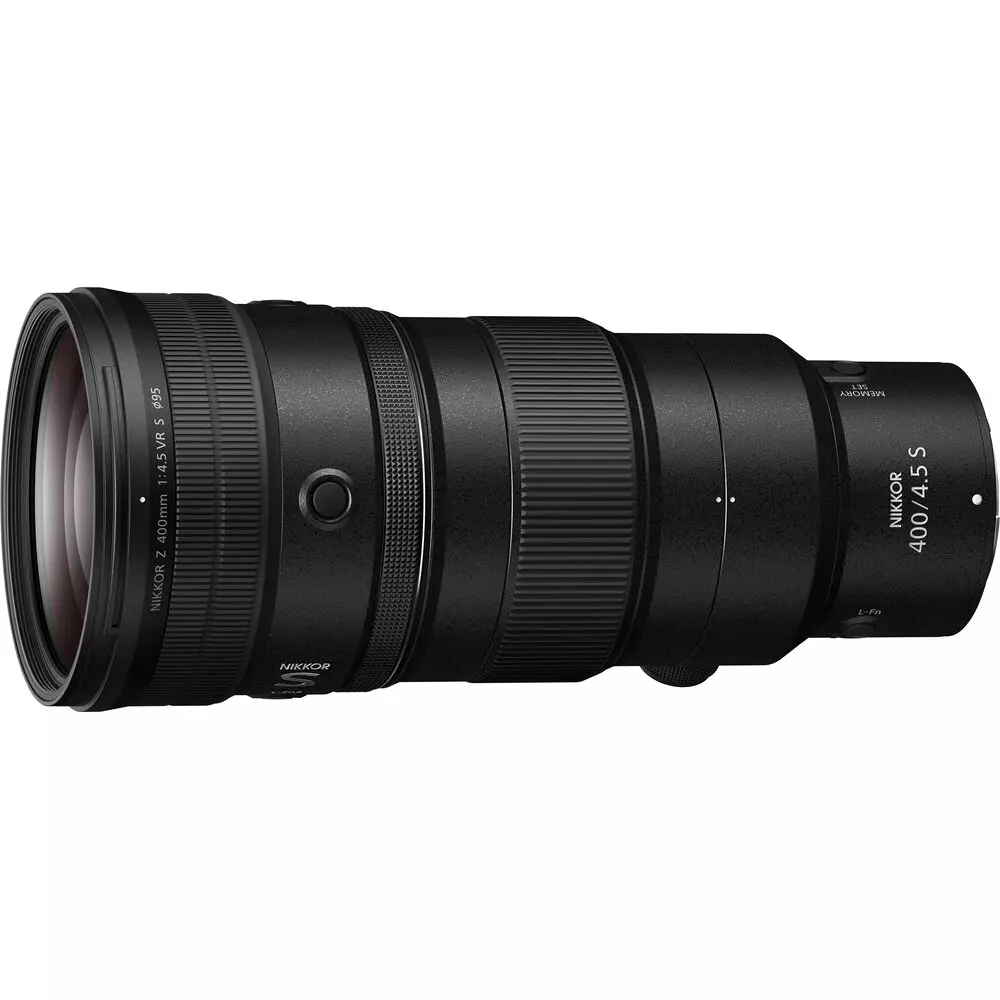
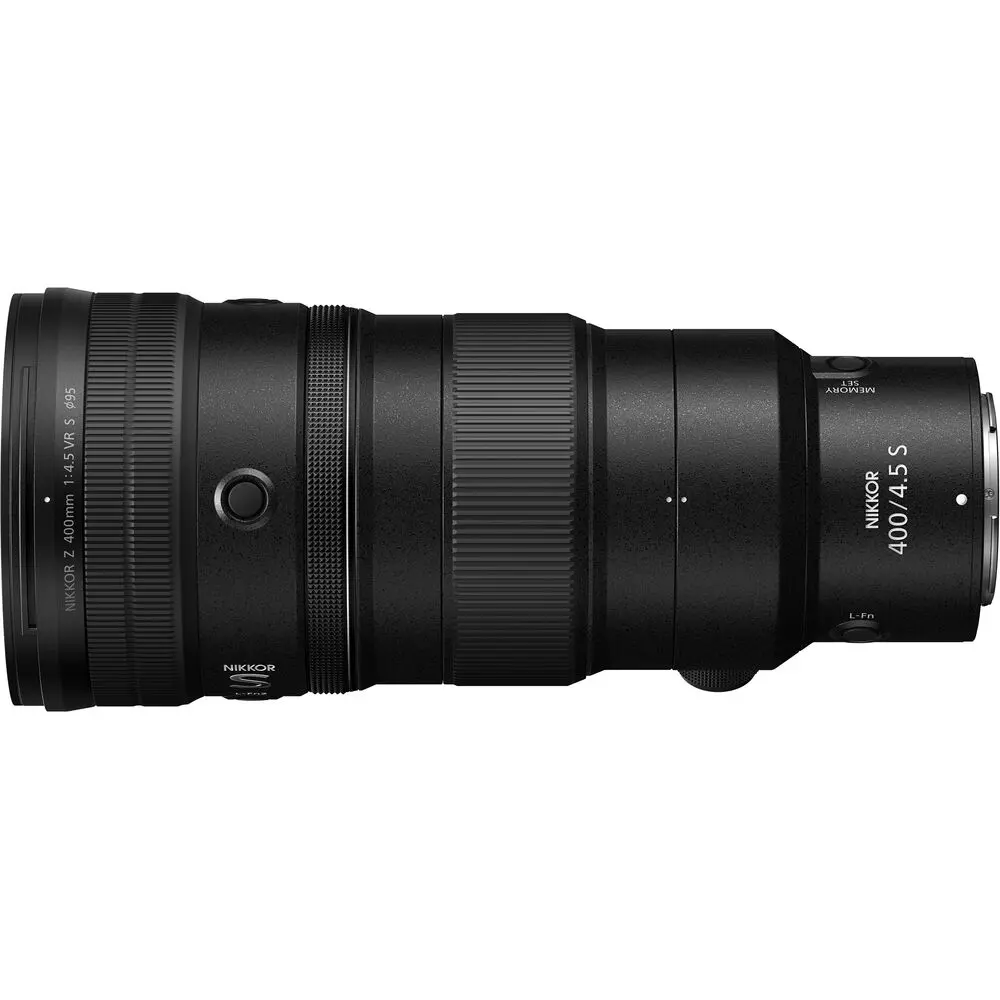
Nikon Nikkor Z 400mm f/4.5 VR S lens




Aktiiviset kampanjat

Varmasti yhteensopivat tarvikkeet
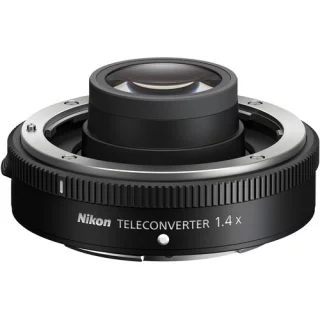
Nikon Z Teleconverter TC-1.4x teleconverter

Nikon Z Teleconverter TC-2x -telejatke
NiSi Filter Protector Pro Nano Huc 105mm protective filter
NiSi Filter Circular Polarizer True Color Pro Nano 95mm -polarisaatiosuodin
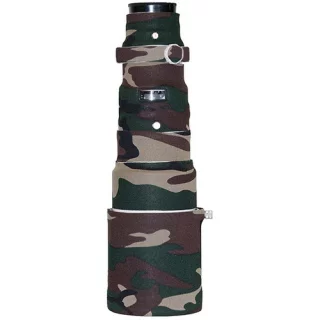
LensCoat Lens Cover -Camouflage suoja (Nikon Z 400mm F4.5 VR) - Forest Green

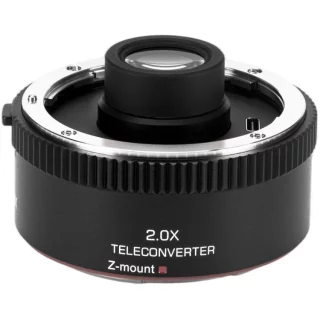
Viltrox TC-2.0x Teleconverter (Nikon Z)
Nikon Nikkor Z 400mm f/4.5 VR S super tele
With a super telephoto focal length of 400mm, a maximum aperture of F4.5, a length of 23cm and a weight of only 1.25kg, this is the beginning of a recipe for success. Add to that a very competitive price tag and uncompromising image quality and you'll understand why this is a popular tube!
The new Nikon Z 400mm F4.5 is the manufacturer's lightest and smallest super telephoto lens, and it is ideal for sports and wildlife photography that require quick response - even handheld. More versatility can be achieved by combining it with a teleconverter, and focusing also works with Nikon mirrorless systems with the more powerful 2x teleconverter.
- Image stabilization: 5.5 stops of power and, for example, with the Z9's in-body stabilization, a combined 6 stops of power
- Weight 1245 grams (1160g without tripod collar) and length 23cm
- All the latest coatings and a completely new optical structure
- Closest focusing distance 2.5m
- Programmable control ring for example, exposure adjustment directly from the lens
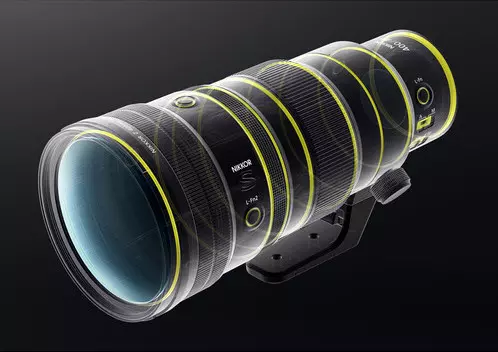
- L-FN programmable buttons, e.g. focus distance storage
- Weatherproof construction
New lens design and technology
New compact Nikon super telephoto lenses have often been built with PF (Phase Fresnel) technology, but this Nikkor 400mm is a more traditional lens design. Apparently, the F4.5 aperture and other design solutions have made this PF-style size possible.
It would seem that F4.5 is a very good choice, a slight deviation from the traditional 4x aperture has resulted in a smaller size without compromising image quality. And the difference of half an aperture value is not even a noticeable difference with the sensors in the new Nikon bodies.
But otherwise, this optics is not traditional in any way, this is a completely new design for Nikon Z mirrorless cameras. It uses Nikon's most modern lens technology, such as Super ED aberration-correcting lenses and an SR lens element. This special lens reduces chromatic aberration that occurs at certain wavelengths, which would be more difficult to remove in post-processing.
Handheld shooting is also aided by a 5.5-stop effective stabilizer that also works in conjunction with the in-body stabilizer of certain cameras, such as the Nikon Z9. This double stabilization has a total of 6 stops of effect.
Autofocus and video recording
The Nikon 400mm S features two separate stepping motors that drive two separate focusing elements. The autofocus is fast and is also useful when shooting video. The lens has a minimum focusing distance of 2.5 meters and a focus range limiter is also available.
Additionally, Nikon's focus breathing reduction technology and smooth aperture control help with video recording, meaning high-quality video even when the focus distance and lighting change.
You can start focusing correction at any time, just turn the focus ring.
Usability of a professional lens
Image quality is, like other Nikon professional telephoto lenses, nearly flawless. The MFT curves show excellent sharpness at full aperture across the entire image area, and other distortions and errors are also minimized.
On the other hand, image quality is the minimum requirement for lenses of this level. Taking memorable images requires skill and patience. And when a unique situation arises, the usability of the equipment is an important part. Do your fingers hit the right spot in the dark and cold, do you need to stop shooting in the rain, or is the weather protection in order? According to Nikon's tradition, the photographer's perspective has been the most important starting point in the design work.
The lens has a programmable focus ring, with the default setting it handles manual focus, but the same ring can also be used to change the aperture value or correct exposure. There are also programmable L-Fn keys. These can be programmed to, for example, the location of a bird's nest or the distance to a football goal, so that in the event of a situation, the correct focus is just one press away.
In addition, most of the lens elements and the focus motor are located at the rear of the lens. This makes the lens' center of gravity optimal for handheld shooting, i.e., ideally in the hand that supports it. This makes even fast movements and tracking a fast-moving subject such as a flying bird easier and more accurate.
The Nikon 400mm F4.5 is compatible with Nikon's TC-1.4x and TC-2.0x teleconverters, meaning it can be converted to a 560mm F/6.3 or 800mm f/9 lens if necessary.
The lens is weather and dust-resistant in several places, and the outer lens element is coated with a fluoride coating that repels dirt and makes cleaning easier. In addition, the filter thread is a reasonable size of 95mm, so the use of protective filters and polarizing filters is easy.
Specifications:
- Compatibility: Nikon Z mount
- Focal length: 400mm
- Aperture: F4.5 (minimum F32)
- Closest focusing distance: 2.5m (maximum magnification 0.16X)
- Optical construction: 19 elements in 13 groups, 9 rounded diaphragm blades
- Image stabilizer: yes
- Adjustable and removable tripod collar
- Filter thread: 95mm
- Size: 104 x 234.5mm
- Weight: 1245g
- Nikon NIKKOR Z 400mm f/4.5 VR S lens
- Nikon LC-95B 95mm Snap-On Front Lens Cap
- Nikon LF-N1 Rear Lens Cap
- Nikon HB-105 Lens Hood
- Nikon CL-C5 Lens Case
- Tripod Foot


Osta myös
Nikon Z Teleconverter TC-1.4x teleconverter
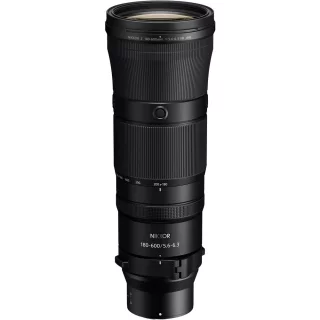
Nikon Nikkor Z 180-600mm f/5.6-6.3 VR lens

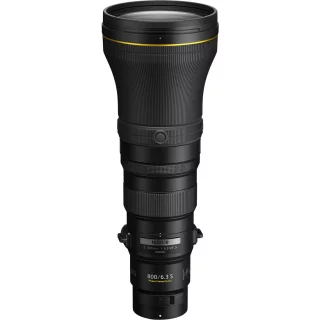
Nikon Nikkor Z 800mm f/6.3 VR S lens
Arvostelujen yhteenveto
Kysy tuotteesta

ma-pe 9-17 ja la 10-14