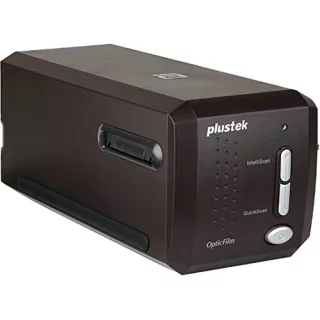
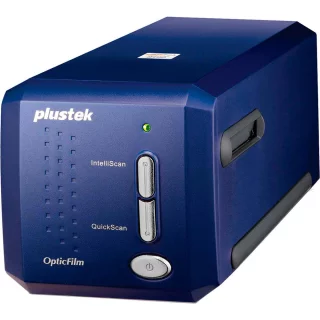
Plustek OpticFilm 135i film scanner

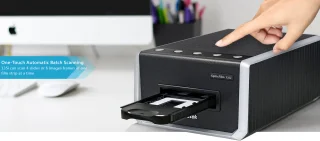

Load a film strip or four slides and let the scanner do the rest. New optics, infrared dust removal, and half-cinema and panoramic support.

Subscribe to availability notification, and you’ll receive an email as soon as the product is available again.
Plustek OpticFilm 135i film scanner
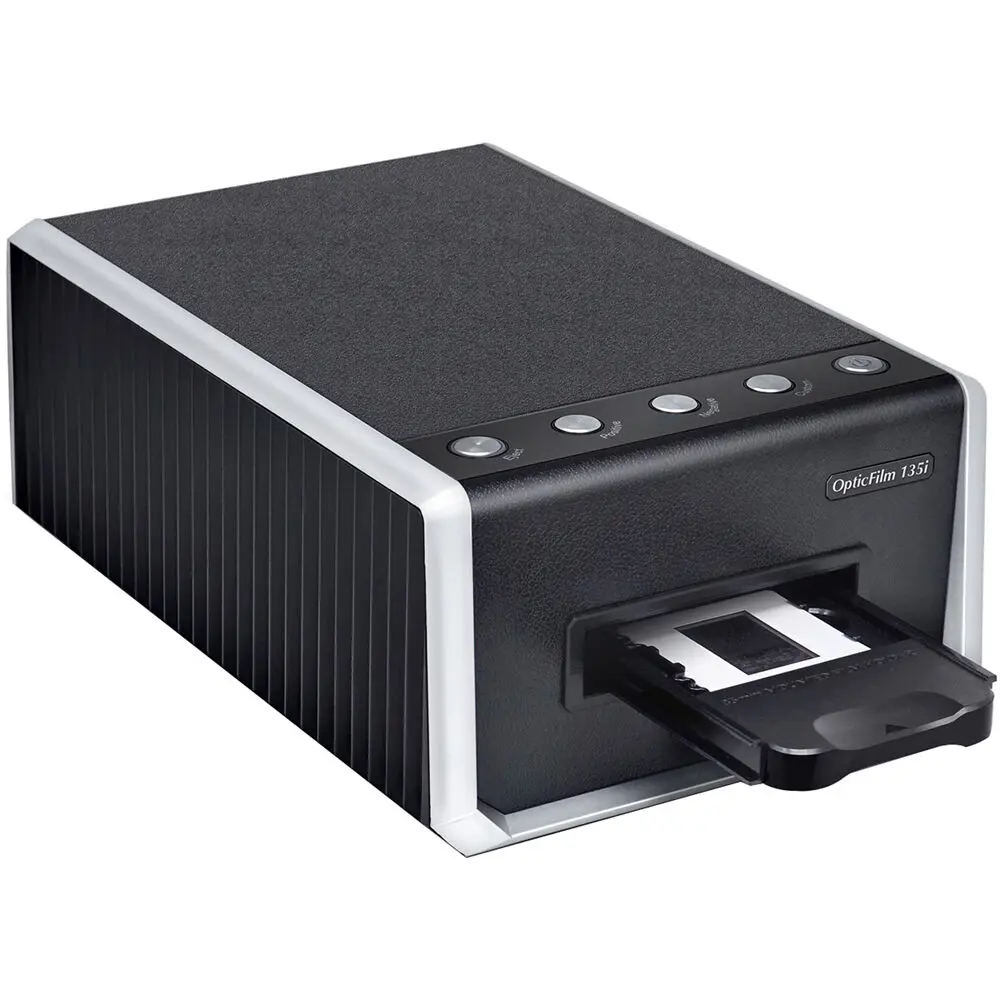
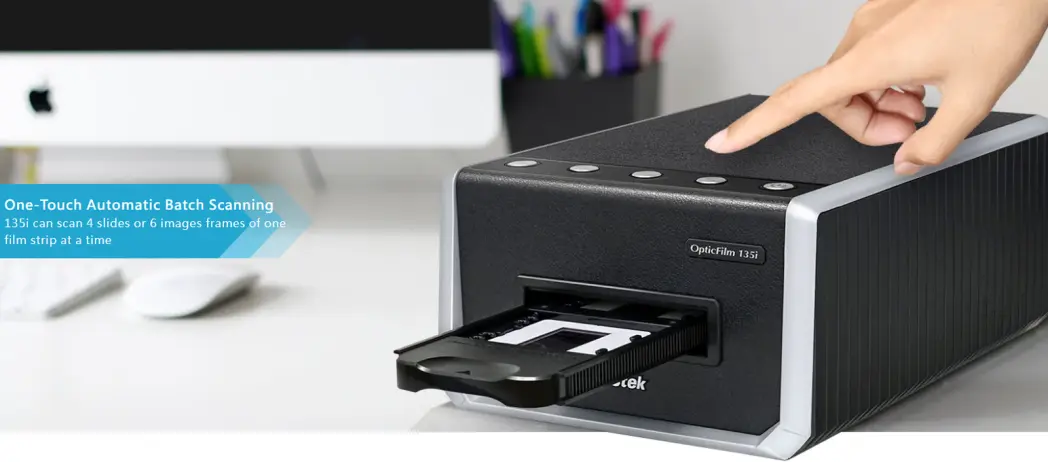
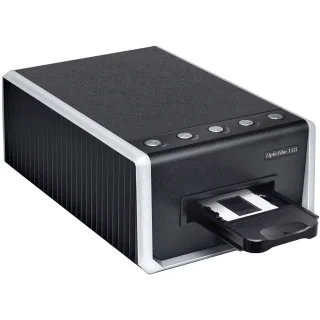
The Plustek OpticFilm 135i is a film scanner for those who have a large number of negatives or slides to scan or who don't want to sit next to the scanner all the time. In Plustek's other models, the holder is manually moved frame by frame. In the 135i, a motor pulls in the entire holder and scans the frames one after the other.
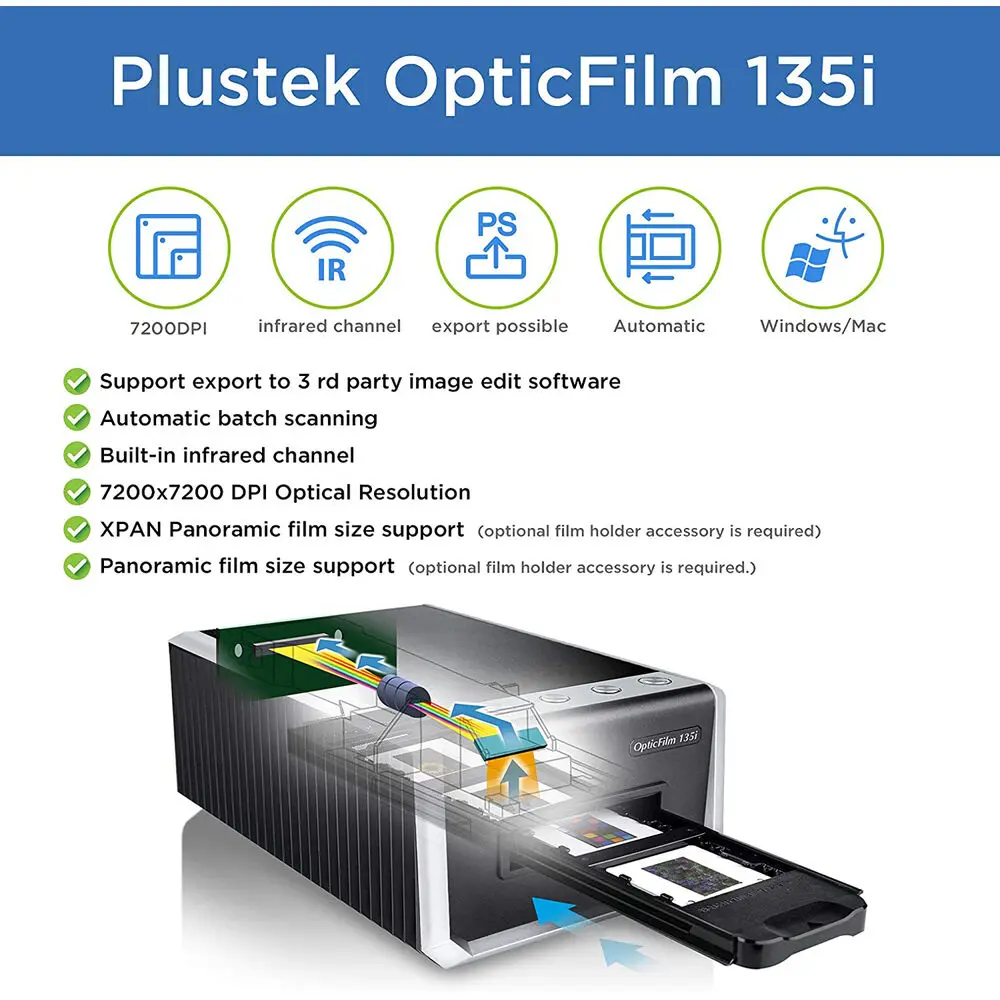
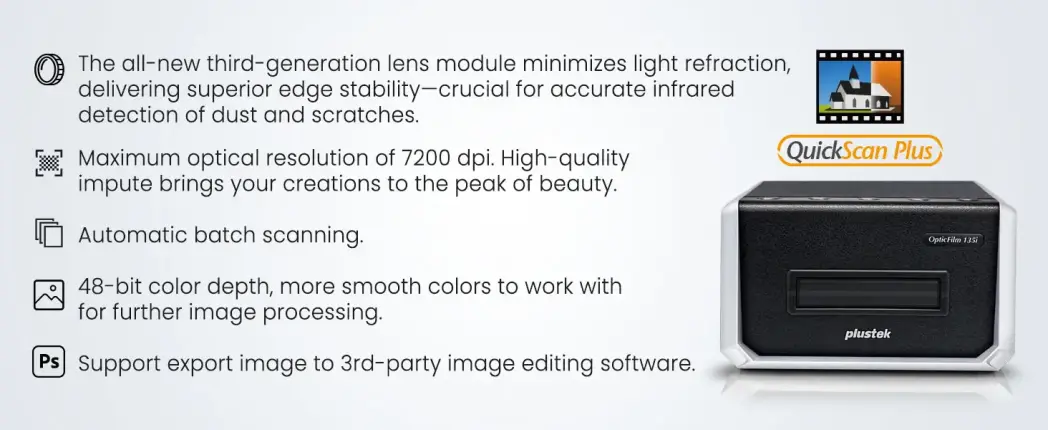
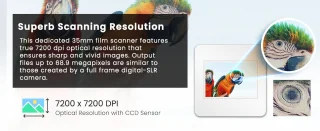
The model name already has a long history, and this third version, released in 2025, has been given a revamped five-element optics. It also features Plustek's familiar 7200 dpi CCD technology and an infrared channel for dust removal.
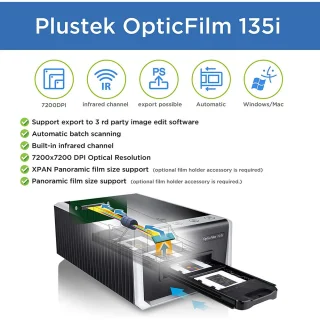
- Automatic serial scanning: six-frame film strip or four slides with one touch
- New five-element aspherical optics for improved sharpness at the edges of the image
- Support for half-length films and also for panoramic film with separately available holders
- Infrared channel for dust and scratch removal
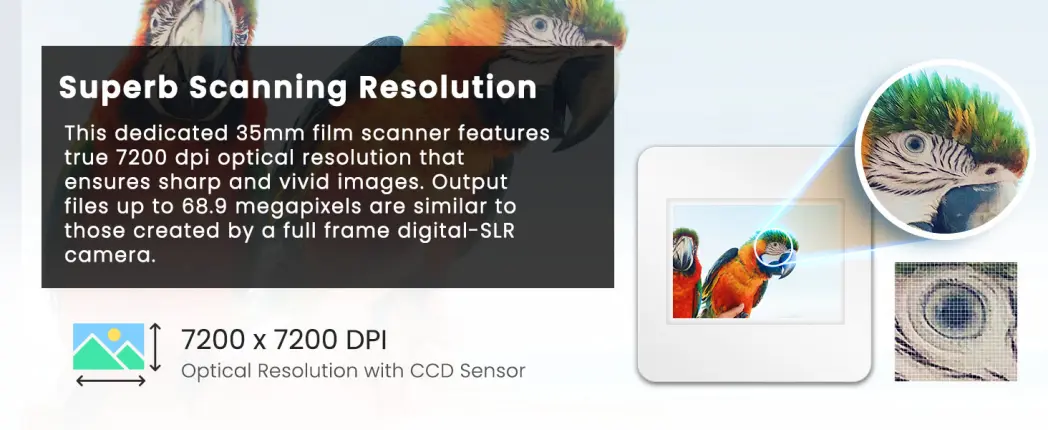
- 7200 dpi resolution , or approximately 69 megapixel file from a film screen
Set and forget: Scanning times can easily multiply when dust removal and high resolution are used. With a manual feed scanner, this means sitting next to the machine, but with the 135i, you can simply load the holder, press a button, and do something else in the meantime. For large archiving projects, this is the 135i’s biggest advantage.
Motorized feed and sturdy holders
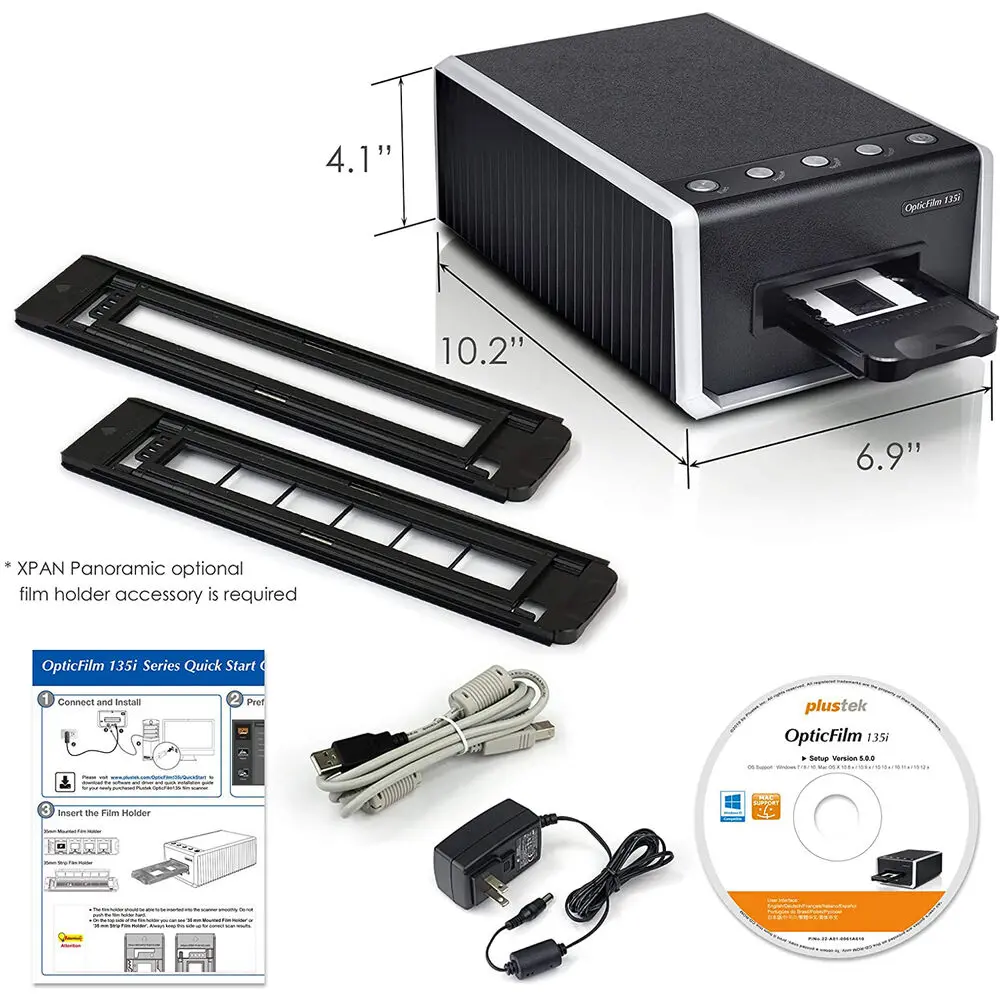
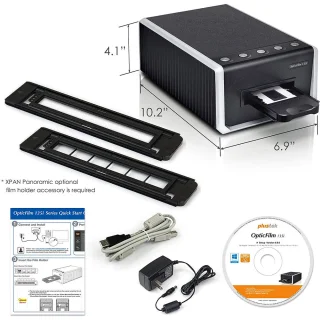
The film is loaded into the holder, and the holder is inserted into the scanner. The six-frame strip and four framed slides have their own holders, and they are included in the sales package. The holders are high-quality and sturdy, and the magnetic attachment keeps even curled film straight during scanning. Straightness directly affects sharpness.
The scanner has dedicated buttons for positives, negatives, custom settings, and holder output. This means you can start a serial scan directly from the device.
Half-length and panoramic images
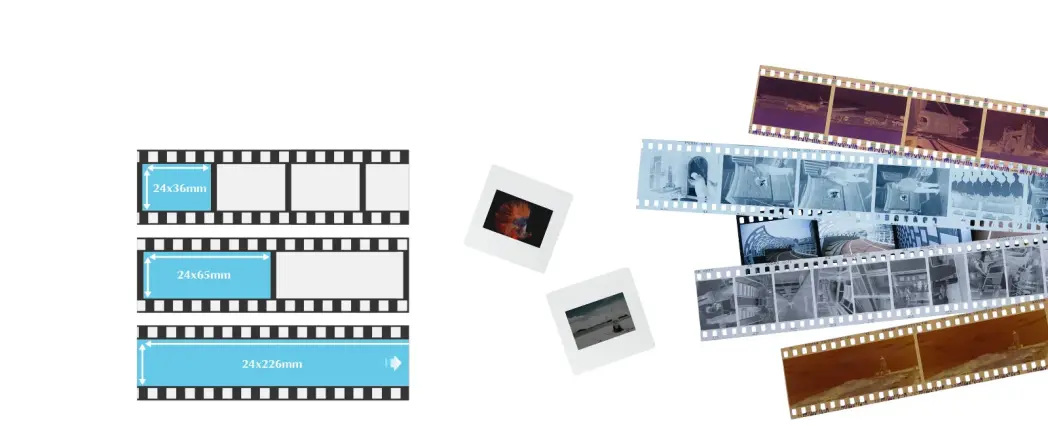
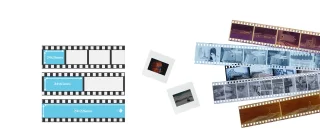
The 135i is one of the few film scanners available today that directly supports other than standard film frames. Half-film frames are scanned with a standard holder, so films from cameras such as the Olympus Pen and Kodak Ektar H35 can be scanned as is. Separate holders are available for panoramic films: a shorter one for XPan-type 24x65 mm frames and a longer one up to 226 mm wide. This means that the scanner can also read wide panoramic frames as a single image without having to combine the images afterwards.
Revised optics
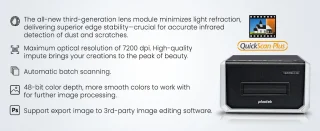
The latest 135i, released in 2025, features Plustek's third-generation lens module. It features five elements and aspherical surfaces. The structure reduces refractive errors, so sharpness remains more consistent right up to the edges of the image field, and edge distortion and softness are reduced.
This is also useful for dust removal: when the infrared image is accurate even at the edges, dust and scratches are identified more reliably there. When comparing a used 135i or an older OpticFilm 135, it is worth noting that the optics have been updated in this version.
The difference to older Plustek models, such as the OpticFilm 8300i, is not dramatic, however. Practical resolution is around 3200–4000 dpi in both, so around 4000–5000 dpi is usually a good compromise between quality, scan time and file size. The full 7200 dpi is worth saving for the best images and large prints.
Dust removal and software
The scanner's infrared channel works on the same principle as other Plustek film scanners. In addition to the regular color image, a separate infrared scan is performed, which sees only dust and scratches, and only their areas are corrected. As with other infrared dust removal systems, this does not work with traditional silver-based black and white films or Kodachrome slides.
Plustek's own QuickScan Plus is included, which is very suitable for fast digitization and archiving. However, its dust removal and adjustment options are basic, and dust removal may leave color errors and noise. Note: SilverFast is not included in the sales package. For more demanding use, we recommend purchasing SilverFast 9 or VueScan software separately. With them, dust removal is as effective as with SilverFast's iSRD in the 8300i model, and you can also use film profiles for negatives and Multi-Exposure for dark slides.
135i or 8300i SE?
Both are good cine film scanners, and the choice depends mostly on how much you have to scan. The OpticFilm 8300i SE comes with SilverFast SE Plus 9, and has a slightly larger dynamic range, but you have to move the frames manually. The 135i's strengths are automatic sequential scanning, newer optics, and half-cine and panoramic support. If you have a lot of film or are scanning panoramas, the 135i will save you the most time.
Specifications:
- Type: Film scanner for 35 mm film strips and framed slides, motorized feed
- Version: Third generation, released 2025
- Sensor: CCD
- Light source: LED
- Optics: Five-element aspherical lens structure
- Optical resolution: 7200 dpi (approx. 69 megapixel file)
- Dynamic range: 3.4
- Color depth: 48-bit input, 24/48-bit output
- Grayscale: 16-bit input, 8/16-bit output
- Infrared channel: Yes
- Capacity: 6-frame film strip or 4 framed slides
- Supported image sizes: Cinema screen, half-cinema, panorama up to 226 mm (with additional holder)
- Scanning time entire holder, infrared: approx. 52 s (600 dpi), approx. 6 min (3600 dpi), approx. 25 min (7200 dpi)
- Buttons: Positive, Negative, Custom and Clip Out
- Interface: USB 2.0
- Operating systems: Windows 7–11 (64-bit), macOS 10.10 or later (including Apple Silicon)
- Computer requirements: Intel i5 or faster, 8 GB memory (16 GB recommended), 20 GB disk space
- Software: Plustek QuickScan Plus
- Dimensions: approx. 175 x 259 x 104 mm
- Weight: approx. 1.6 kg
The sales package includes:
- Plustek OpticFilm 135i film scanner
- Film holder for 35 mm film strips (also half-length film)
- Slide holder for four framed slides
- Power supply and USB cable
- Plustek QuickScan Plus software
Featured

Summary of reviews
Ask about product

Mon-Fri 9-17 and Sat 10-14
INFO

