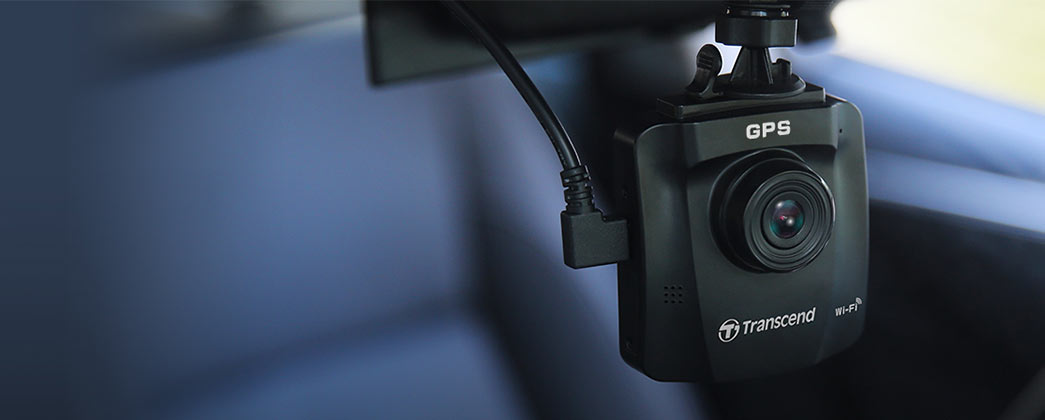
Find the right dash cam for your car
Various car cameras have become considerably more popular in recent years - some are attracted to recording road trips and others want a dash cam for safety reasons.
A camera mounted on the windshield or dashboard impartially records all events that occur on the road, and if you are involved in an unexpected crash, you will have valuable evidence at your disposal if necessary.
Dash cams are designed to require little attention from the driver while driving. Equipped with a wide-angle lens, the device captures and records moving video completely independently of everything in front of it. The camera starts automatically as soon as the power is turned on and when you start driving, and turns off when the car's power is turned off.
Dash cam features include the following:
- Single camera, or front and rear camera
- Internal battery or capacitor
- Loop recording
- Accelerometer
- Parking attendant
- GPS
- Wifi
- Mobile network
- Scheduled restart

What is a dash cam/car camera?
A dash cam (car camera, windshield camera, eng. Dash Cam) is, as its name suggests, a small camera mounted on the windshield or dashboard of a car, whose purpose is to record video events while driving. The camera is directed outward from the car window and records traffic events. A dash cam does not require any attention from the driver, but the device works independently.
How to mount and connect a dashboard camera to a car?
Installing a dash cam is easy. The dash cam is attached to the car using the suction cup mount or adhesive tape that comes with it. The power supply for dash cams is designed to be taken from the car's cigarette lighter socket. The cigarette lighter usually supplies power to the dash cam when the car's ignition is on. Some dash cams come with a separate additional battery or wiring kit that can be used to connect the dash cam to the car's fuse box. In this case, the dash cam receives power even when the vehicle is turned off, and the dash cam acts as a surveillance camera for the car when it is parked.
Single or dual camera model
Most dashcams are designed to be mounted on the windshield, recording what is happening in front of the car. These dashcams are single-camera or “1-channel” dashcams, and this is the most common type of dashcam.
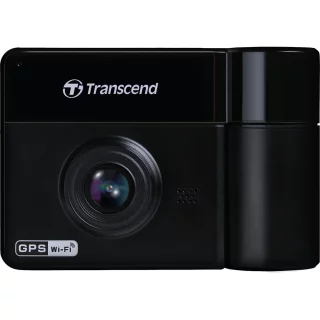
If you want to record what is happening at the back of the car or inside the car in addition to what is happening at the front, dual-lens (“2-channel”) dash cams are the right choice. Typically, dual-channel dash cams record images from the front and back of the car simultaneously.
With internal battery or capacitor
Almost every dash cam is powered by the car's cigarette lighter (12V). The cameras also need some power to save the recorded file when the car's power supply is cut off - whether it is cut off as planned by turning off the car with the ignition key or in a crash. For this purpose, car cams contain either a capacitor or a battery. The purpose of these is not to supply power to the car cam in the same way as, for example, a battery for a digital camera, but rather they are intended only as a short-term backup power source for unexpected situations.
Batteries and capacitors have their own advantages and disadvantages.
+ Capacitors are more heat resistant and therefore suitable for extreme temperatures.
+ Capacitors are also more reliable and have a longer lifespan than batteries.
- Condenser cameras are slightly more expensive
- Capacitors hold significantly less current than batteries (but enough to save the video file when the power goes out)
+ Batteries hold up to 5-10 times more current than capacitors
+ With a battery-powered dash cam, you can record for a moment without the camera being connected to the car's cigarette lighter (e.g. in the event of a crash, you can record the car from the outside)
- Batteries overheat more easily
- Batteries have a shorter lifespan
Image quality
Image quality is the first priority when choosing a dash cam. If the image is blurry, dark, or otherwise unclear, it will not be a pleasure to look at afterwards, and it will probably not be suitable as evidence if such a situation arises.
The image quality of dash cams varies from HD to 4K UHD depending on the model. The differences between the cameras are small in good and clear weather, but the quality differences become large when the lighting conditions and weather are poor, i.e. if it is a gray cloudy day, night and street lighting. In Finland, there is a lot of darkness and grayness, so the image quality requirements are more important here.
The cameras in our range are generally at least FullHD (1080p) quality, which is sufficient for many situations. The advantages of high-definition images are that they clearly distinguish license plates, road signs, etc. details.
The best dashcams feature the Sony STARVIS™ CMOS image sensor, which is the highest quality ever seen in a car camera. The Starvis image sensor produces sharp and clear images in daylight, as well as when driving at night and in Parking Assist mode in the dark.
Loop Recording
All dashcams store their footage on a separate memory card. As such, the device has a limited amount of memory for video recording. Loop recording is the solution to this.
When loop recording is on, the dash cam records video in short bursts, usually 3 or 5 minutes long. When the memory card is full, the dash cam automatically deletes the oldest video file to make room for the new one. So you can be sure that your movements are recorded on the memory card.
Accelerometer - G-Sensor
Car cameras are usually equipped with a G-sensor, which allows the dash cam to lock the currently recorded video file, for example, to prevent it from being accidentally overwritten or deleted. Many cameras allow you to adjust the sensitivity of the acceleration sensor, i.e. how much movement (e.g. sudden braking or acceleration) activates the lock.
The G-Sensor is also a necessary feature when using the parking sensor feature. Read about it below.
Parking attendant feature - Parkin Mode
Parking monitor is a function that allows the camera to be ready to record when the car is parked. A car camera equipped with a motion sensor then acts a bit like a surveillance camera for the car.
The dash cam with parking mode is designed to go into sleep mode when the vehicle is parked. While in sleep mode, the dash cam is alert and tracks movement, but at this point the camera is not yet recording anything to the memory card.
A parking attendant can work in a few different ways.
- Motion and shock detection: When the dash cam detects motion or a shock/knock, the camera "wakes up" from sleep mode and starts recording. The dash cam's image sensor detects motion. The accelerometer, in turn, detects knocks and shocks.
- Time-Lapse: Time-lapse captures images at a rate of 1fps, or 1 frame per second. Each 1-minute Time-Lapse video covers a 30-minute period in the park.
GPS
Depending on the dash cam model, some have a built-in GPS antenna and others have one available as an accessory. The GPS records the vehicle's speed and location. Depending on the model, you can view this information directly on the dash cam screen or with the help of software that you install on your computer.
5Hz / 10Hz GPS
The Hz number tells you how many times per second the GPS updates - 5Hz = 5 times per second and 10Hz = 10 times per second. For dash cams, the GPS update rate is not that important unless you want better accuracy at high speeds.
WIFI
Wifi allows you to connect your dash cam to your smart device. Depending on the device model, you can use the wireless connection to view and back up videos/photos stored on the device, adjust device settings, update firmware, etc.
BlackVue dash cams are currently the only dash cams that connect to a Wifi hotspot (i.e. when you share an internet connection with your mobile phone) and allow access to the device over the internet. This way, you can monitor the dash cam videos and the car's movement from the other side of the world.
Mobile network (4G)
Blackvue's latest dash cams come with a separately purchased mobile device that enables mobile network connectivity (you will also need a separate mobile subscription).
A 4G connection brings peace of mind. Finland has 4G/3G coverage that covers almost the entire country, so the dash cam will almost certainly stay connected to the network at all times.
What is a mobile network needed for?
In traditional dash cam use, there is no need for a mobile network. However, the mobile network allows you to connect the dash cam to a cloud service. For example, Blackvue cameras support cloud services, which makes it possible to save important video files. You can also monitor the car's movements remotely, and remotely check that the car is still parked.
Scheduled restart
Timed restart is a feature that prevents recording problems that may occur when the camera is left running for long periods. Restarting clears the camera's buffer memory, BUT does not destroy video files stored on the memory card. Timed restart usually only starts in parking attendant mode and is set to run in the middle of the night by default.
Memory stick
Dash cams do not have internal memory, meaning that recording is done on a separate memory card. As a rule, every dash cam has a slot for a microSD memory card.
Still wondering which dash cam is right for you?
Contact our expert customer service.



Mon-Fri 9-17 and Sat 10-14
INFO