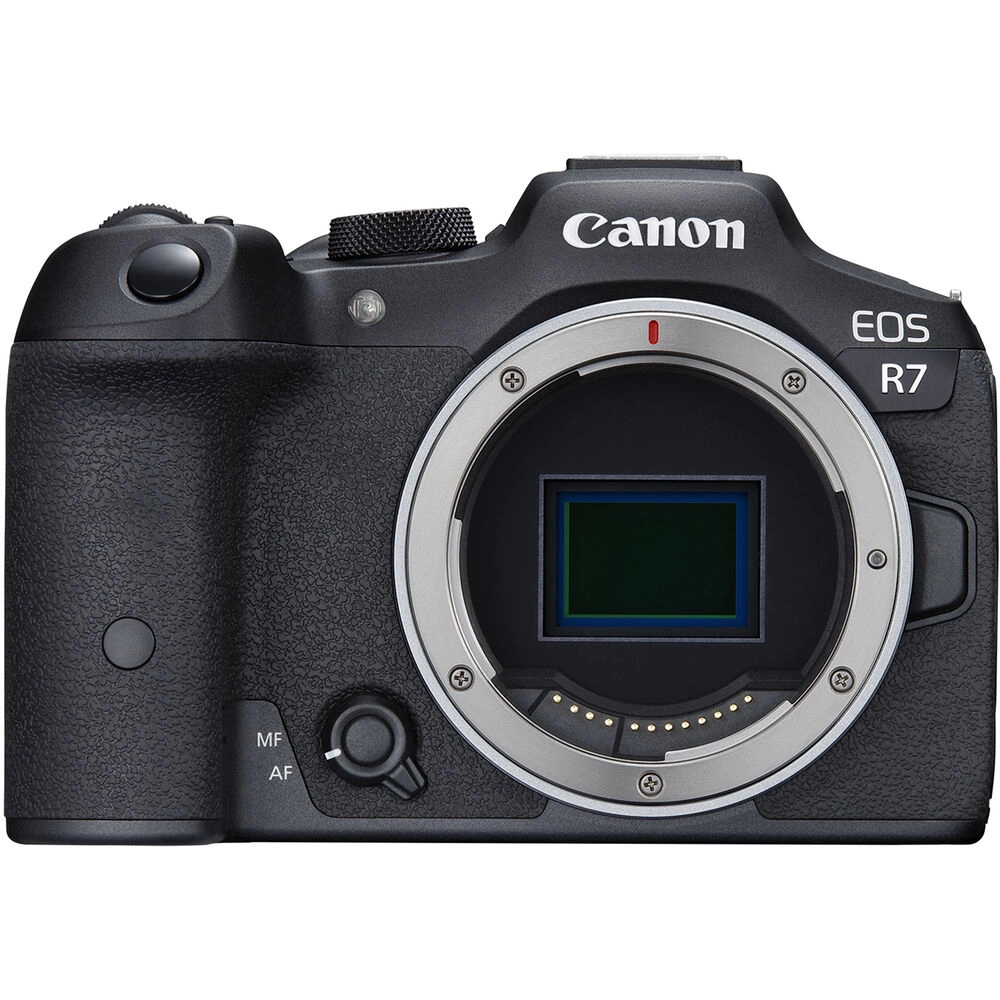
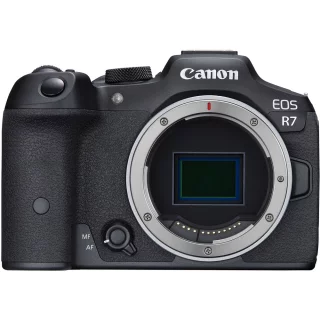
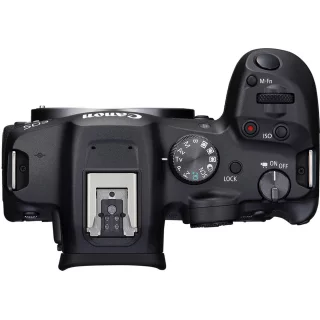
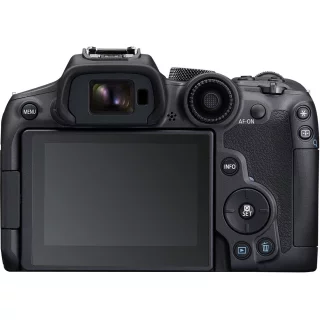
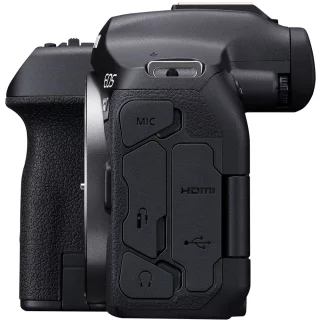
Canon EOS R7 body




Bundle Deal
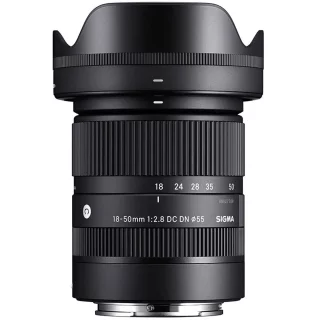
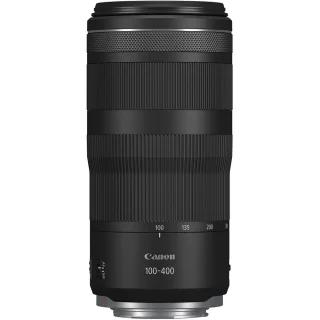

Compatible accessories

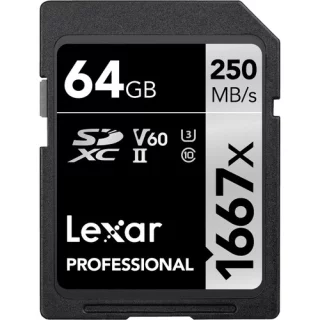
Lexar Professional 64GB SDXC UHS-II (1667x, 250Mb/s)
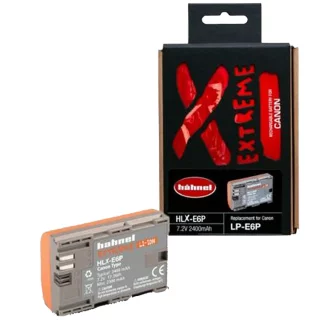
Hähnel Extreme HLX-E6P (Canon LP-E6P) battery
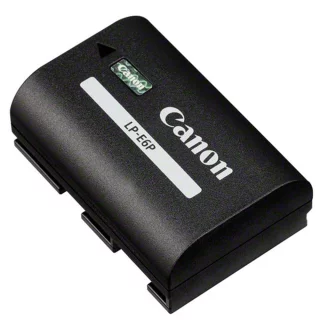
Canon LP-E6P battery
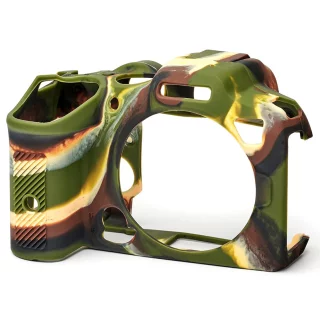
easyCover Camera Case for Canon EOS R7 (Camo)
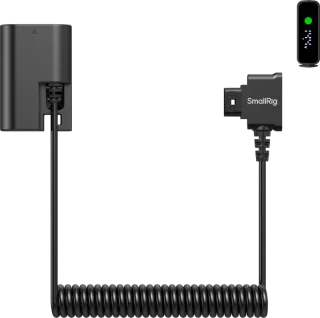
Canon EOS R7 body
The Canon EOS R7 is like a mini-championship! If the EOS 7D Mark II and EOS R5 evoke warm feelings, you will definitely be excited about this new camera. This APS-C-sized sensor camera is perfect for a professional photographer as a second camera, and for demanding enthusiasts, it is a great tool for sports and nature photography, now also for video shooting.
If you're shooting distant subjects, 33 megapixels and a 1.6 crop factor are definitely an attractive combination!
- Dual Pixel CMOS AF II autofocus
- Internal image stabilization and up to 8 stops of stabilization
- APS-C size 33 megapixel image sensor
- Continuous shooting 15fps (mechanical shutter), 30fps (electronic)
- 4K 30P video recording is created from 7K footage
- Continuous video recording (i.e. no 30 min limit)
- LP-E6NH battery
- Starts up quickly - always ready
- HEIF compressed HDR photos
- Two SDXC UHS-II memory card slots
- Weatherproof construction
Ultimate APS-C
Ultimate APS-C - These are the words Canon used to describe this new camera. This is a top model tuned for a smaller sensor size. As you can see from the feature list, this has a kick in terms of burst shooting for even the most demanding nature photographers.
The autofocus is based on the Canon EOS R3 top model, meaning it uses Dual Pixel CMOS AF II. This means it includes face detection, animal eye detection, and now also vehicle detection and automatic tracking. Selecting the subject to focus on can be done conveniently directly with the joystick. In addition to speed, this Dual Pixel AF II is also praised for its ease of use, meaning you don't have to adjust it differently for each situation, but the focus works reliably and naturally.
The sensor-shifting IBIS image stabilization system has also been borrowed from Canon's top models. The EOS R10's image stabilization is also among the best on the market and also works in conjunction with lens stabilizers. The CIPA standard for image stabilization is up to 8 stops (depending on the lens).
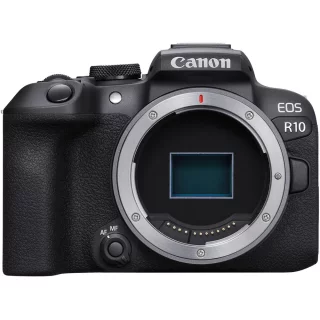
Continuous shooting is possible with a mechanical shutter at a speed of 15 frames/s and with an electronic shutter at 30 frames/s. During continuous shooting, the camera also meters exposure and performs intermediate focusing. If continuous shooting is important, it is worth choosing this EOS R7 sister model instead of the R10, as the buffer cache size is clearly larger. The EOS R7 records about 100 raw images at a 15FPS setting and 65 images at a 30FPS setting before taking a break, the EOS R10 falls short of these readings by about a third.
Usability
After shooting, when you close the camera, a shutter will be placed in front of the sensor in the same way as on the EOS R6 and R5. This provides protection for the shutter and reduces dust from getting onto the sensor when changing lenses.
In addition to just continuous shooting, the camera's speed has been designed comprehensively and, for example, the camera also starts up from a closed state and is ready to shoot faster than previous models!
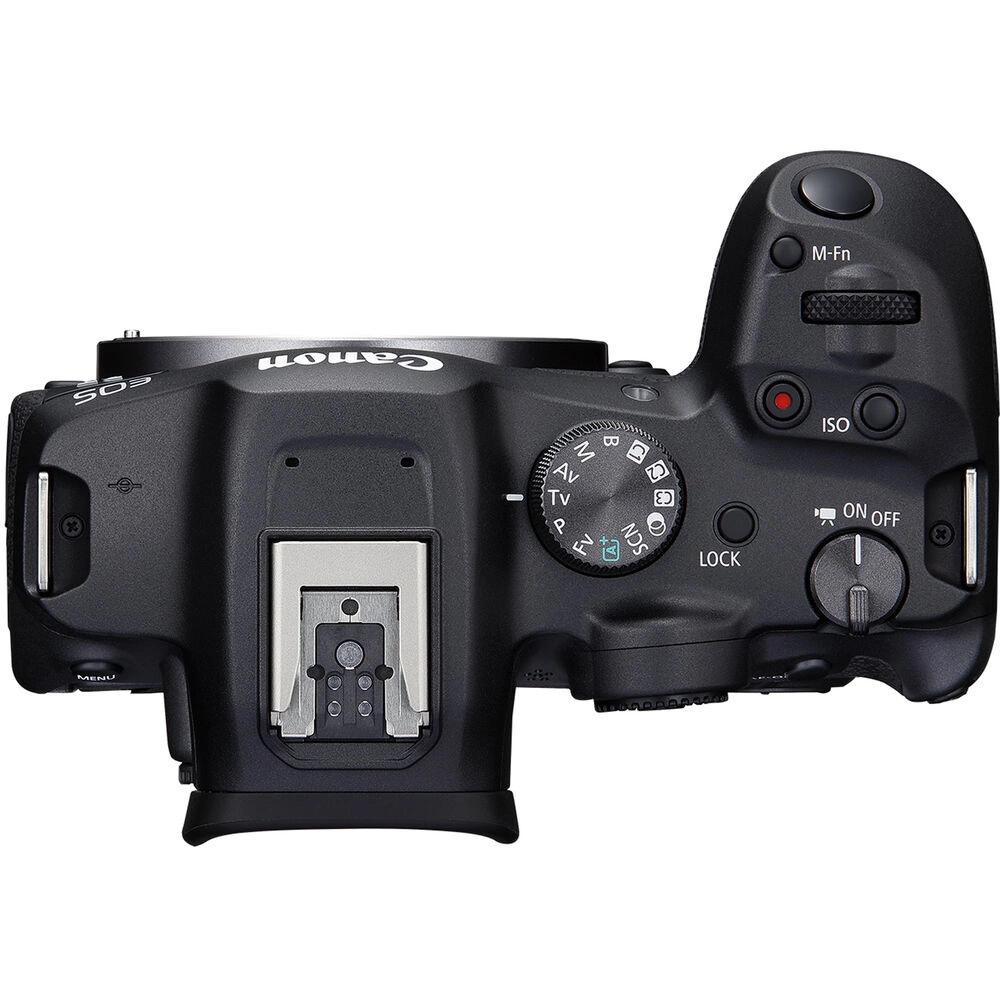
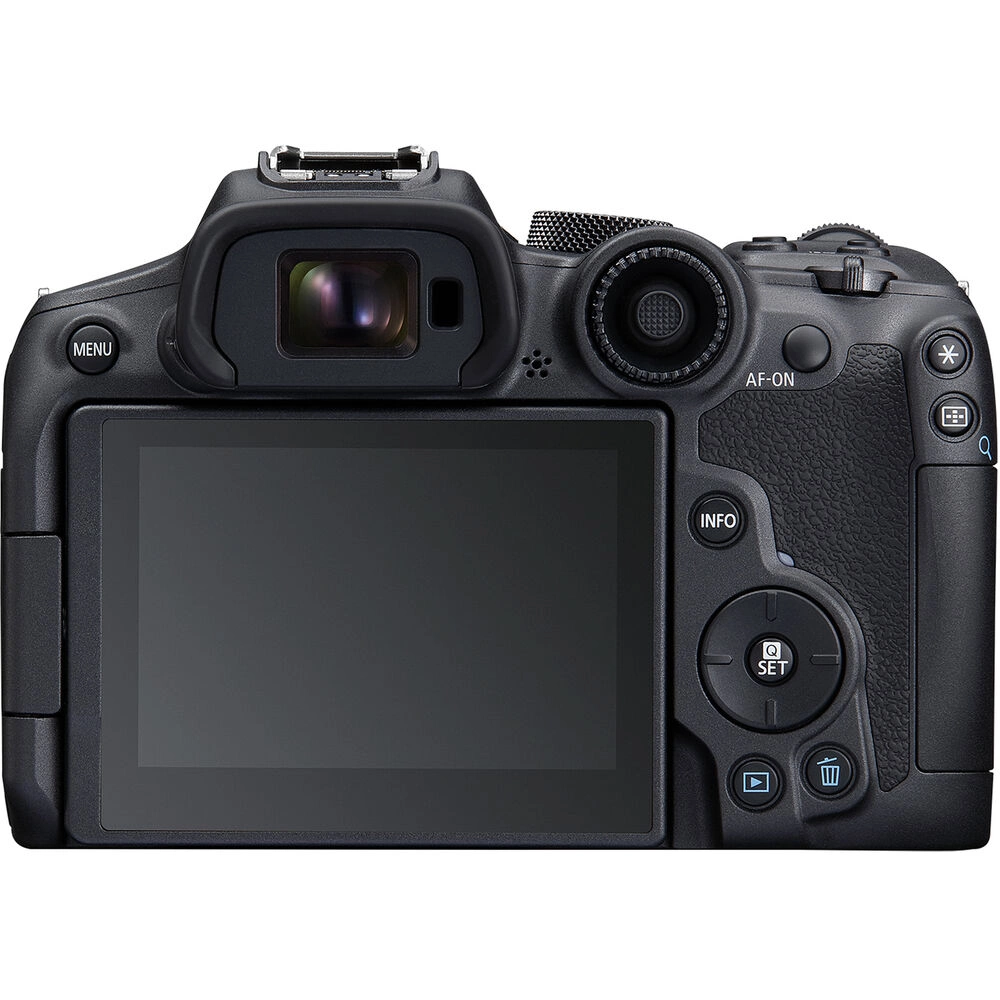
The Canon EOS 7D Mark II heritage is evident in this camera with a spacious and comfortable grip, and the EOS R7 is also a better match for the heavy RF series telephoto zooms than the EOS R10 or RP. The rear control dial has now been moved up, around the focus point selection joystick. The functions of the lower multi-selector are customizable, as on more robust bodies.
The viewfinder resolution lags behind the top full-sensor models, but there is an OVF View assist setting, which makes the electronic viewfinder not so sharp and 'digital' looking, meaning it feels more familiar to those who have shot a lot with a DSLR.
The Canon EOS R7 is weatherproof.
Canon EOS R7 in video shooting
- 4K 30P video is created from 7K footage
- 4K 60P and FullHD 120FPS without cropping
- Separate 4K Crop mode for wildlife photography
- C-log 3 wide tonal range recording (first time on an APS-C sensor size camera)
- 10bit HDR PQ recording
- Long continuous recording (no 30 minute limit)
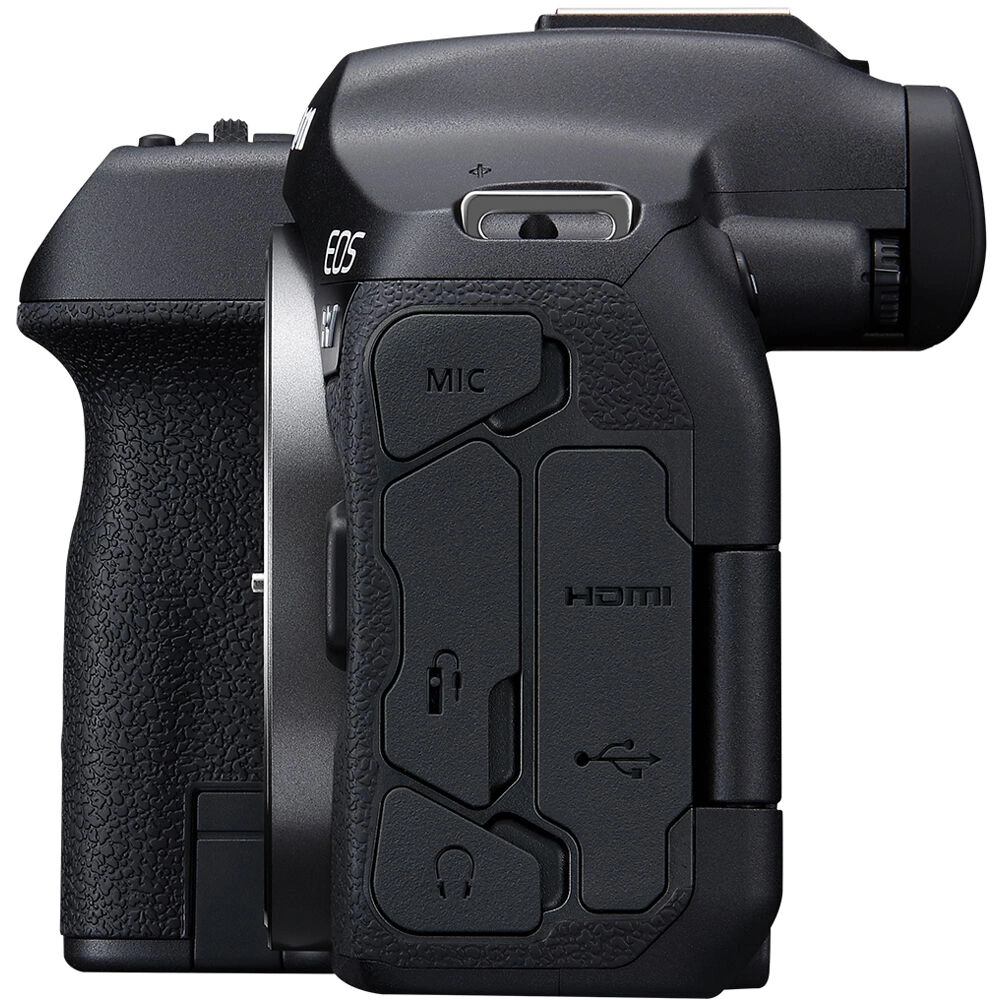
- Microphone and headphone jack
As you can see from the list, the EOS R7 is also a hybrid camera! The camera's 4K video is created from 7K of data across the entire sensor area. This so-called oversampling technology produces a more detailed and less noisy video image.
4K 60P video can be shot without cropping, but this is formed from sub-pixels, just like 120P slow-motion videos, meaning the image quality is not as sharp as 4K 24 and 30P.
Canon also relies on the device's thermal management and continuous recording is possible for a long time without overheating:
- 6 hours in normal quality (handy for live streaming!)
- Slow motion video (Full HD 120/100 fps): 90 minutes
- With 4K image quality at 30 frames per second in oversampling HQ mode: approximately 60 minutes (if the starting temperature is +23c)
- With 4K image quality at 60 frames per second in crop mode: approximately 60 min (if the starting temperature is +23c)
As noted with the EOS R5, the Dual Pixel AF II focusing system is excellent for video shooting. The Canon EOS R7 is also a useful device for many videographers as their primary camera.
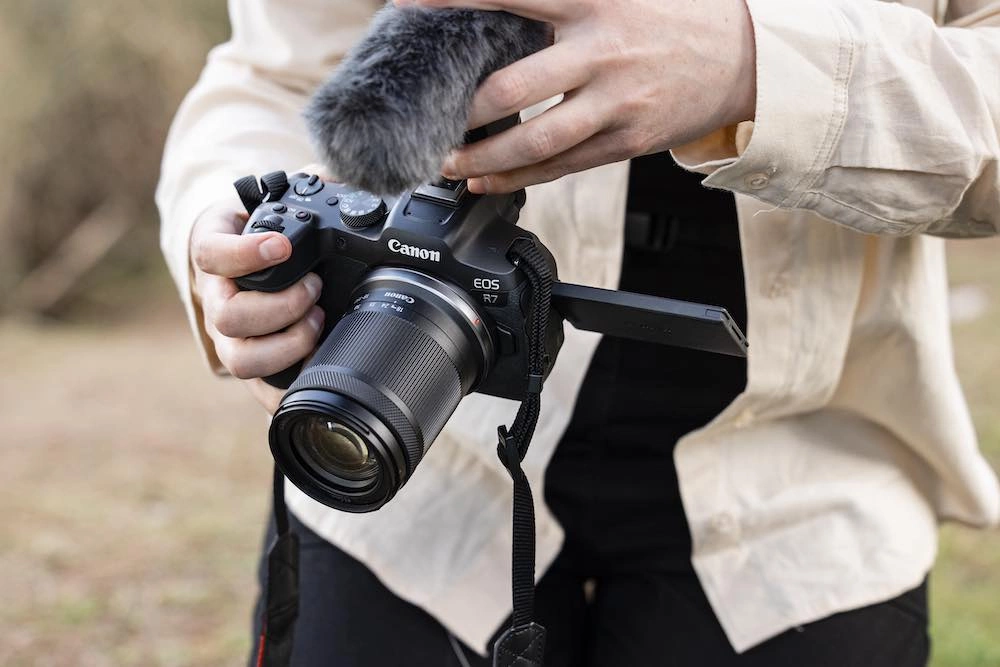
The Canon EOS R7 includes the manufacturer's modern Multi-Function Shoe, which can be used to attach a flash transmitter, digital stereo microphone, or AD-P1 smartphone adapter, like the EOS R3.
| Compatibility: | Canon RF mount |
|---|---|
| Cell: | APS-C size 33 megapixel sensor |
| Sensitivity | ISO 100-32000 |
| Autofocus | Dual Pixel CMOS AF II |
| AF features | Face and eye detection, works down to -5EV |
| Rear display: | 1.65 million-dot tilting touchscreen |
| Memory card slot: | 2x SDXC UHS-II |
| EVF: | yes, resolution 2.36M dots |
| Processor: | Digic X |
| Lightning sync: | 1/250 |
| Connections: | USB-C 3.2 Gen 2, HDMI-Micro, 3.5mm microphone and headphone |
| Wireless connections: | 2.4GHz WiFi & Bluetooth |
| Battery: | LP-E6NH |
| Size: | 132 x 90.4 x 91.7mm |
| Weight: | 612g (with battery and card) |
The sales package includes:
- Canon EOS R7 body
- Canon LP-E6NH Lithium-Ion Battery (7.2V, 2130mAh) battery
- Canon LC-E6 charger
- Battery Pack Cover
- Canon RF-5 Camera Cover body cap
- ER-R7 Camera Strap
- ER-SC2 Shoe Cover
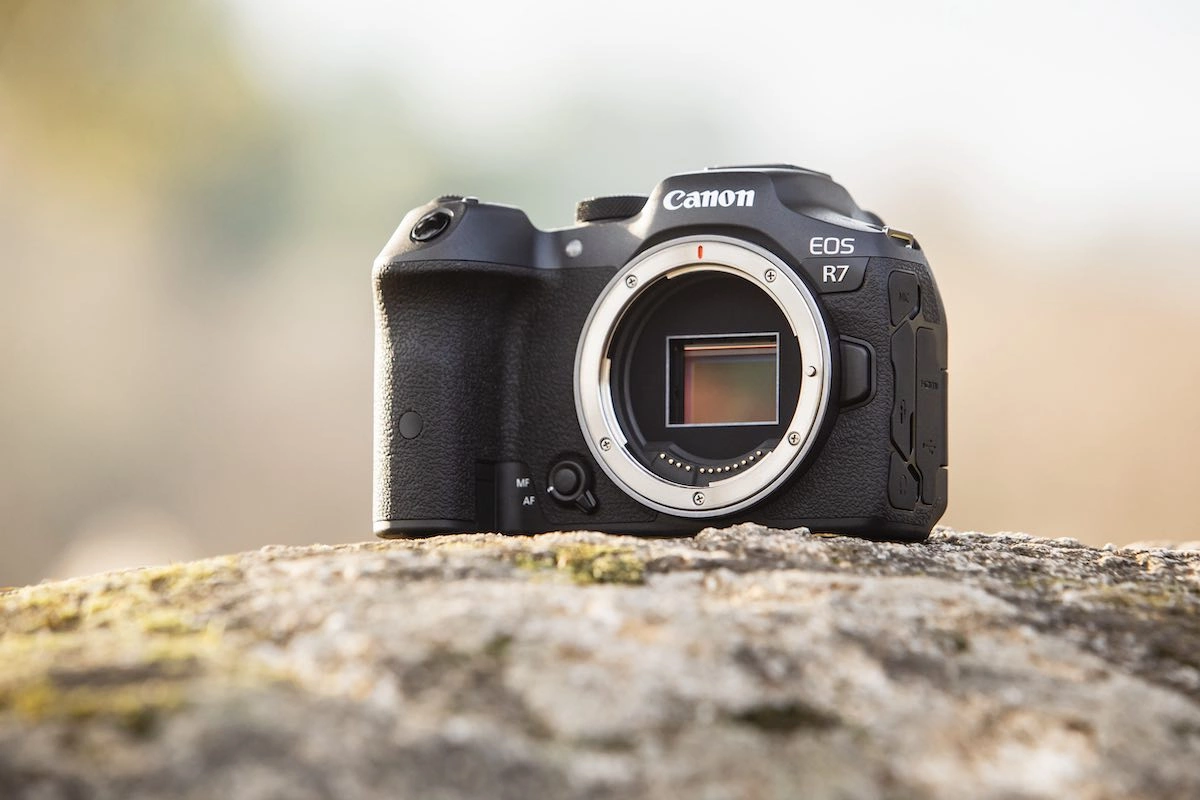 Canon EOS R7 järjestelmäkamera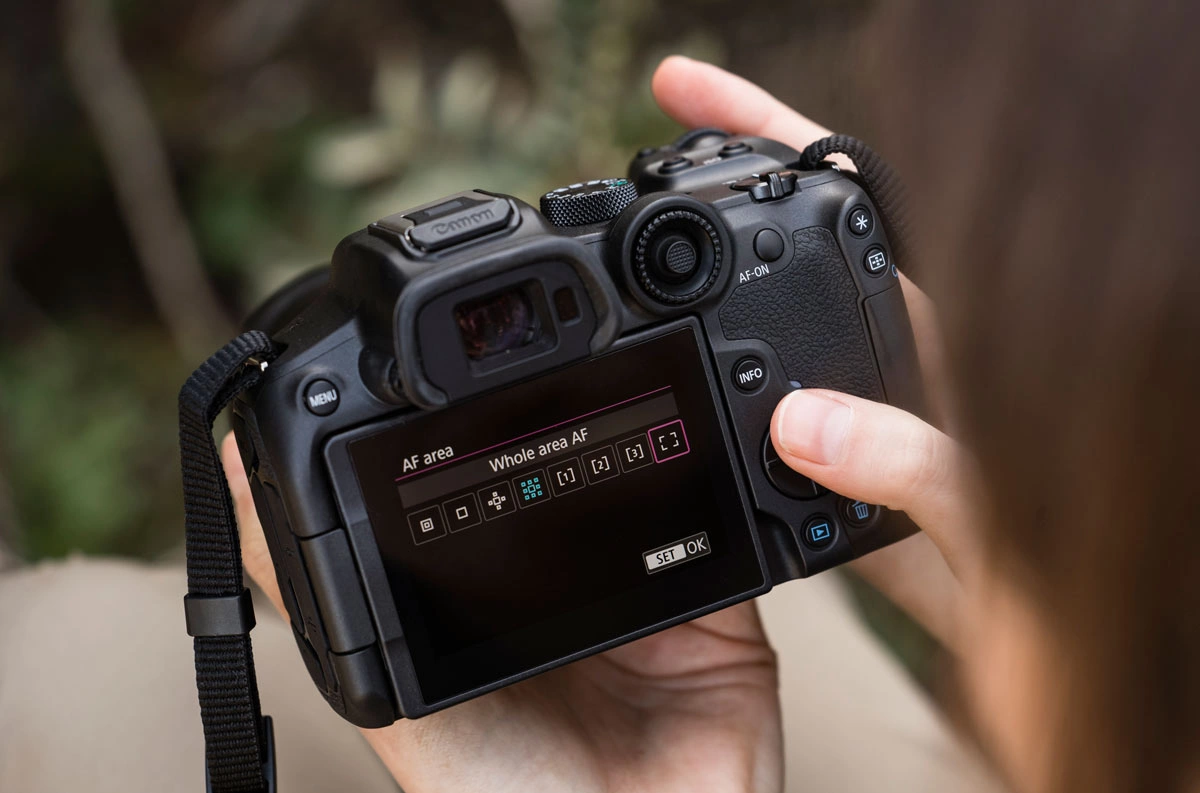
Featured
Canon RF 100-500mm f/4.5-7.1 L IS USM
Summary of reviews
Reijo H.

Sanni P.
Appe P.
Satu P.


Tuomo V.
Ask about product

Mon-Fri 9-17 and Sat 10-14
INFO