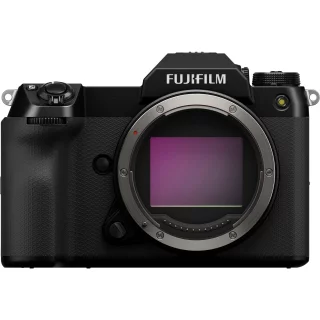
Fujifilm GFX 100 II medium format system camera



Pakettidiili
Varmasti yhteensopivat tarvikkeet

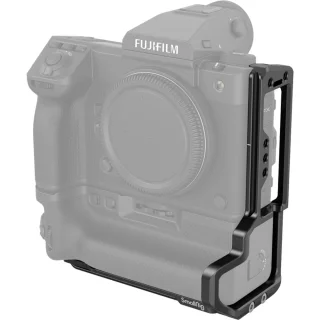
Fujifilm GFX 100 II medium format system camera
Also ask for an exchange offer!
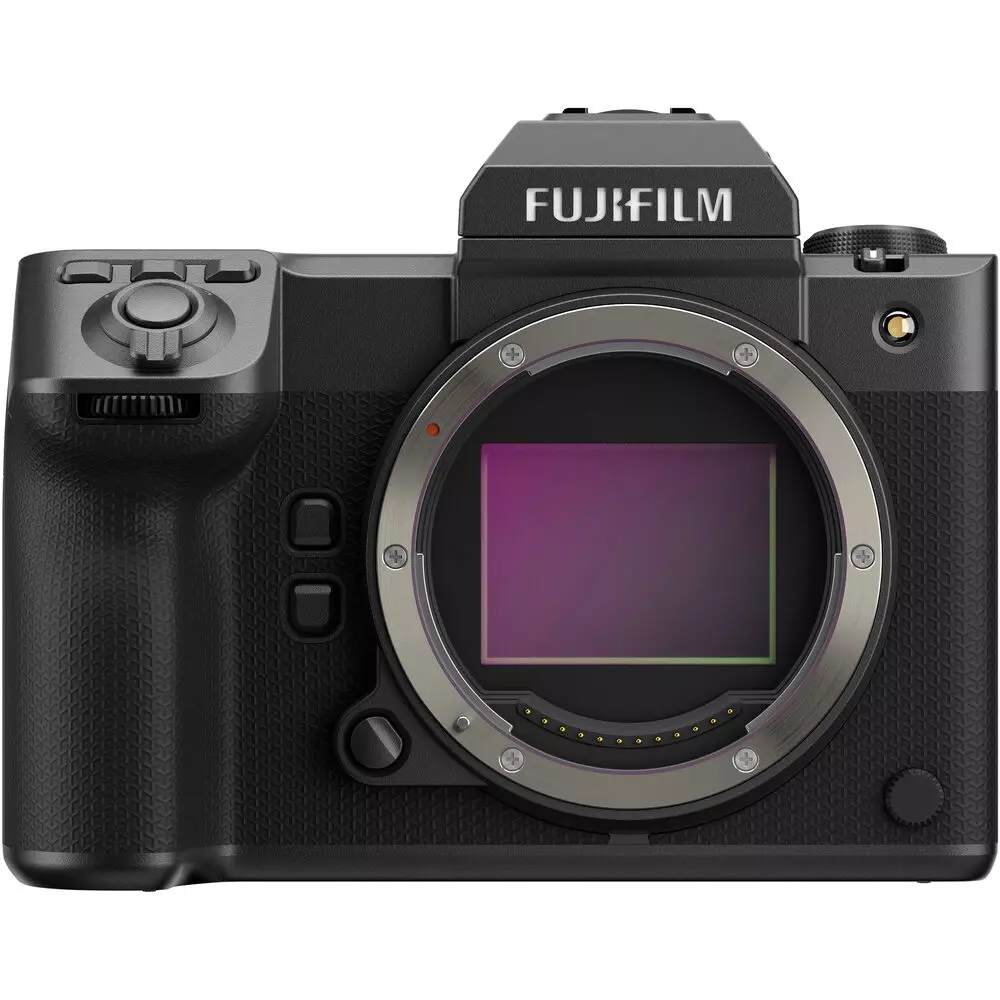
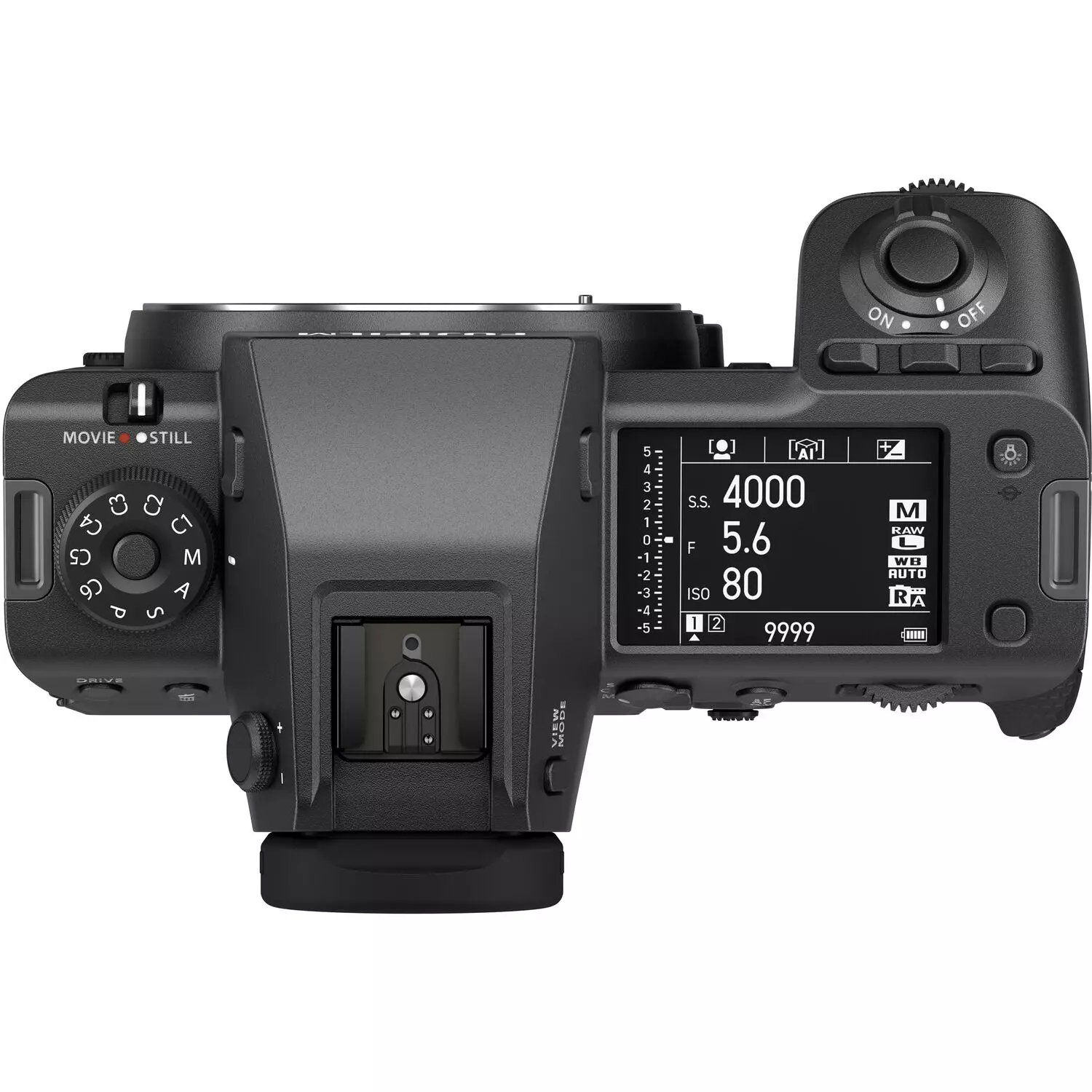
The FujiFilm GFX 100 II is a professional medium format system camera. The image sensor size is 44x33mm, which is 70% larger than a full-frame film sensor. As the name suggests, it has 102 megapixels, which means that this surpasses all film-sized systems in resolution and the closest equivalents can be found in separate digital cameras.
However, the camera's size is reasonable compared to its features, meaning it's not much heavier than other professional bodies, it has Fuji's most advanced autofocus, a more effective image stabilizer that moves the sensor, and so many features for video recording that this could also be called a film camera.
The package is such that it can be used as the only system for an active enthusiast who is passionate about cameras. Of course, it also includes the top features for traditional uses such as landscape photography, museum-level reproduction and form, and product photography. So the mid-size has come a long way from grandfather's Hasselblades. This body, however, exudes the same dignity.
- 102 Megapixel 43.8 x 32.9mm medium format CMOS HS II image sensor
- 5-axis 8-stop effective image stabilization
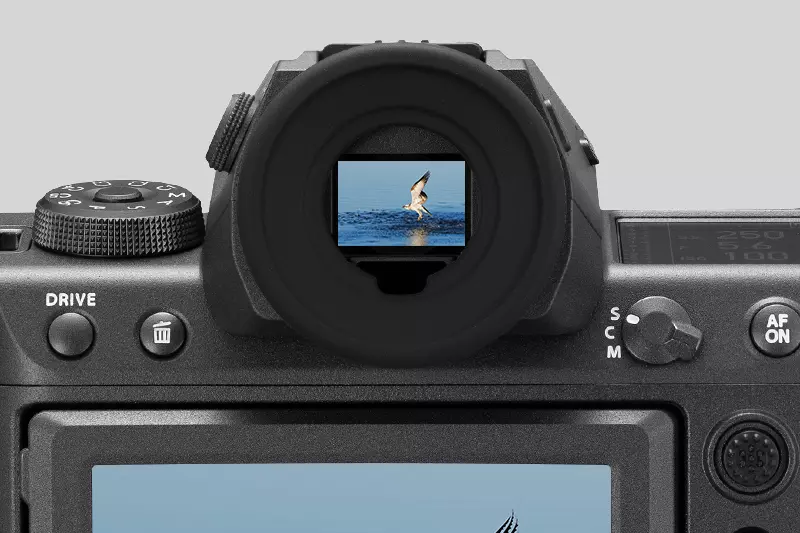
- High-resolution 9.44 million-dot OLED viewfinder, 1x magnification
- 8K 30P and 4K 60P video recording, also recording in RAW format to an external recorder
- Fuji's latest AI-taught autofocus
- Continuous shooting at 8fps or 5fps so that the image is visible even during the exposure, i.e. blackout free!
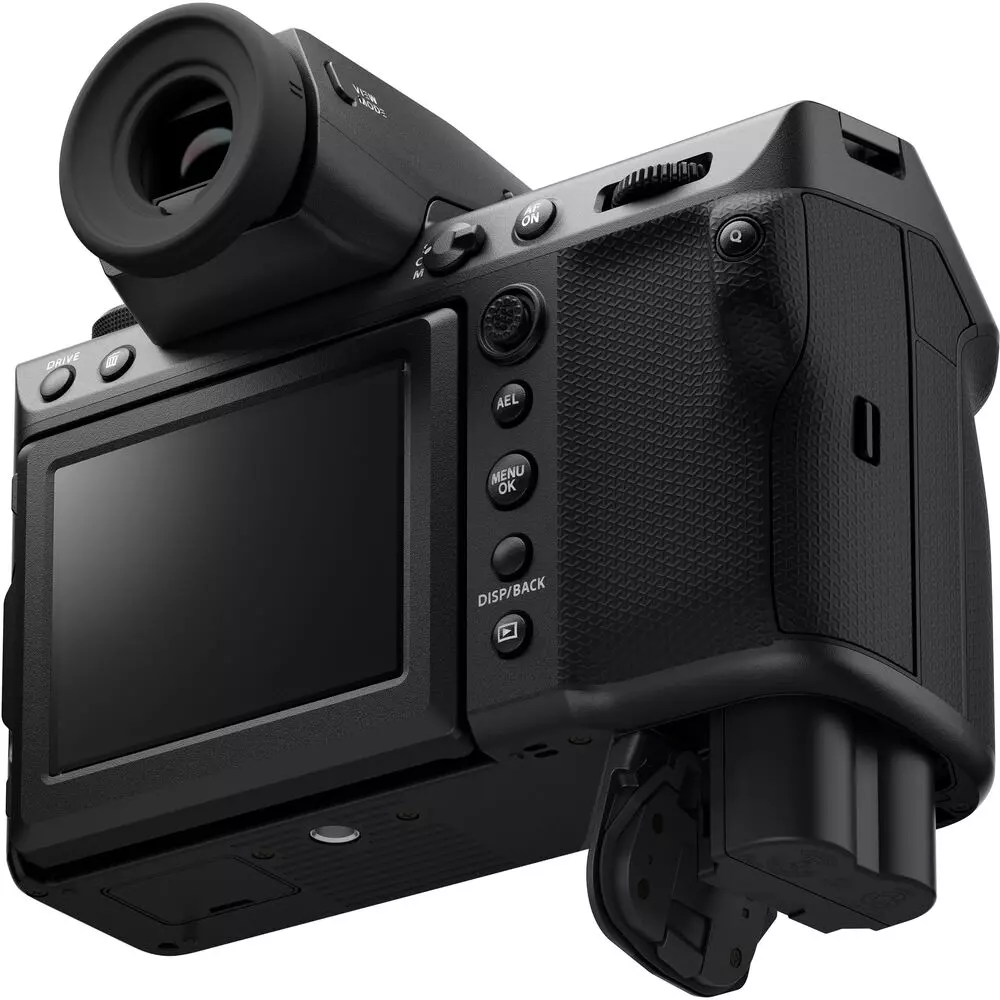
- The rear screen is foldable in three directions, so it also works well in portrait mode.
- Lots of video features: Apple ProRes codecs, auxiliary features like Waveform, Vectorscope, and support for anamorphic lenses
- Pixel Shift multi shot: up to 400 megapixel images by combining 16 raw images in camera
- Weatherproof frame
The sensor contained in the Fuji GFX 100 II is clearly larger in physical size than the film size at 43.8x32.9mm (about 70% larger), and the film equivalents of focal lengths can be calculated by a factor of 0.79x. The maximum sensitivity range of the sensor is very wide, ISO 50-102400, and images can be recorded with a medium format style 16bit color depth.
New sensor and more powerful image stabilization
The image sensor has been upgraded from the previous 100 and 100S models. The sensor has twice the read speed compared to the previous model, and this, combined with the latest 5th generation processor, enables the camera to deliver cinema-class speed and video capabilities.
In addition to the speed, the sharpness of the image is better at the edges thanks to the redesigned micro lenses. The accuracy of the focus points is also better at the edges. The lowest sensitivity is 80, which is already close to the Velvia 50 level.
The Fuji GFX 100 II features a new 8-stop image stabilization (compared to 5.5 stops in the previous GFX 100 model). The stabilization works by moving the sensor and uses, for example, a sensor that detects video content and camera movements.
Effective stabilization is a big part of how this body has become a replacement for film cameras, when shooting without a tripod in even a little bit of darkness, the image files would reveal that the camera's full potential cannot be used, the resolution is so merciless at these readings. The stabilizer also works together with the stabilizers found in lenses, the power is maintained even at longer focal lengths.
The body stabilizer also enables the Pixel Shift Multi-shot feature. In this case , the camera takes up to 16 RAW images and moves the image sensor 0.5 pixels at a time between images. These images are assembled into a very high-resolution 400 megapixel file. Each image also stores only one primary color, red, green or blue, so in addition to the resolution, the color information is more accurate.
Fuji's most advanced autofocus
The autofocus is borrowed from Fuji's top bodies X-H2 and X-H2S, meaning it includes AI-taught object-recognition autofocus. The camera recognizes if there is, for example, a bird, car, motorcycle, airplane and train in the image and the focus is able to lock to this, and continuous focusing is also reliable. The categories are quite extensive, and bird also includes insects and airplane mode drones. In addition, there is a general mode for varied shooting.
Target-detection autofocus now also works during video recording (unlike on X-H2 bodies)!
And of course, the Fujifilm GFX 100 II includes traditional face or eye detection focus modes suitable for portrait photography.
Fuji GFX 100 II as a film camera
Before Fuji's previous models, medium format cameras and video production had never been in the same sentence, and now the GFX 100 II takes these to a whole new level, meaning it is also suitable for hybrid photographers and video producers.
The numbers focus on 8K video recording, but here there is a 1.53x crop, meaning the size is smaller than the full sensor size. With 5.8K and UHD 4K 60P settings, the crop is non-existent (1.01X). In addition, the rolling shutter effect is certainly bigger than with small sensors and Fuji does not mention in its spec list that the video image is oversampled.
There is also a new Variable Cine crop feature: the camera can choose whether to use Fuji GF lenses, a cine lens, Fujino cine lenses or anamorphic optics, and the camera will suggest different settings for the video based on your selection.
This shows that Fuji has not been afraid to include professional-level features in this camera, and on the other hand, full-fledged use also requires professionalism. The bitrate and recording codecs are comprehensive, with Apple ProRes in various versions directly to the card. 8K video recording is possible directly to an SSD hard drive via the USB-C connection and via the full-size HDMI connector, Atomos and Blackmagic RAW can be output to an external recorder.
Also new is Frame.io camera to cloud compatibility, meaning that via Wifi (or the camera's Ethernet connection!) photos (raw and jpg) or h.264 small proxy files or 8K ProRes material are transferred directly to the cloud service for viewing.
Professional-level usability
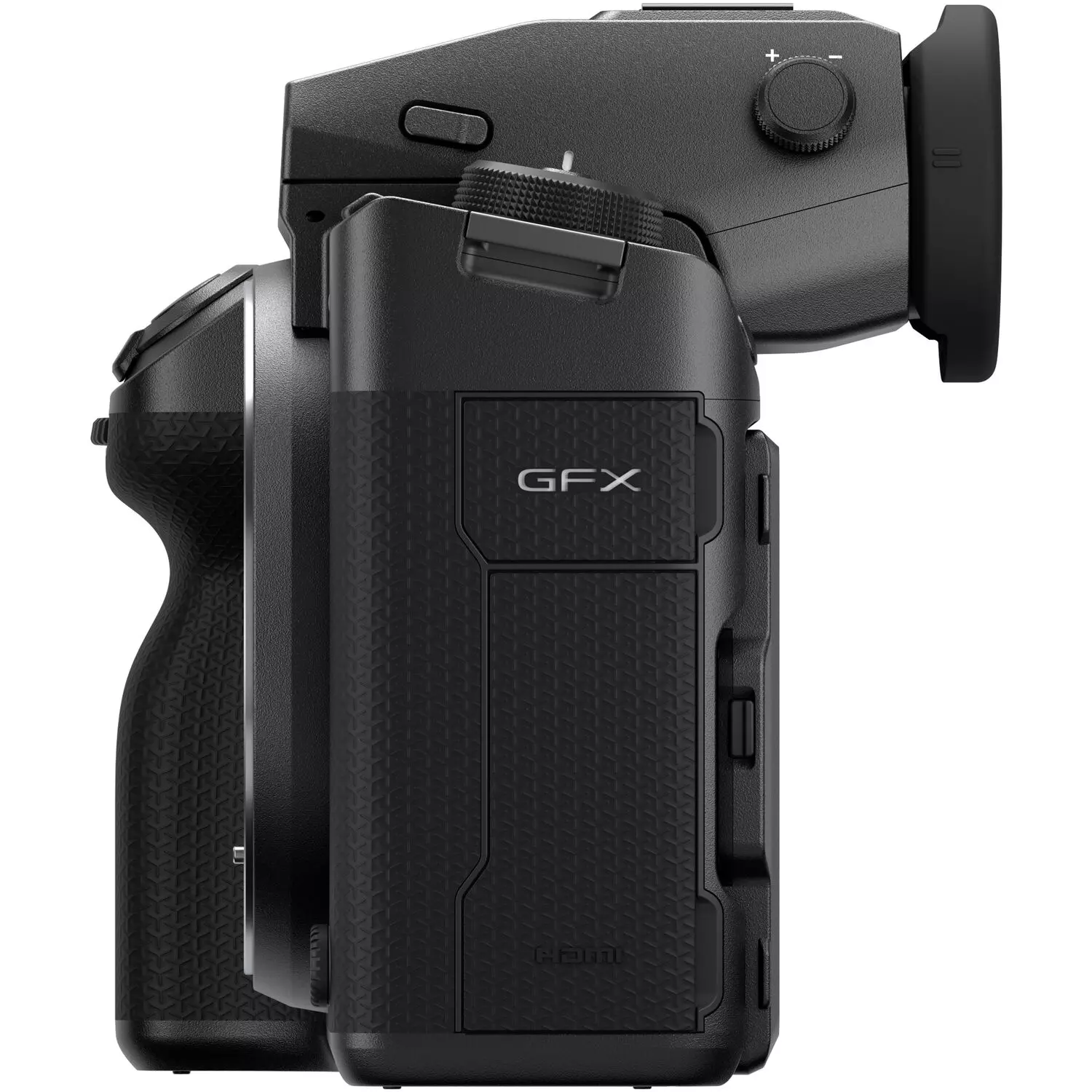
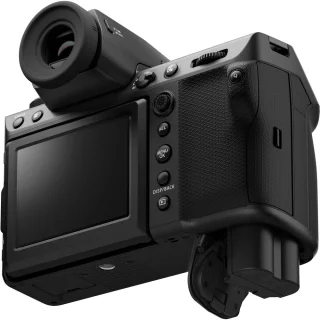
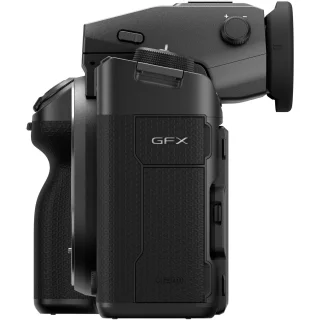
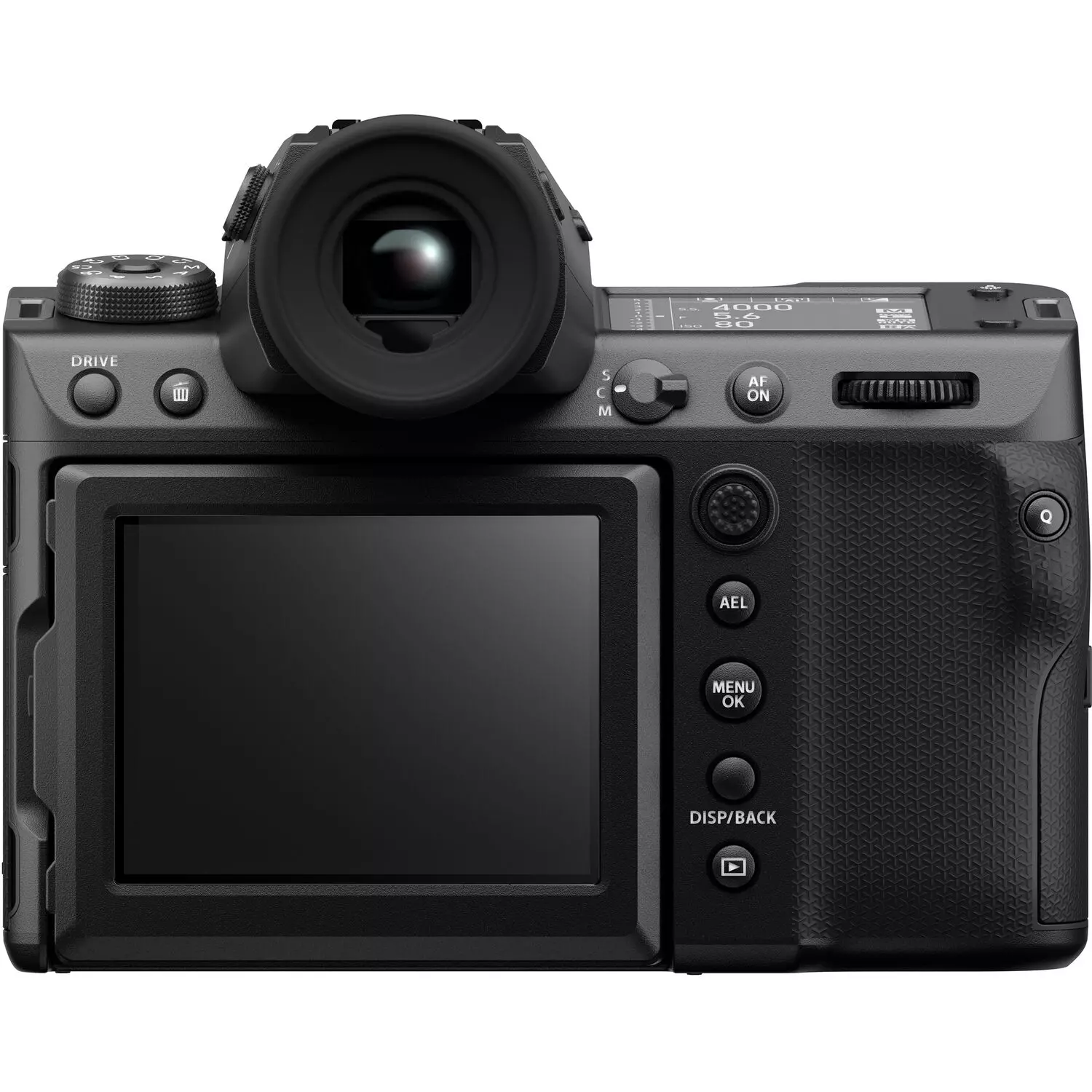
The new GFX 100 II is a combination of the previous model and the smaller GFX 100S body. So the size is now surprisingly compact in the 100S style but with a super accurate viewfinder. In addition, like the original model, the viewfinder must be removed and this is compatible with the EVF-TL1 tilt adapter. So you can shoot from the hip in the previously mentioned Hassel style. Many photographers also find that the connection and control of the model is easier when there is no kilo of camera in between, but you can make eye contact immediately by lifting your head from the viewfinder.
And that viewfinder! The resolution is 9.44 million pixels, meaning that you can more easily assess the sharpness of the image directly through the viewfinder. Of course, this also makes it easier to use manual focus lenses with an adapter. The magnification is exactly 1x and the refresh rate can be selected between 60 and 120Hz.
The Fuji body fits well in the hand, and there is a high-quality and slightly rougher rubber coating for protection and grip. The surface and shaped handle make it easy to use with one hand.
Although the Fuji GFX 100II is a serious professional camera, it comes with the same JPG settings as the lighter X-series bodies (or even more, as it includes the new Reala ACE setting). Fuji's JPG images are highly praised for their tonal range and quality, meaning that for example, for fast-paced catalog shooting, with the right settings, you can make a ready-to-use image straight away.
The camera has two CFexpress Type B / SD USH-II memory card slots, so you can back up your files while you're shooting. For video recording at higher bitrates and burst shooting, CFExpress Type B is the preferred option.
The Fuji GFX 100 II has a weather-resistant construction and the body is made of durable magnesium alloy.
Specifications:
- Sensor type: Medium Format 43.8 x 32.9 mm, GFX 102 MP CMOS II HS
- Compatibility: Fujifilm G mount
- 102 megapixels (resolution 11648 x 8736)
- Focal length factor: 0.79x (compare film size)
- Built-in 5-axis image stabilization with 8 stops of image stabilization
- Processor: X-Processor 5
- ISO sensitivity range: 100-12800 (expanded to 50-102400)
- Storage format: JPEG, DNG raw images (16 and 14 bit colors), TIFF
- Video recording: 8K 30P and 4K 60P 4:2:2 10bit directly to memory card
- Proress 422 HQ, 422, 422 LT and Proxy. H.264 and H.265
- F-Log2 and Hybrid Log Gamma HLG wide tonal range recording, max. 14+ stops of dynamic range
- ProRes Raw and Blackmagic Raw for external recorder
- Viewfinder: Electronic OLED viewfinder, refresh rate 120P in boost mode
- Viewfinder coverage: 100%, magnification 1x (lower magnifications also available)
- Viewfinder resolution: 9.44 MP
- Display: 3.2”, 2.36 million dots, 2-axis tilting touchscreen
- Continuous shooting speed: 8 fps with mechanical shutter RAW, unlimited
- Memory card: 2x CFExpress Type B / UHS-II SD combo slots
- Videos and images can also be saved to an external SSD via the USB-C connection
- Connections: 3.5mm headphone jack, 3.5mm microphone, HDMI Type A, ethernet, USB-C, PC-Sync
- Wi-Fi & Bluetooth
- Battery: NP-W235, 540 shots on a single charge
- Dimensions: 152 x 117 x 99mm
- Weight: 1030g (with viewfinder, memory card and battery)
Sales package includes: FUJIFILM GFX 100 II Medium Format Mirrorless Camera body, BCP-002 body cap, battery, charger, strap
Osta myös
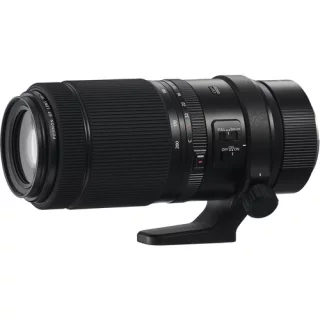
Fujifilm Fujinon GF 100-200mm f/5.6 R LM OIS WR lens
Arvostelujen yhteenveto
Kysy tuotteesta

ma-pe 9-17 ja la 10-14