
Canon RF 200-800mm IS USM in first test - Pasi Parkkinen

When Canon announced the RF 200-800mm F6.3-9 IS USM , its modest aperture was criticized. However, it must be taken into account that the focal length range of 200-800mm is the widest on the market. In addition, the price is a fraction of the prices of fixed L-series telephoto lenses intended for professional use. Current mirrorless cameras tolerate very high ISO values, which makes this type of product a good fit. Improving even one aperture value would have increased the size, weight and price of the lens considerably. Image noise produced by high ISO numbers can also be effectively removed in post-processing with many different software. Like many other photographers, I use Topaz Labs' DeNoise AI and Sharpen AI software for noise removal and sharpening, as well as Adobe Lightroom's integrated Denoise function, which was released this year. All images in this test were taken with Adobe Lightroom and post-processed with Topaz software.
Canon RF 200-800mm image quality
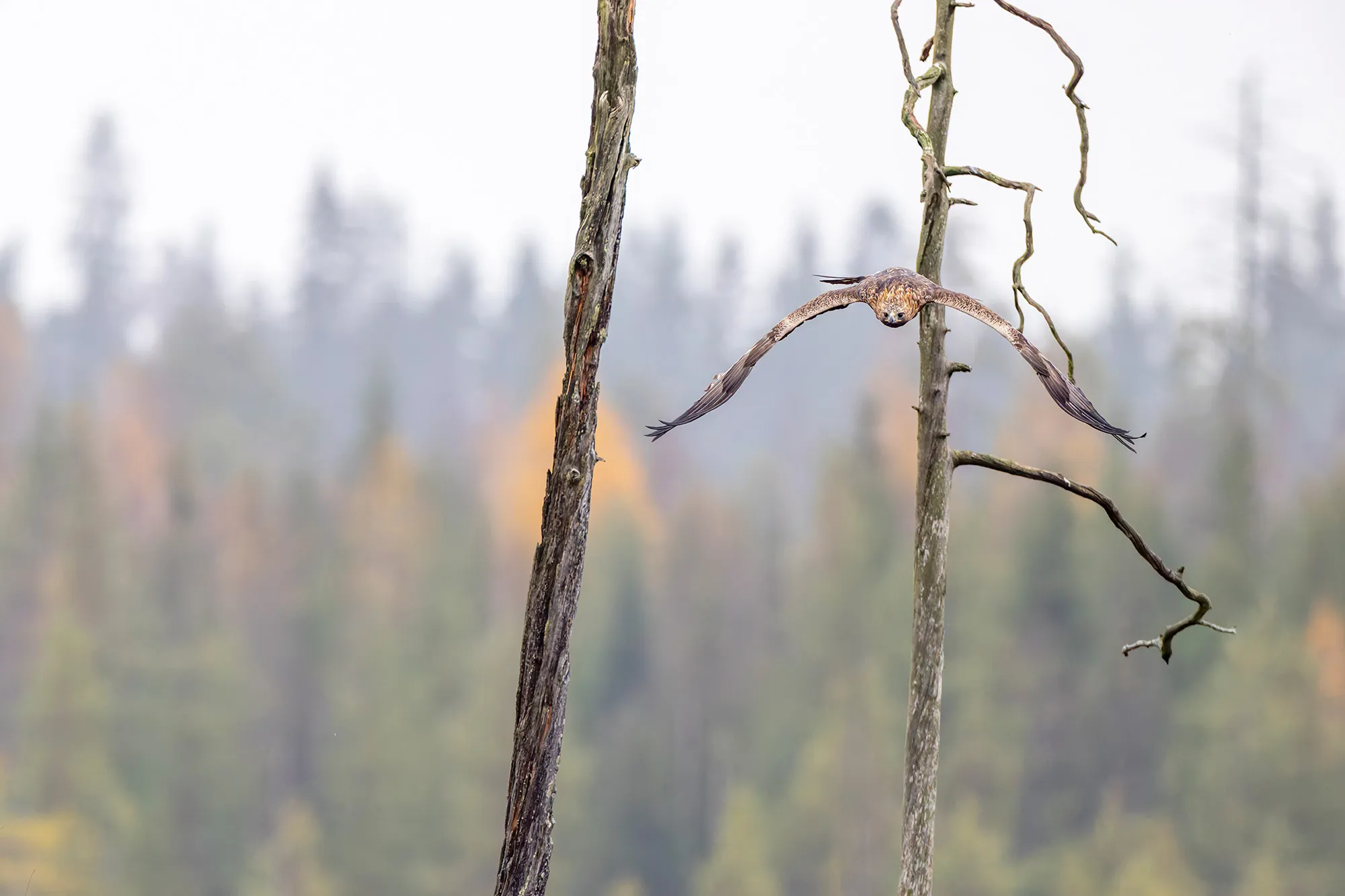
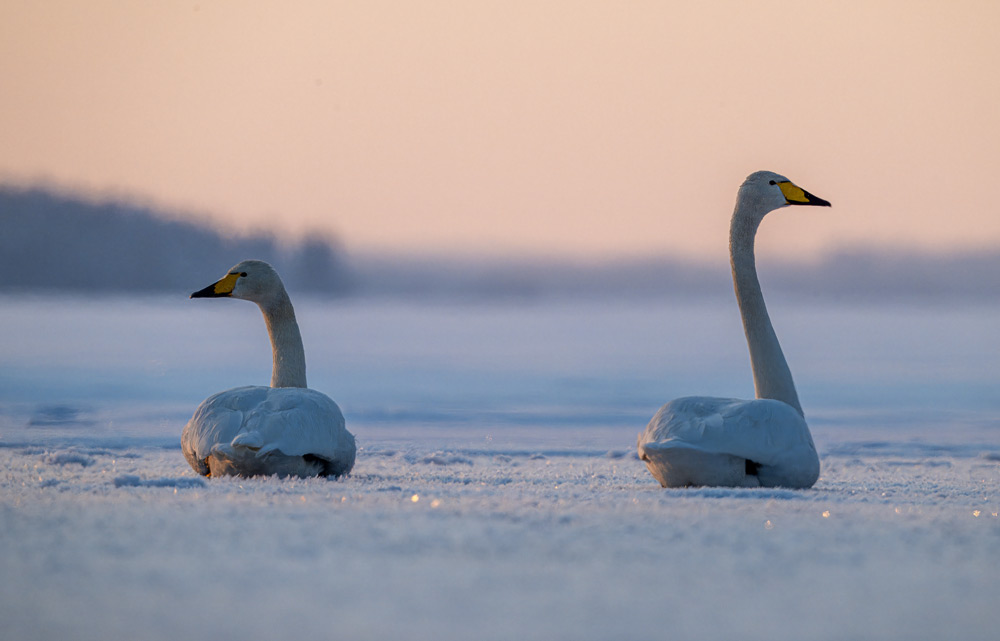
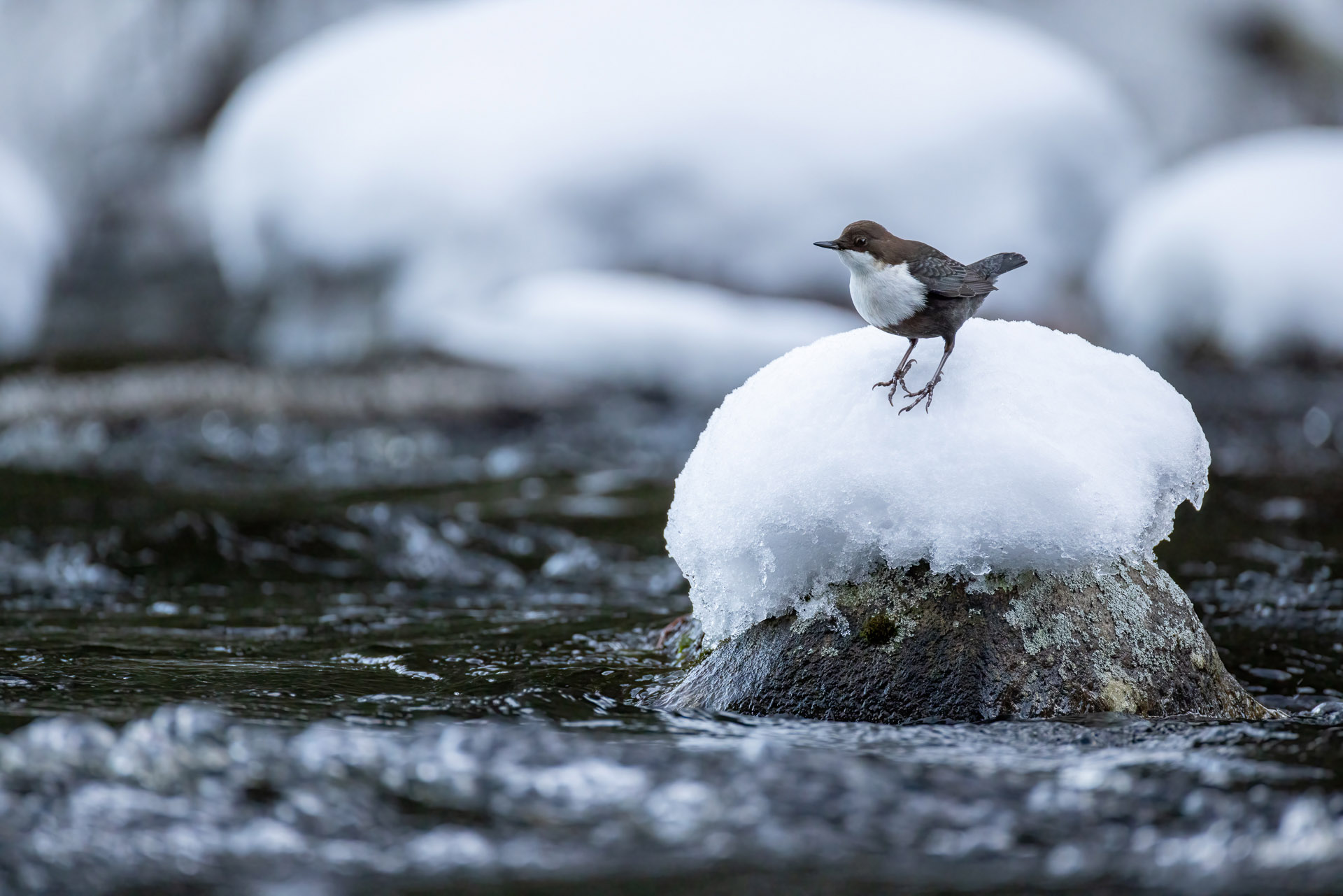
The RF200-800mm proved to be very sharp throughout the entire focal length range. I did not notice any visible vignetting, even in snowdrift photos, so the glass is clear from edge to edge even when shooting with a full-sensor camera. Colors are reproduced naturally and the contrast is excellent. In terms of sharpness, I did not notice a huge difference compared to the EF600mm equipped with the 1.4x teleconverter (840mm). However, it must be admitted that the fixed L-series lens is slightly sharper. Considering the price difference, this is understandable.
In the field test
I used the RF-200-800mm and Canon R5 to photograph winter birds, a stream environment and a rapids. As a reference, I used the EF600mm F4.0 IS III telephoto and the 1.4X III extender. The test was conducted over a couple of days during the darkest time of the year in mid-December, just a few days before the winter solstice. This underlines the fact that even in low light, the RF200-800 certainly works great in good light.
Thanks to a good stabilizer, you can use slow shutter speeds for stationary subjects. Fast subjects, such as winter birds in your backyard, need faster shutter speeds. This is where the limitations of the RF200-800 on a winter day in December come into play. That doesn't completely prevent you from shooting, either, as the continuous shooting of modern bodies (20-30fps) allows for fast bursts of images. Often, in fast series, there are a couple of frames where the subject has not moved for a moment. In that case, it is possible to get sharp frames even with a longer shutter speed.

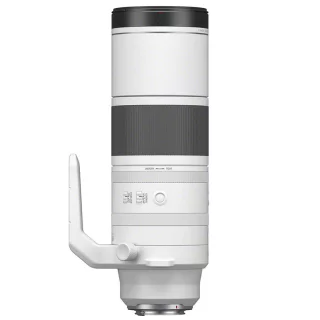
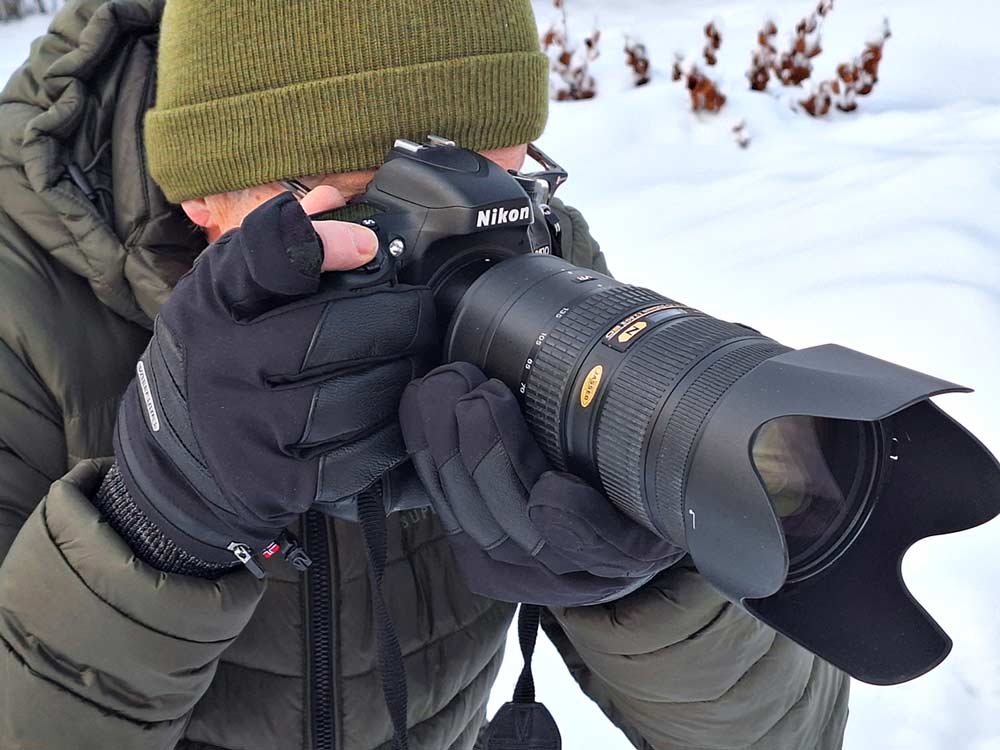
The lens feels solid in the hand. The tripod collar and handle are large enough to allow you to carry the camera and lens with it even when wearing gloves. The stiffness of the zoom ring can be adjusted, allowing you to get the right stiffness for the zoom. It is also good that when carried on the shoulder, this prevents the zoom from falling out on its own. The center of gravity of the zoom does not change when zooming to a long distance. The glass does not bend forward on its own and is balanced to handle throughout its entire focal range.


In addition to the tightness of the zoom ring, the lens only has two settings: autofocus and stabilizer on/off (AF-MF & Stabilizer On-Off). These are more than enough for most people. For comparison, the L-series lenses have more modes for the stabilizer and focus range limitations. I don't remember ever using them, but the basic settings have been enough for me. In addition, the lens has a programmable button, like other RF lenses, which can be assigned the desired function on the camera.
Choosing a videographer
The RF200-800mm is equipped with a high-performance stabilizer. Together with the R-series in-body stabilizer (IBIS), the end result is surprisingly good. Even at the full 800mm focal length, handheld shooting is possible. The wide focal length range is ideal for nature photographers' video work. It is worth noting that in video shooting, high aperture does not have the same benefits as in still photography; optimal shutter speeds for smooth video are much longer than in still photography. When using a fast-aperture fixed lens for video shooting, the light reaching the sensor must be cut with gray or ND filters in any case. The RF200-800mm has a 95mm filter thread, so adjustable ND filters suitable for video use are generally available.
Final conclusions

The RF 200-800 is a tool for the mobile nature photographer. Its lightness allows it to be taken on longer trips. If you mostly shoot in the evening and morning twilight or are looking for an extremely short depth of field, the RF200-800 is not necessarily the best solution. However, it must be noted that even when using fast fixed focal length telephoto lenses, it is often not possible to use the maximum aperture of the lens. To obtain sufficient depth of field, you often have to stop down. For example, when photographing a flock of birds in flight, it is good to stop down to, for example, F8.0-F11 at a focal length of 800 mm, in order to make the sharp area sufficiently wide and all the birds in focus. Depth of field is always affected by the focal length, aperture and distance to the subject, so there is no universally applicable formula for the appropriate aperture value. The closer you are to the camera, the shorter the sharp area. As the focal length increases, the sharp area always shrinks.
When aiming for beautiful bokeh, it's worth remembering that it can also be influenced by the choice of shooting location and height. You can often achieve better results from low or at the same level with the subject, even with the RF200-800mm.
I didn't really find any annoying flaws or features with this zoom. Although there have been compromises in terms of brightness, there are no compromises in terms of optical quality. The Canon RF 200-800mm produces excellent sharpness.
I would think the RF200-800mm would also work well for shooting flying insects such as butterflies and dragonflies. It is easier to find a fast-moving subject in the viewfinder at a shorter focal length and then zoom in for a tighter focus. The closest focusing distance at 200mm is 80cm, extending to 3.3m at 800mm. The focus motor felt fast and tracked the moving subject smoothly. Of course, this is also influenced by the autofocus settings and capabilities of the camera body used. I always use continuous focusing (SERVO) and when shooting animals and birds, also eye detection.
The RF200-800mm can also connect RF1.4x and RF2.0x teleconverters. These were not available in my test.

Website: https://ratmakka.fi/parkkinen/
Instagram: https://www.instagram.com/pasi.parkkinen/