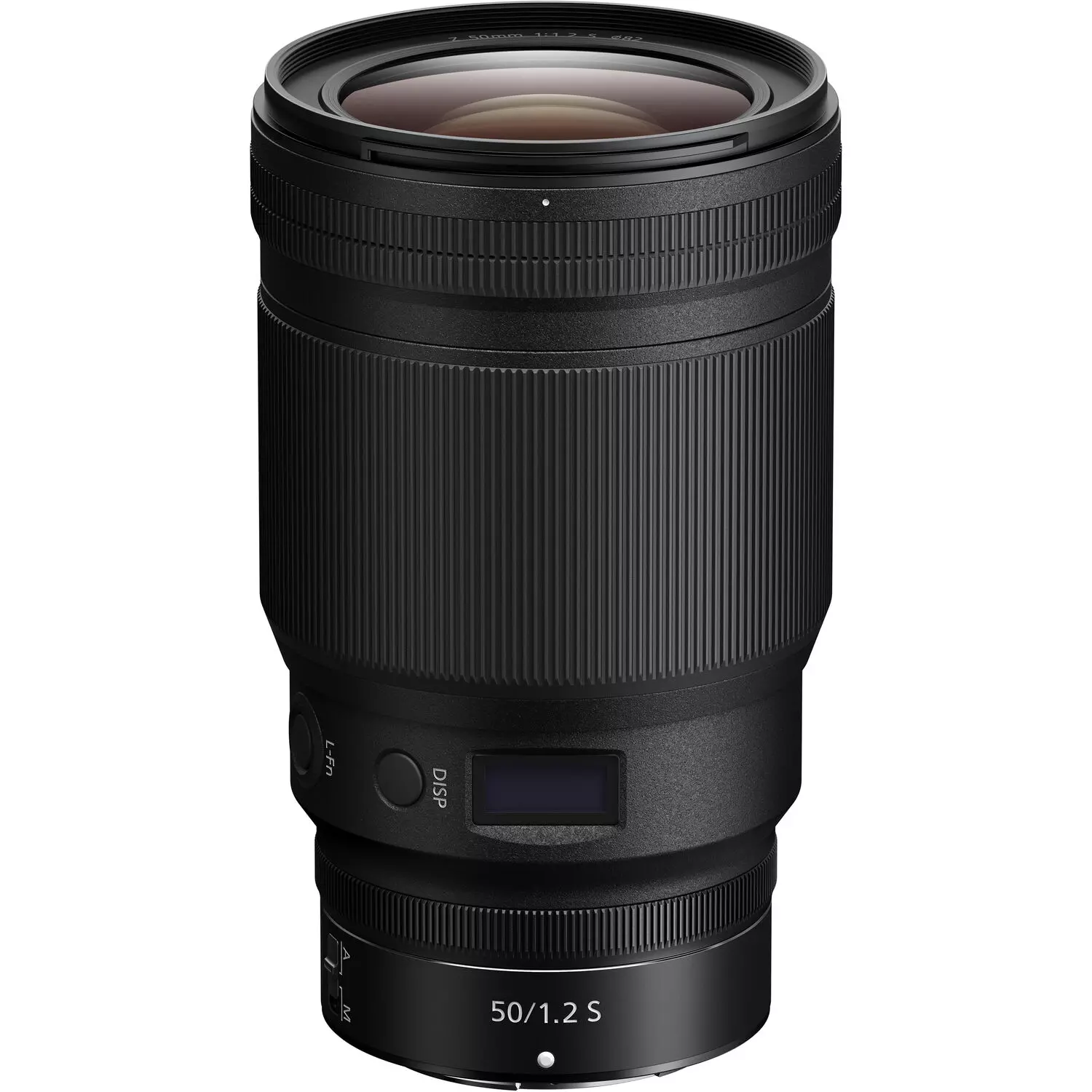
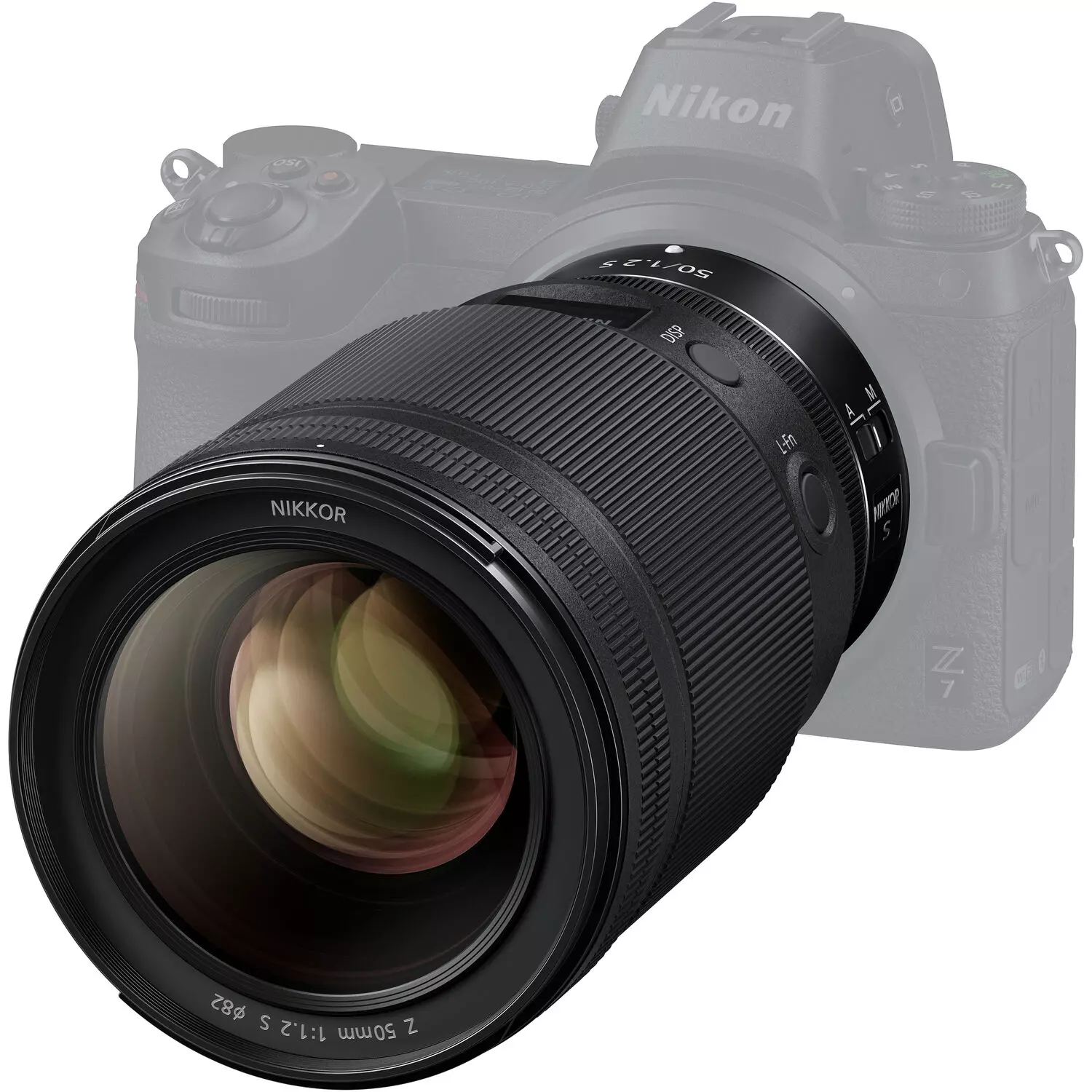
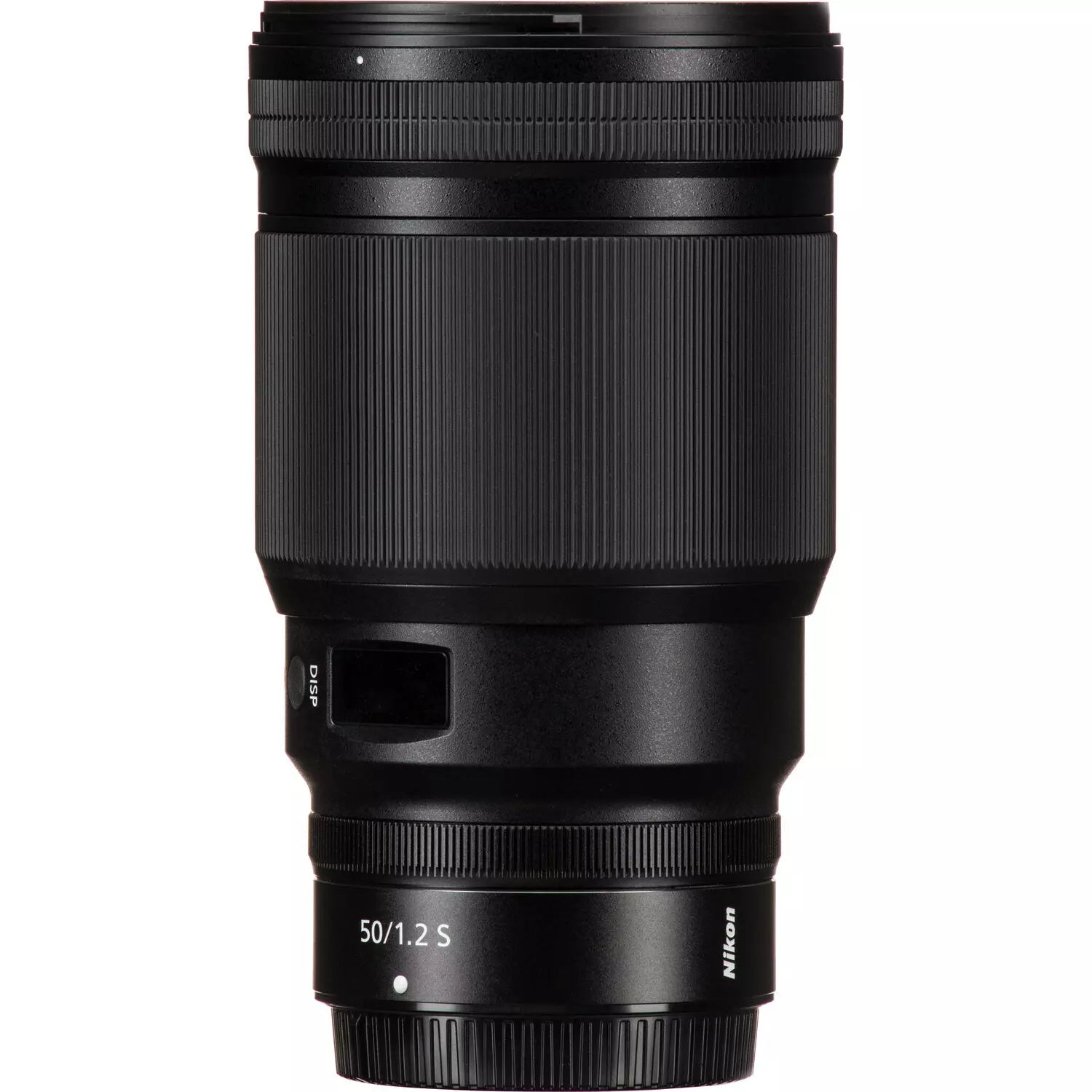
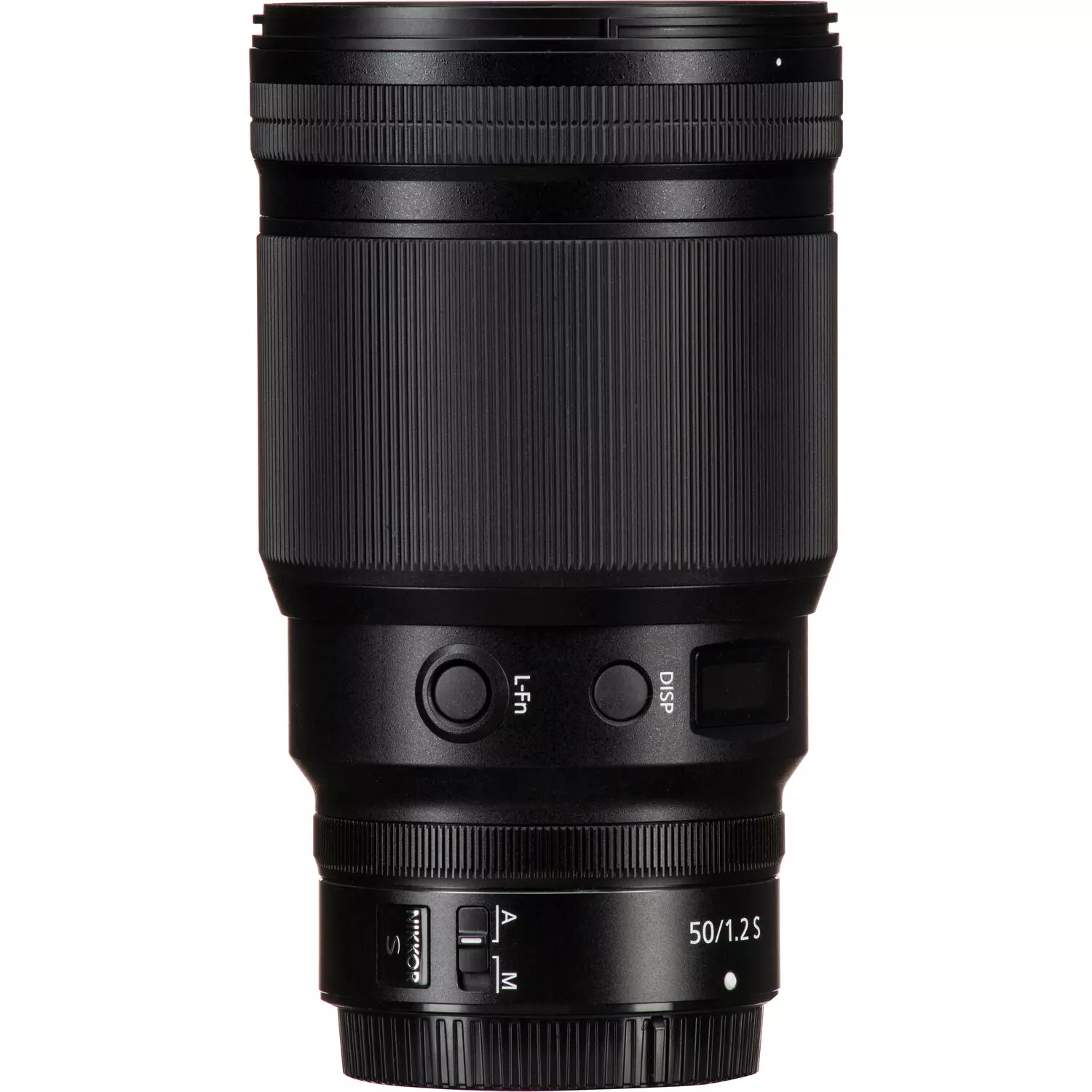
Nikon Nikkor Z 50mm f/1.2 S lens




Varmasti yhteensopivat tarvikkeet

Nikon Nikkor Z 50mm f/1.2 S lens
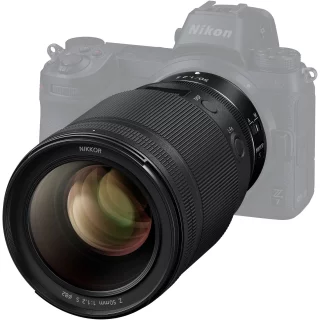
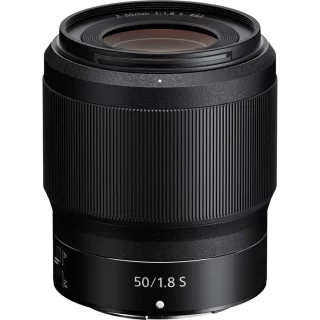
Nikon's most basic Z-mount cameras were first announced with just a 50mm F1.8 fast lens, followed by a fast F1.2 version, a 58mm 0.95 Noct Nikkor, and most recently a 50mm F1.4, meaning there are options. The first is a basic version with great image quality, the F0.95 is an exotic special lens, and the F1.4 version is a fast option offering a more classic look.
This 50mm F1.2 is the version best suited for professional use, such as portrait and event photography.
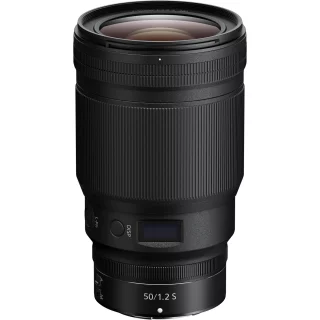
- Weight approximately 1kg and length 15cm
- All the latest coatings and a completely new optical structure
- Closest focusing distance 0.45m
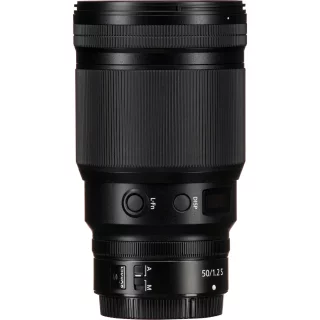
- Programmable control ring for example, exposure adjustment directly from the lens
- L-FN programmable and OLED info display
- Two STM focus motors
- Weatherproof construction
Technical performance & beautiful design
The weight is double that of the basic version and the light output is one aperture higher. A modern SLR camera contains a sensor that can easily compensate for this difference in aperture, meaning there must be more than just the light transmission.
And there are! Testers say the image quality here is very close to the 58mm Noct-Nikkor, which is a great achievement for only a third of the price and half the weight. And according to the manufacturer's MFT curves, the F1.2 version at full aperture is similar to F1.8, so now you don't have to choose between quality and brightness. The drawing is more than just the raw resolution of the test plates, meaning objects outside the depth of field are drawn beautifully and softly.
Image errors are minimized and the lens performs well in various special situations, such as backlit situations. Nikon's latest Arneo coating technology is used, which has been added to certain lenses in addition to the more traditional Nano coating. The coatings eliminate reflections from different angles and therefore work well together.
Autofocus is handled accurately and quickly by two STM focus motors, taking into account the size of the lens elements. Focusing is handled internally, meaning the lens size does not change during use.
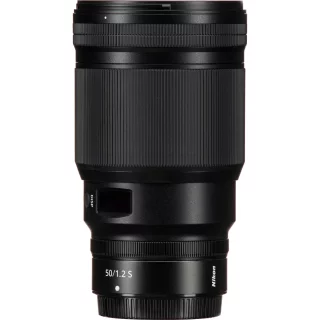
The focus ring is large and very tactile, making it suitable for precise work. The lens also has an OLED display that shows focus distance, aperture and depth of field. The control ring allows you to adjust exposure, for example, and there is also a programmable Fn button on the side of the lens.
The lens is weather and dust-protected in several places, and the outer lens element is coated with a fluoride coating that repels dirt and makes cleaning easier.
Specifications:
- Compatibility: Nikon Z mount
- Focal length: 50mm
- Aperture: F1.2 (minimum F16)
- Closest focusing distance: 45cm (maximum magnification 0.19X)
- Optical construction: 17 elements in 15 groups, 9 rounded diaphragm blades
- Fixed but rotatable tripod collar
- Filter thread: 82mm
- Size: 89.5 x 150mm
- Weight: 1090g
- Nikon NIKKOR Z 50mm f/1.2 S lens
- LC-82B Lens Cap
- Nikon LF-N1 Rear Lens Cap
- HB-94 Lens Hood
- CL-C2 Lens Case storage bag
Osta myös

Tenba Axis v2 16L Road Warrior Camera Backpack - Black
Arvostelujen yhteenveto
Kysy tuotteesta

ma-pe 9-17 ja la 10-14