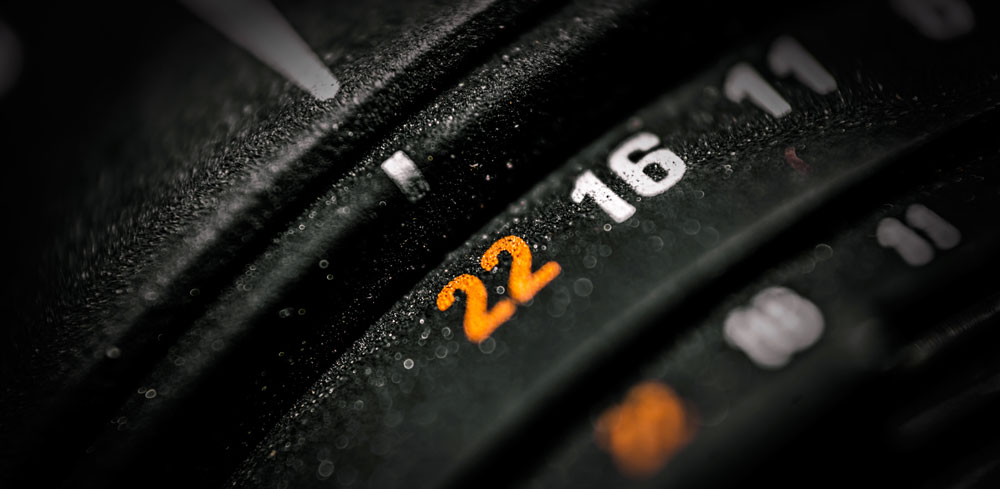
When you enjoy shooting, you don't think too much about the prints on the side of the lens. At that point, they don't really matter, the most important thing is the shooting itself.
Labels become more important at the latest when you are buying a new lens, or an accessory for a lens. Will this lens fit my camera? What size filter is suitable? What is a zoom lens? What does the lens's aperture mean? Thinking about these can be painful when the labels may seem very cryptic.
- Is the lens compatible with APS-C, FullFrame or mirrorless bodies?
- How do I know what kind of filter fits my lens?
- Does the lens have image stabilization?
- Suitable lens for x photography?
How do I know if a lens is suitable for a full-frame, frame-mount, or mirrorless camera body?
Each manufacturer has their own abbreviations that describe the lens mount and compatibility. Here they are compiled and grouped.
It is important to note that you can also attach lenses suitable for full-frame camera bodies to small sensor bodies. However, the other way around is usually not possible, as there may be structural differences in the way small sensor lenses are attached.
Lenses with the following marking are suitable for APS-C or crop sensor bodies:
- Canon: EF-S
- Nikon: DX
- Pentax: DA
- Sigma: DC
- Sony: DT and E
- Tamron: Di II
- Tokina: DX
Only lenses with the following markings are suitable for FullFrame camera bodies:
- Canon: EF
- Nikon: everything except DX
- Pentax: FA
- Sigma: DG
- Sony: all except DT, FE and E
- Tamron: Di
- Tokina: everything except DX
The following lenses are suitable for mirrorless cameras:
- Canon (APS-C): EF-M, RF-S
- Canon (FullFrame): RF
- Fujifilm: XF, XC, X-Mount
- Nikon (APS-C): 1 Nikkor
- Nikon (Full Frame): Z
- Sigma: DN
- Sony: E, FE
- Tamron: Di-III
- Panasonic and Olympus: Micro Four Thirds (m4/3)
What size filter or lens cap fits the lens?
On the side of the lens and/or the front lens frame there is a Ø symbol and a number that indicates the diameter of the front lens of the lens. This number also tells you the size of the filters and lens hood that will fit the lens.
Image stabilizer, image stabilization, lens stabilization, vibration reduction
Stabilization has almost as many names as it has markings, as each manufacturer uses its own abbreviation.
Image stabilization makes handheld shooting easier, especially with longer exposure times and longer focal lengths.
- Canon lenses: IS (Image Stabilizer)
- Nikon lenses: VR (Vibration Reduction)
- Fujifilm lenses: OIS (Optical Image Stabilizer)
- Panasonic lenses: OIS (Optical Image Stabilizer)
- Sigma lenses: OS (Optical Stabilizer)
- Pentax lenses: SR (Shake Reduction)
- Sony lenses: OSS (Optical SteadyShot)
- Tamron lenses: VC (Vibration Control)
- Tokina lenses: VCM (Vibration Correction Module)
The focal length of a lens is expressed in millimeters.
The focal length of a lens indicates how wide or narrow the angle of view of the lens is. The focal length is marked on the side of the lens in millimeters, such as 50mm, 24-70mm or 200-500mm. The longer the focal length, the narrower the angle of view produced by the lens and the more the lens magnifies the subject being photographed.
You often hear the question of what is the right lens (focal length) for a particular shooting situation. However, there is no clear answer to this. The right focal length is the one that gets you the image you want. However, focal lengths can be roughly divided as follows:
- For landscape photography, star photography: 8-35mm
- For street photography, event photography and general photography: 35-50mm
- For portrait photography, sports photography: 50-200mm
- For bird and animal photography, sports photography: 200-800mm
{ "@context": "https://schema.org", "@type": "Article", "mainEntityOfPage": { "@type": "WebPage", "@id": "https://www.kameraliike.fi/fi/article/objektiivien-merkinnat-ja-numerot-selitetyna/16889" }, "headline": "Lens markings and numbers explained", "description": "Quick overview of lens markings. Answers to questions: how do I know what the correct filter size is, and what is a zoom lens?", "image": "", "author": { "@type": "Organization", "name": "Kameraliike.fi", "url": "https://www.kameraliike.fi" }, "publisher": { "@type": "Organization", "name": "", "logo": { "@type": "ImageObject", "url": "" } }, "datePublished": "2021-09-19" }