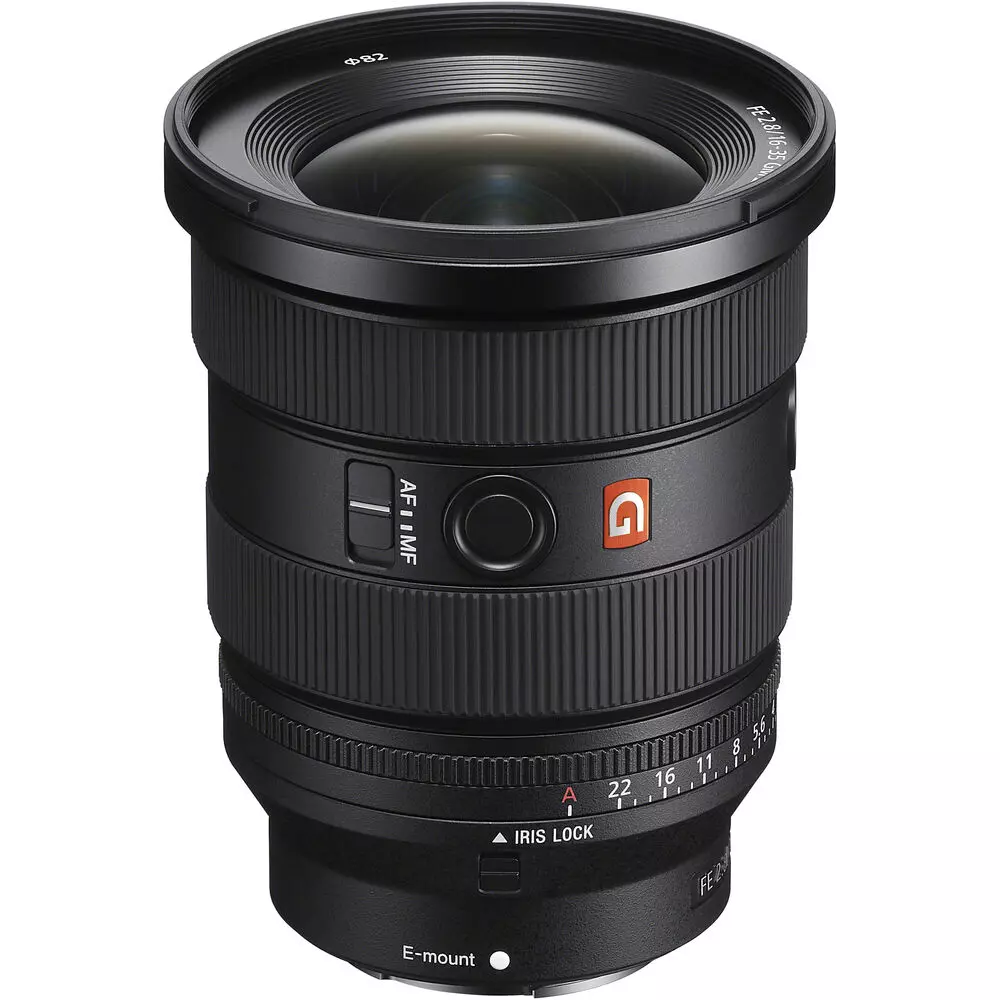
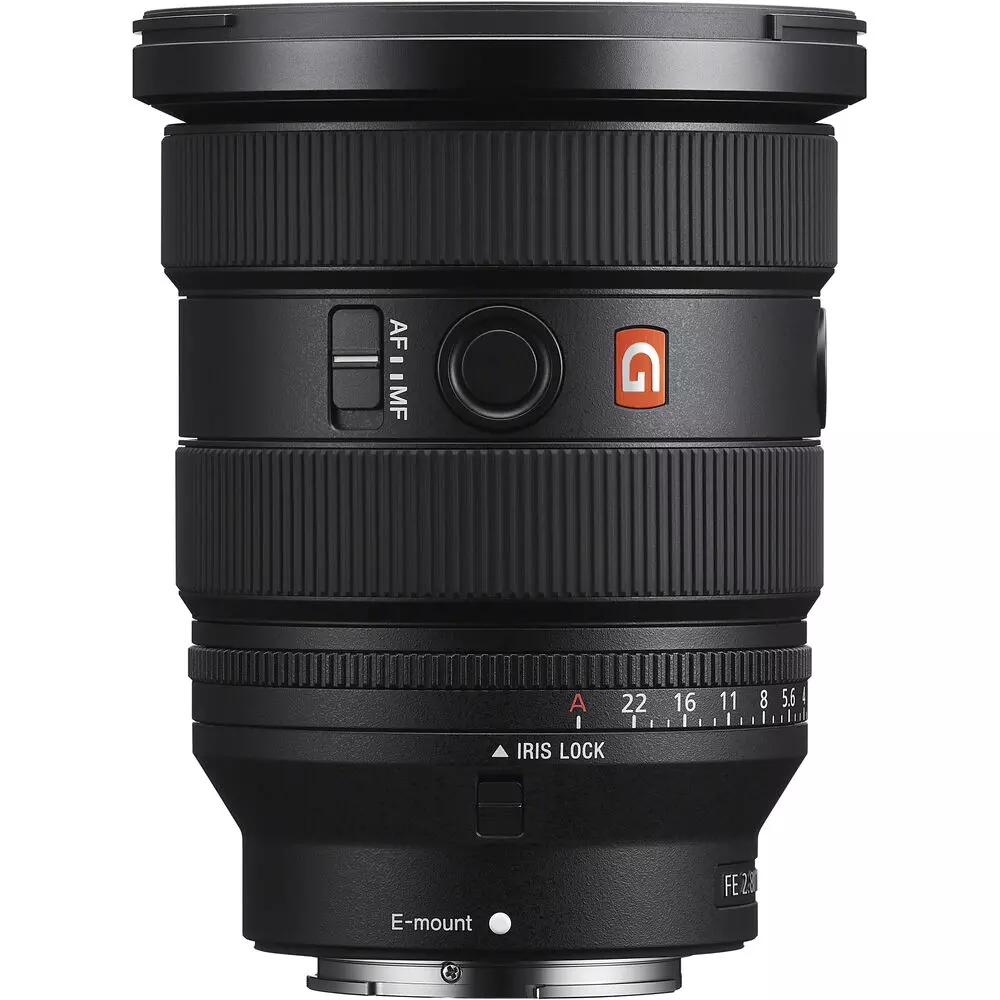
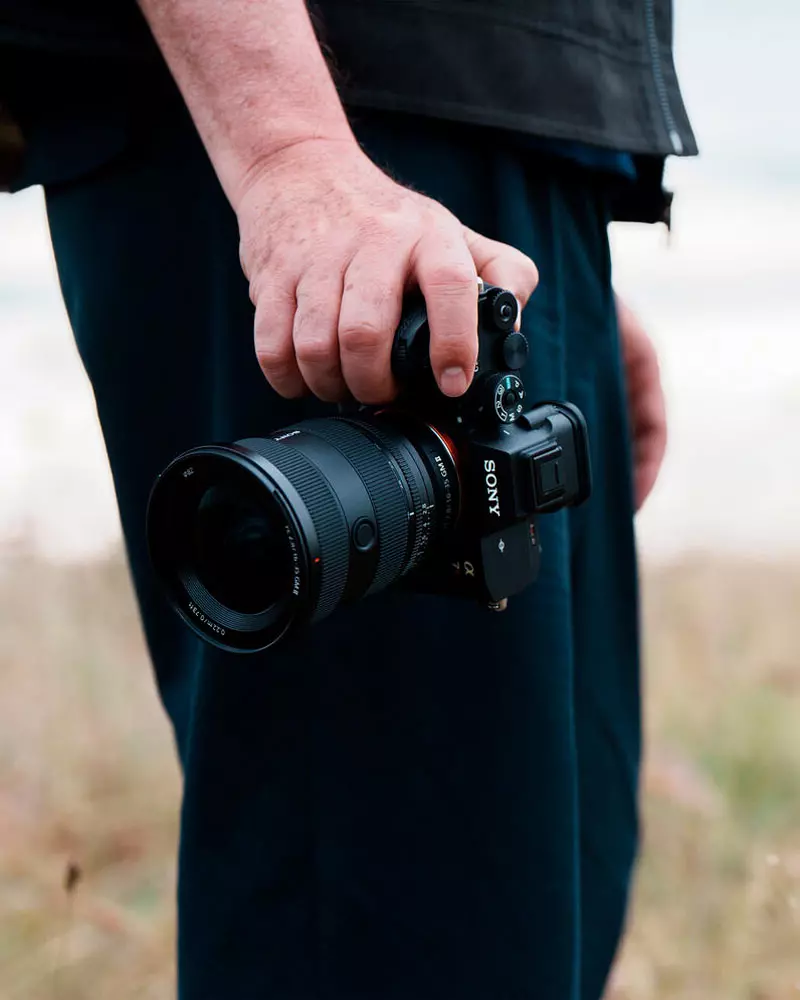
Sony FE 16-35mm f/2.8 GM II lens




Aktiiviset kampanjat

Varmasti yhteensopivat tarvikkeet
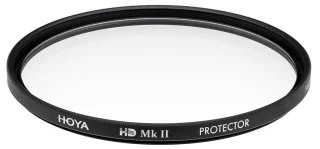
Hoya HD MkII Protector 82mm protective filter

Hoya Fusion Antistatic Next CIR-PL 82mm pyöröpolarisaatiosuodin
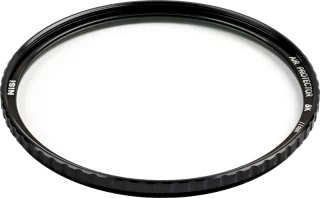
NiSi AIR Protector 82mm protective filter
Sony FE 16-35mm f/2.8 G Master II lens
Sony has previously updated the 24-70mm F2.8 and 70-200mm F2.8 G Master professional series lenses, and now it was the turn of this 16-35mm F2.8 wide-angle zoom.
The reasons for the update are the same for all of these: when the first 16-35mm G Master was announced, there were no 61-megapixel sensors, 30 FPS continuous shooting, bodies suitable for cinema use, or even the ability to imagine continuous autofocus that detects birds and eyes. Now Sony has all of these and the lenses need to be part of this development, especially for professional use and demanding enthusiasts.
- New optical design, better sharpness and less distortion
- New faster autofocus, focus also works with Sony A1 burst mode
- Approximately 20% lighter and 10% smaller than the previous version
- Closest focusing distance 22cm
- Aperture control ring, two programmable Focus Hold buttons
- Weather and dust resistant with fluoride coating on the front lens
First things first, the optical design is completely new. These professional wide-angle lenses are as good as the edge definition is, as the subject matter is often interiors, buildings or landscapes that reveal a softness of the edge. The previous 16-35mm G Master was also very good, but improvements have been made. In addition, for example, when shooting against backlight or from bright light sources, reflections have been minimized.
In addition to the raw resolution, Sony says it has improved bokeh, meaning that areas outside the focus area are drawn more beautifully and softly.
A clear improvement is also the closest focusing distance, which is 22cm. And this is calculated from the sensor level, meaning that subjects can be brought really close to the camera.
Autofocus and video recording
Autofocus is handled by four XD focus motors and this keeps up with the subject even in 30FPS continuous shooting. In addition, this enables, for example, 4K 120P slow-motion videos with real-time focus on suitable bodies. In addition, the focus also works when changing focal lengths, if you need to react to unexpected situations while shooting.
The focusing element moves inside the lens body, meaning the length or center of gravity of the optics does not change and image sharpness remains good at all focusing distances.
The Sony FE 16-35mm GM II works great even in professional video shooting, in addition to the aforementioned focusing speed, the breathing compensation function found in new Sony cameras works. This means that when you change the focus, the image does not change its size in a disturbing way.
In addition, manual focus works linearly, meaning that follow focus systems can be used easily.
Professional-level usability
The weight and size have been compressed to a smaller size, but the durability, weather protection and usability are still at a precise pro level. The weight reduction is partly explained by the optical structure and materials. The body and parts are made of metal or plastic depending on the stress placed on the part. The Sony 16-35mm is naturally
The controls are good for Sony's current level, meaning there is a manual aperture ring, where you can turn off the clicks for different aperture values, or you can take care of the entire aperture adjustment entirely in the camera.
There are two programmable focus hold buttons. There's a handy AF/MF switch on the side that lets you switch between autofocus and manual focus without having to go into the camera's menus.
The Sony 16-35GM II is dust and splash resistant, and its front lens has a fluoride coating that repels dirt and grease.
In addition to the lens hood, the lens comes with a zippered, padded protective case for the lens.
Specifications:
- Lens mount: Sony FE mount (Full Frame)
- Focal length: 16-35mm
- Aperture: f/2.8
- Minimum aperture: f/22
- Optical construction: 15 elements in 12 groups, 11 rounded diaphragm blades
- Closest focusing distance: 22.1cm
- Magnification: 0.32x
- Filter thread: 82mm
- Dimensions: 87.8 x 111.5 mm
- Weight: 547g
The sales package includes:
- Sony FE 16-35mm f/2.8 GM II Lens (Sony E) lens
- Sony ALC-F82S 82mm lens cap
- Sony ALC-R1EM with rear camera
- Sony ALC-SH177 lens hood
- Protective bag
Osta myös
Arvostelujen yhteenveto
Kysy tuotteesta

ma-pe 9-17 ja la 10-14