Sigma 70-200mm F2.8 DG DN OS Sports (Sony FE) -objektiivi




Pakettidiili

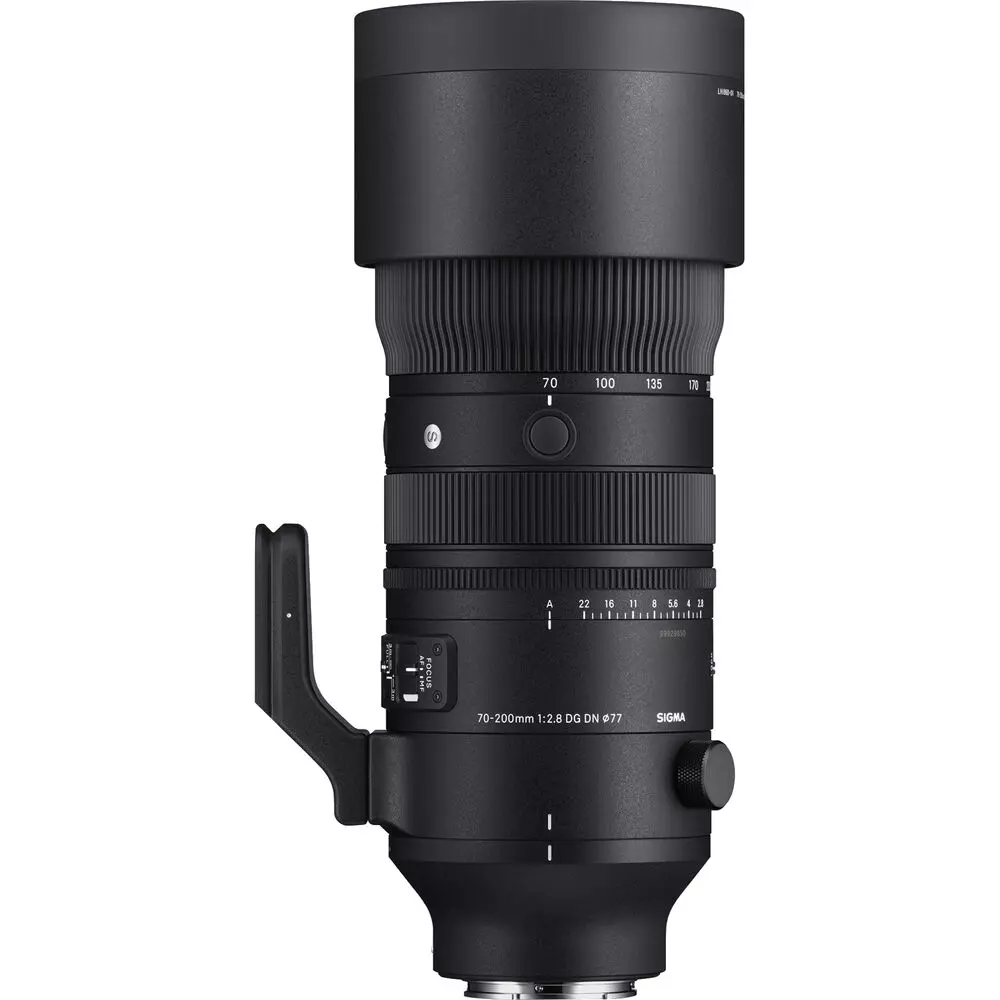
Sigma 70-200mm F2.8 DG DN OS Sports (Sony FE) lens
The Sigma 70-200mm is a completely new lens for Sony mirrorless system cameras, the old version for mirrorless cameras only has the focal length left. The optical structure has been updated and especially the image stabilization and autofocus are now at a completely new level and can meet the demands of cameras such as the Sony A1 and A7R V!
The image quality has been praised in initial tests, and this is a really tough competitor to Sony's own professional-level G Master lenses.
- Completely redesigned optical design designed for mirrorless cameras
- Two HLA focus motors and two focusing lens groups - fast AF
- Up to 7.5 f-stop image stabilization
- Aperture control ring for the first time on a Sigma zoom
- Three programmable AF-L points
- Internal zoom - lens size does not change when changing focal length
- Weatherproof construction
- Made in Japan
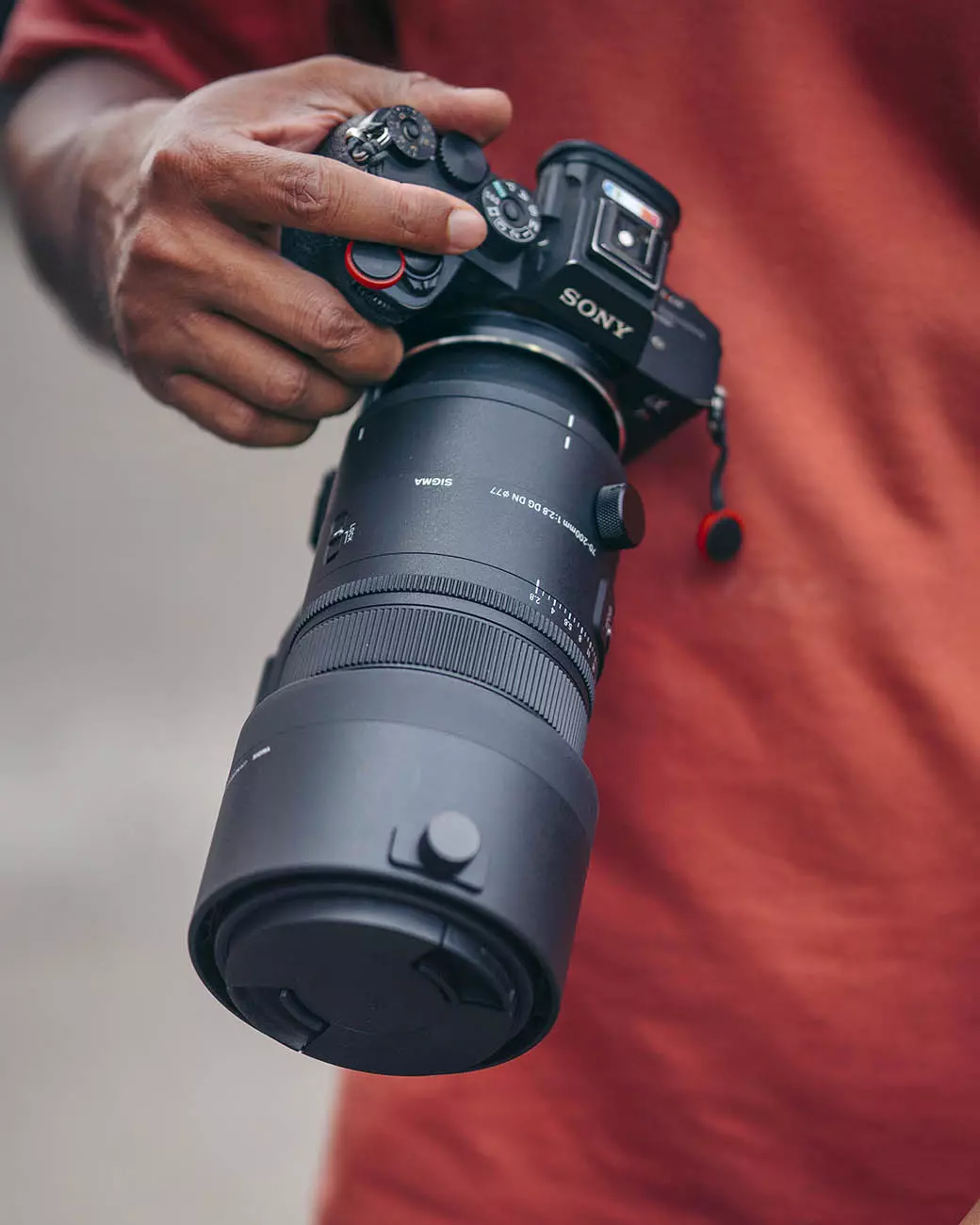
Sigma's new 70-200mm DG DN will certainly be compared to the corresponding telephoto zoom from Sony's G Master series, and in size they are surprisingly similar, i.e. smaller than the mirrorless versions. However, the Sigma is about 300g heavier than the Sony.
Ultra-fast autofocus
Focusing is handled by two HLA High Response Linear Actuator focus motors and the focus elements are two groups moving in opposite directions. This means that the lens features Sigma's latest technology.
Note: Since this is not a Sony lens, there is a small limitation in continuous shooting. Continuous shooting is possible in AF-C mode even with fast continuous shooting, but if the subject is moving with this mode activated, the maximum speed is most likely 15 frames per second. If the subject is static, continuous shooting can also be 30FPS.
Despite this exception, the performance is among Sigma's best, meaning that focusing is fast and accurate.
Sigma 70-200mm F2.8 in video shooting
In addition to image quality, focus breathing, i.e. the subtle but annoying change in the focal length of the image when focusing, affects the quality impression in video shooting. However, this is very well minimized with the new Sigma, which is a great thing because the breathing compensation feature found in Sony's better bodies only works with Sony's own lenses.
The Sigma is not parfocal, meaning that when you change the focal length, the focus position also changes slightly. Fortunately, the Sony's fast focus often corrects this slight shift, but for example with manual focus, this is not parfocal like cine lenses.
The Sigma 70-200mm F2.8 is conventional in terms of usability, meaning that stabilizer adjustments and focus limitation can be made directly with buttons. In addition, there are three programmable AF-L buttons on the front of the lens for activating the focus feature, for example. In addition, for the first time in a Sigma zoom lens, there is an aperture control ring, this control ring also has an automatic setting and lock, like Sony.
Zooming is handled somewhat obliquely by the adjustment ring located closer to the front lens. The length of the lens remains the same when zooming from one extreme position to the other, meaning the package is very sturdy mechanically and there are no sliding tubes exposed where dust could get inside the optics.
Comes with a fixed and rotating tripod collar, protective case and lens hood. Weather protection is good, as with Sigma's Sports series.
Specifications:
- Compatibility: Sony FE / Sony E mount
- Focal length: 70-200mm
- Aperture: F2.8
- Image stabilizer
- Lens construction: 20 elements in 15 groups, 11 rounded diaphragm blades
- Closest focusing distance: 65-100cm
- Filter thread: 77mm
- Size: 90.6 x 207mm
- Weight: 1335g
The sales package includes:
- Sigma 70-200MM F/2.8 DG DN OS SPORTS SONY E/FE lenses
- LENS HOOD LH860-01 -lens hood
- SOFT CASE LS-591SEL (For 591965/969) storage bag
- TRIPOD SOCKET TS-151 tripod collar
Made in Japan
Arvostelujen yhteenveto
Kysy tuotteesta

ma-pe 9-17 ja la 10-14
TIETOA