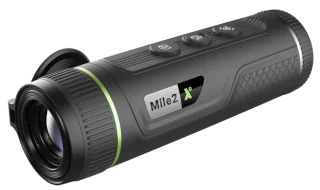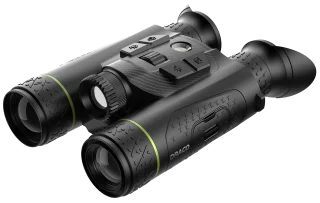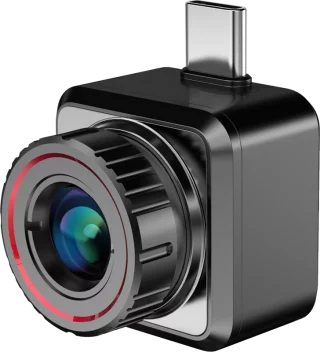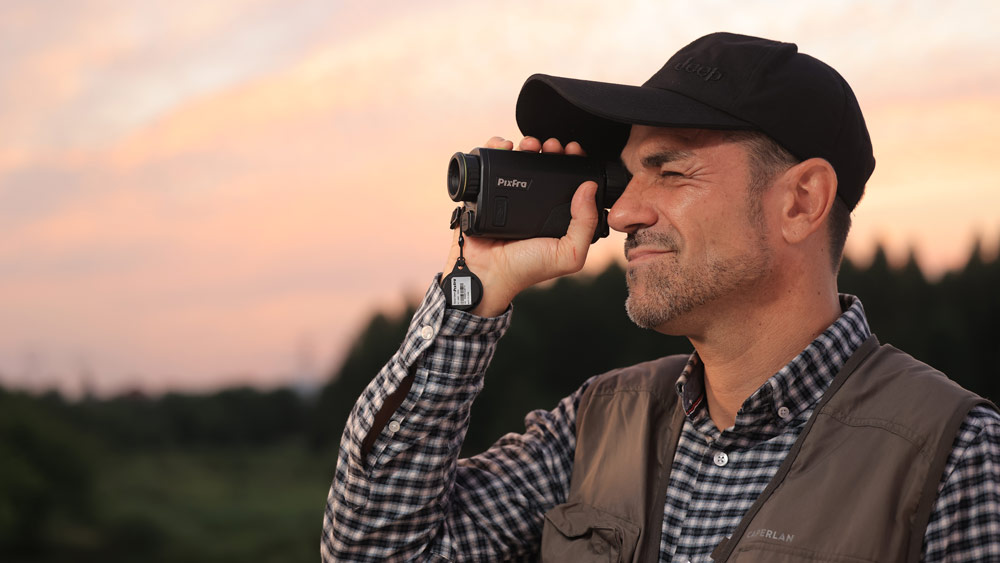



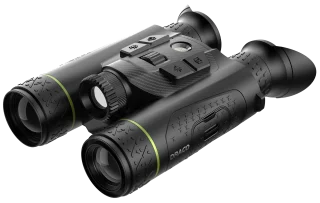
Thermal cameras and night vision devices for technical examination of structures and observation of nature. We offer a comprehensive selection of devices for various purposes.
Here we present five features that help you compare thermal cameras with each other.
Resolution
Thermal resolution refers to a camera's ability to distinguish temperature differences between objects. The higher the resolution, the more accurately the camera can distinguish small temperature differences due to the larger number of pixels. This is important for accurate detection and identification of small or distant objects.
The resolution of the devices we sell is 640x512 in the better devices, and there is often a cheaper model option with a lower resolution if needed.
NETD (Noise Equivalent Temperature Difference)
NETD indicates the camera's ability to distinguish small temperature differences from noise. The lower the NEDT, the more sensitive the camera is to small temperature differences, in a similar way to how the amount of noise in digital cameras affects image quality. Side-by-side images taken with cameras with a NETD of around 60 and a NETD of around 30 reveal that as the number decreases, the image quality clearly improves!
If temperature differences are experiments, NETD does not need to be top-notch, but it is still very useful when photographing structures and observing from a long distance. NETD is expressed in millikelvins, abbreviated mK. For example, Pixfra's 30mK-capable cells are top-notch in their price range.
Manufacturers also often state the pixel size in micrometers, e.g. 12µm, but this does not indicate resolution or NETD value.
Lens focal length and aperture
The focal length of the lens determines the size of the camera's field of view and zoom capabilities. Choose the focal length according to the intended use, for example, a wider-angle lens is suitable for monitoring larger areas, meaning it is easier to find a target, while a longer focal length allows for precise focus on distant targets and more reliable target identification.
In addition, a wider lens works better indoors, as well as at close range, for example when examining blueprints or electrical devices.
The brightness of a thermal imaging camera's lens affects its ability to collect thermal radiation in low light or over long distances. Higher brightness allows for better performance in challenging conditions.
Capture speed and refresh rate
The frame rate determines how quickly the camera can capture images or videos. The refresh rate, in turn, indicates how quickly the camera updates the image in real time. Faster frame and refresh rates may be necessary for monitoring fast-moving objects or in situations where real-time tracking is essential.
For example, a 9Hz image from a Flir device, i.e. an image updated 9 times per second, may be sufficient for examining technical devices, but when viewing a distant object such as a bird from a handheld device, a 50Hz speed is almost necessary.
In addition to these features, there are other factors, such as considering size and weight, ease of use of the user interface, durability, and possible additional features such as the ability to save images or wireless data transfer, and even live image transfer to multiple phones.
Choosing the best thermal camera always depends on individual needs and the environment in which it will be used. It is worth contacting our customer service and we will be happy to help!
015 211 540
Avoinna myymälän aukioloaikoina ma-pe 9-17 ja la 10-14
asiakaspalvelu@kameraliike.fi
Vastaamme asiakaspalvelun viesteihin viimeistään 24 h kuluessa