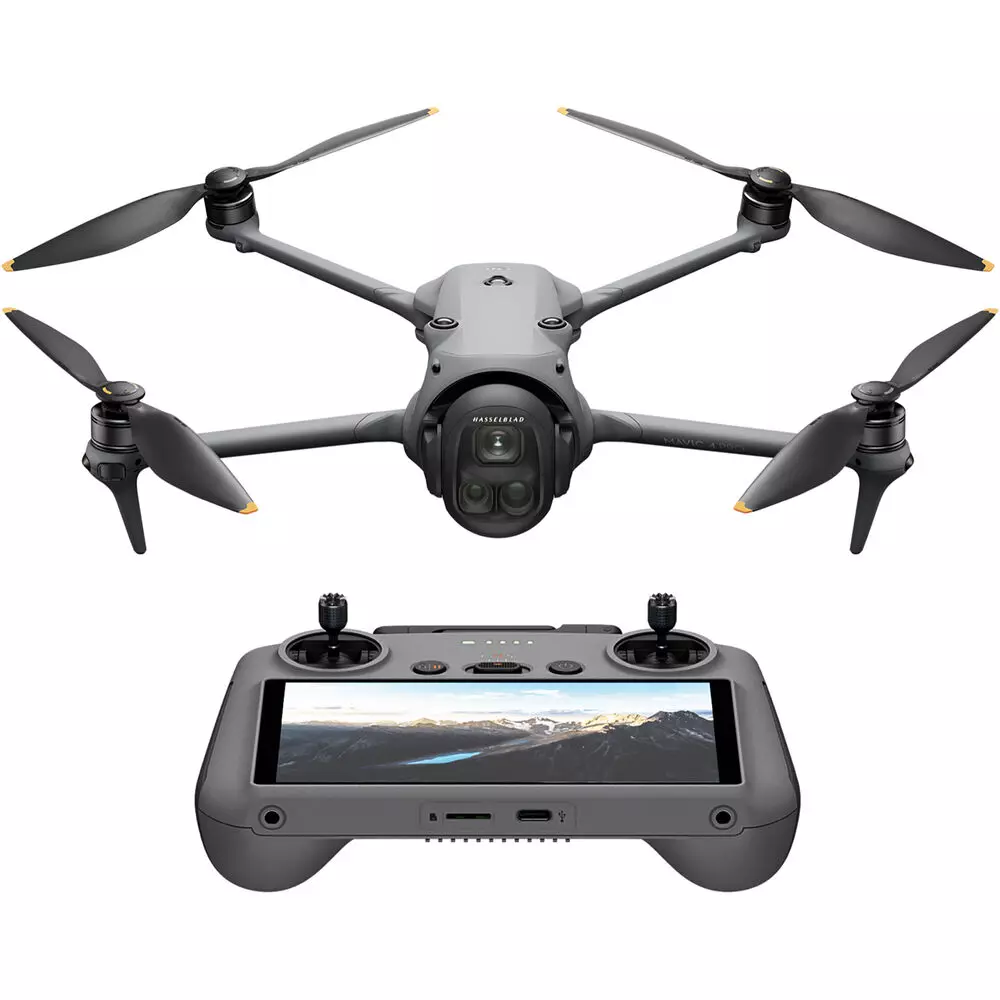
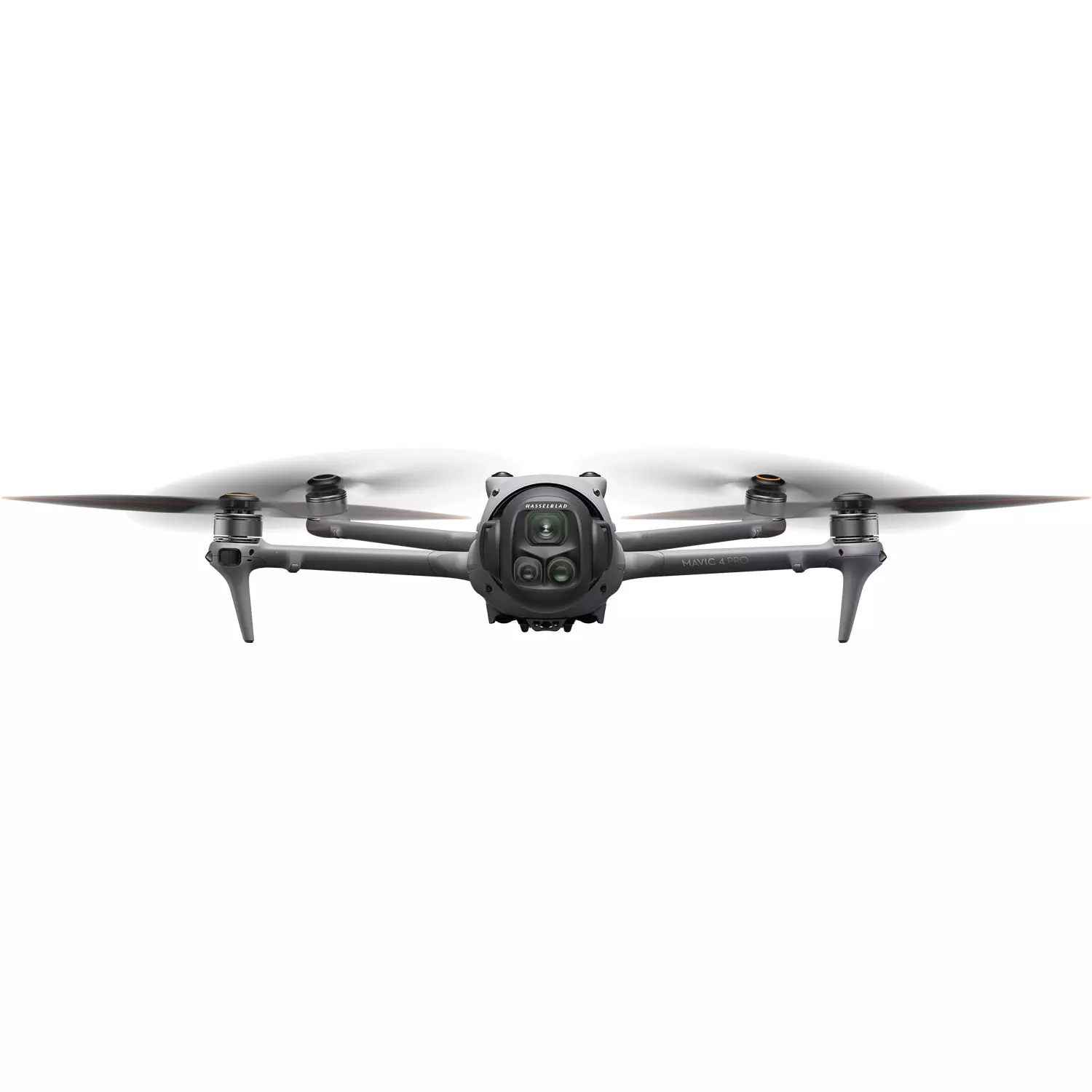
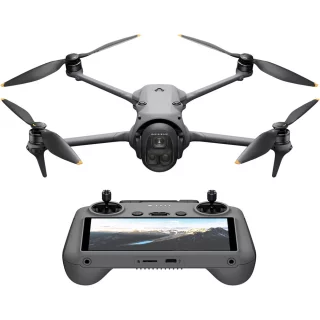
DJI Mavic 4 Pro + DJI RC2 controller -drone with on-screen controller




Bundle Deal
Compatible accessories
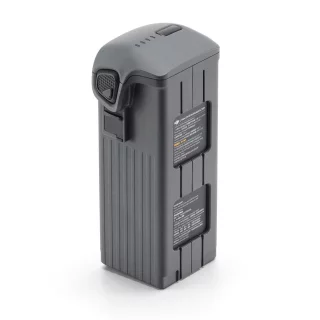
DJI Mavic 4 Pro Intelligent Flight Battery
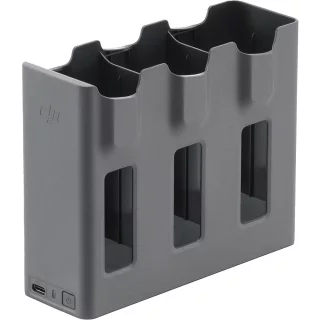
DJI Mavic 4 Pro Parallel Charging Hub
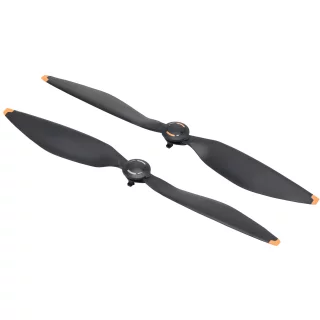
DJI Mavic 4 Pro Propellers -propeller
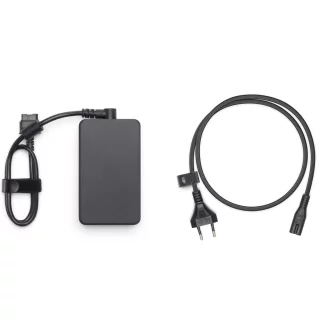
DJI 240W Power Adapter charger
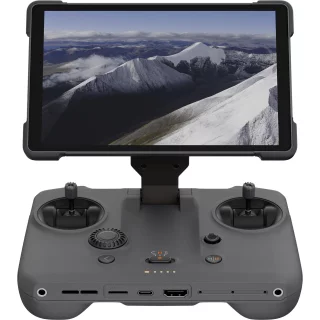
DJI RC Pro 2 controller for drone

DJI Care Refresh additional insurance for Mavic 4 Pro (12 months)

DJI Care Refresh additional insurance for the Mavic 4 Pro (24 months)
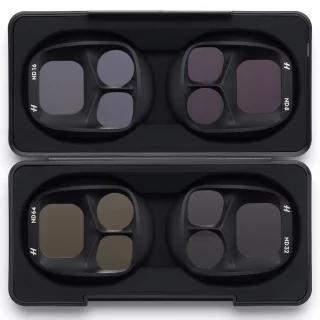
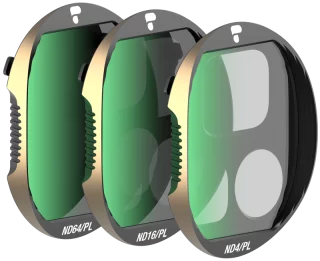
PolarPro Vivid Collection Filter Set (DJI Mavic 4 Pro)
DJI Mavic 4 Pro Fly More Combo + DJI RC controller drone
A whopping 51 minutes of flight time, a 4/3-inch sensor, three cameras, and a 360-degree gimbal
- C2 classification
- Three cameras - Wide-angle camera and two telephoto cameras (3x and 7x)
- Large 4/3-inch image sensor with wide-angle camera
- 120fps slow motion at 4K resolution
- The camera rotates 360° and you can shoot 70° upwards
- 64GB internal memory (of which approximately 42GB is available)
- 51 minutes flight time
- Due to OccuSync O4+ transmission technology, the maximum range in the EU is approximately 7-10km
- Finnish manual available electronically from this link
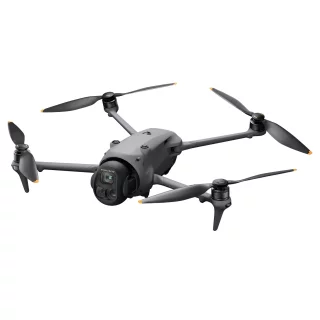
The DJI Mavic 4 Pro is the highly anticipated next-generation, high-end drone that will take aerial photography to the next level. The camera unit stabilizer has been completely redesigned to allow for better camera movement and pointing. The spherical Infinity Gimbal allows for 360-degree rotation, so you can easily achieve cinematic 'Dutch angles' or other dramatic, gravity-defying moves - giving your footage a touch of FPV flying without having to fly an FPV drone yourself. The gimbal can also tilt up to 70 degrees, so you can get awe-inspiring shots of high-altitude targets.
The Mavic 3 Pro had ActiveTrack technology, which has been upgraded to ActiveTrack 360. The main difference is that the drone can now follow autonomously and make navigation decisions on its own. The Mavic 4 Pro’s low-light capabilities make tracking even better in city lights or low light. Tracking can even maintain focus if the underside of the subject is partially obscured during filming. The tracking system also has better directional awareness and a range of up to 656 meters when detecting vehicles, which significantly improves car photography.
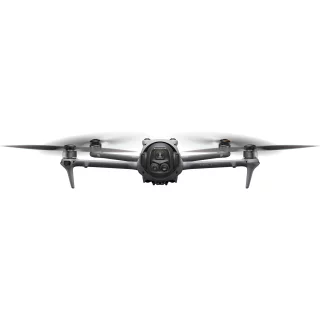
The M4 Pro drone has six low-light sensors with a sensitivity of 0.1 lux. This enables obstacle detection in difficult, near-dark lighting conditions. If the lighting drops below 0.1 lux, the Mavic 4 Pro's forward-facing LiDAR detects any clear obstacles. The RTH or return-to-home function has also improved thanks to the NightTime RTH and Non-GPS RTH features. NightTime RTH utilizes the drone's LiDAR sensor to detect and avoid obstacles.
The Mavic 4 Pro doesn't need to be powered on to transfer videos and photos. Quick Transfer allows you to wake the device up using the DJI Fly app for wireless file transfer without the flight controllers apparently turning on. If wifi isn't an option, simply connect the drone to your computer using a USB cable without having to power on the drone.

Three cameras
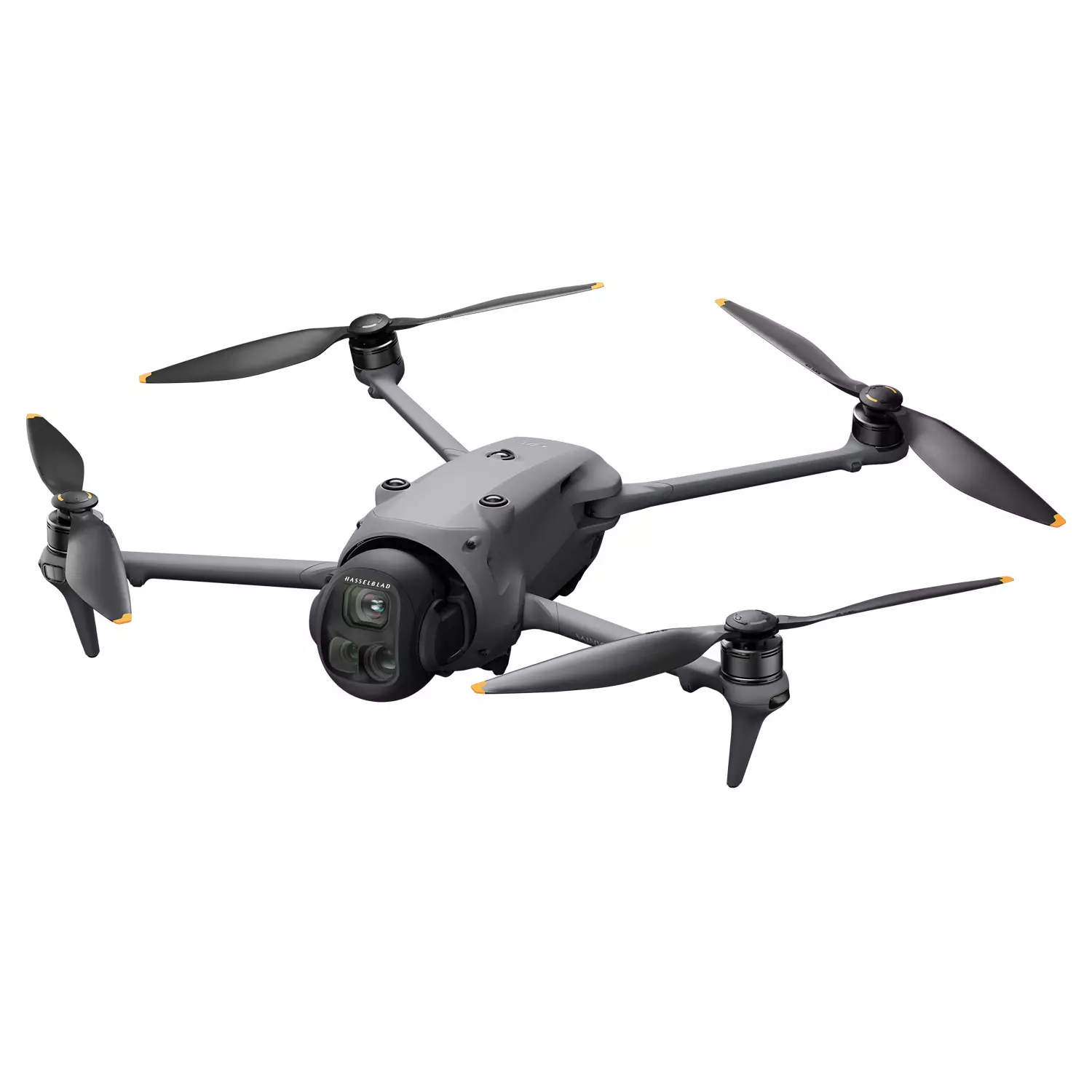
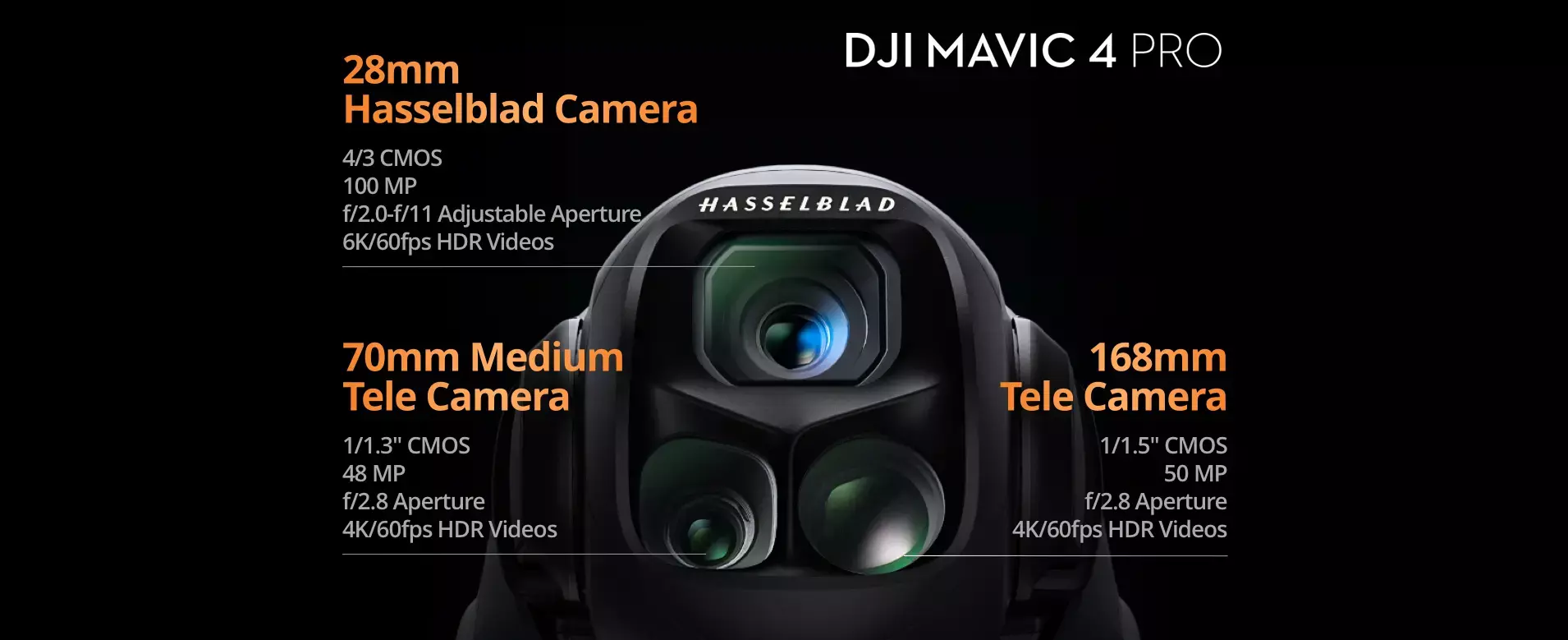
Like the Mavic 3 Pro, the DJI Mavic 4 Pro drone contains three cameras - a wide-angle camera and two telephoto cameras.
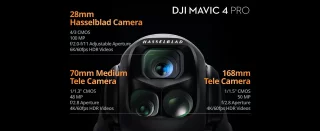
- Main camera: 28mm cine equivalent (f/2-11), 100 megapixels, 4/3 CMOS Hasselblad sensor, 6K/60fps HDR video
- Medium Telephoto camera: 70mm cine equivalent (f/2.8), 48 megapixels, 1/1.3' CMOS sensor, 4K/60fps HDR video
- Telephoto camera: 168mm cine equivalent (f/2.8), 50 megapixels, 1/1.5' CMOS sensor, 4K/60fps HDR video
The main camera features a 4/3-inch, 100-megapixel image sensor designed in collaboration with Hasselblad, combined with a 28mm cine-equivalent lens - slightly narrower than the previous 24mm. The camera's aperture is adjustable in the F2-F11 range, meaning the main camera is a full aperture faster in terms of light output. The large sensor collects more light, which has resulted in a clear improvement in dynamics and image quality in low light.
The other two cameras are telephoto lenses that offer 3x and 7x magnification, with cine equivalent optics corresponding to focal lengths of 70mm and 168mm.
The biggest challenge with the previous generation version has been the quality of the longest telephoto camera, which was good mostly for observing distant objects but not for recording. This has been praised as having improved significantly in the Mavic 4 Pro. Due to the improved image quality, the telephoto is now suitable for videography and production use, partly due to the D-log.
D-Log on all three cameras
All three cameras now support D-Log, D-Log M, HLG and Standard profiles - and best of all, these settings carry over when you switch lenses. This is a huge help both during the shoot itself and during post-production and color grading. No more agonizing over or explaining unsuitable image profiles to the editor.

Battery and battery life
The DJI M4Pro comes with a 6654 mAh (95Wh) battery that provides up to 51 minutes of flight time. Flight time is affected by many factors, and you can only get close to the maximum time under ideal conditions, and when you are not using ActiveTrack or shooting video, a realistic 39-45 minutes is excellent.
The included 100W charger/AC adapter charges the battery even faster, in 80 minutes. If you use the more powerful 240W and charging dock, one battery can be fully charged in 51 minutes, and three batteries in 90 minutes.
Other features:
- Advanced RTH (Return to Home)
- Live image up to 1080p60 resolution
- Support for OcuSync 4+ video transmission
- 64 GB internal memory
- Supports up to 1TB memory cards. U3/V30 or faster cards recommended
| Mavic 4 PRO | Mavic 3 Pro | Air 3S | |
|---|---|---|---|
| Cell | 100Mpix, 4/3' | 20Mpix, 4/3' | 48Mpix, 4/3' |
| Camera 1 | 28mm f/2-11 | 24mm f/2.8-11 | 24mm f/1.8 |
| Camera 2 | 70mm f/2.8 | 70mm f/2.8 | 70mm f/2.8 |
| Camera 3 | 168mm f/2.9 | 166mm f/3.4 | |
| Video broadcast | OcuSync 4.0+ (O4+), 4 antennas, 15 km, 1080p/60p | OcuSync 3.0 (O3), 4 antennas, 15 km, 1080p/60p | OcuSync 4.0 (O4), 4 antennas, 15 km, 1080p/60p |
| Video resolution | 5.1K/50p, DCI or UHD 4K/120p | 5.1K/50p, DCI or UHD 4K/120p | 4K/120p |
| Video bit rate | 200 Mbps (H.264) / 140 Mbps (H.265) | 200 Mbps (H.264) / 140 Mbps (H.265) | 150Mbps |
| Log video | 10-bit D-Log, HDR video (10-bit) | 10-bit D-Log, HDR video (10-bit) | 10-bit D-Log-M |
| APAS version | APAS 5.0 | APAS 5.0 | APAS 5.0 |
| Obstacle detection | Forward, backward, down, left, right and up diagonally | Forward, backward, down, left, right and up diagonally | Forward, backward, down, left, right and up diagonally |
| Flight time | 51 minutes | 43 minutes | 46 minutes |
Specifications:
- Maximum flight speed: 25m/s (in Sport mode) (19m/s according to EU regulations)
- Flight time: up to 51 minutes in ideal conditions
- Wind resistance: 12 m/s
- Internal storage: 8GB
- Satellite support: GPS + Galileo + BeiDou
- Battery: Capacity 6654 mAh / 95Wh, Voltage 17.2 V, Weight 335.5 g
- Video formats: MP4/MOV (MPEG-4 AVC/H.264, HEVC/H.265)
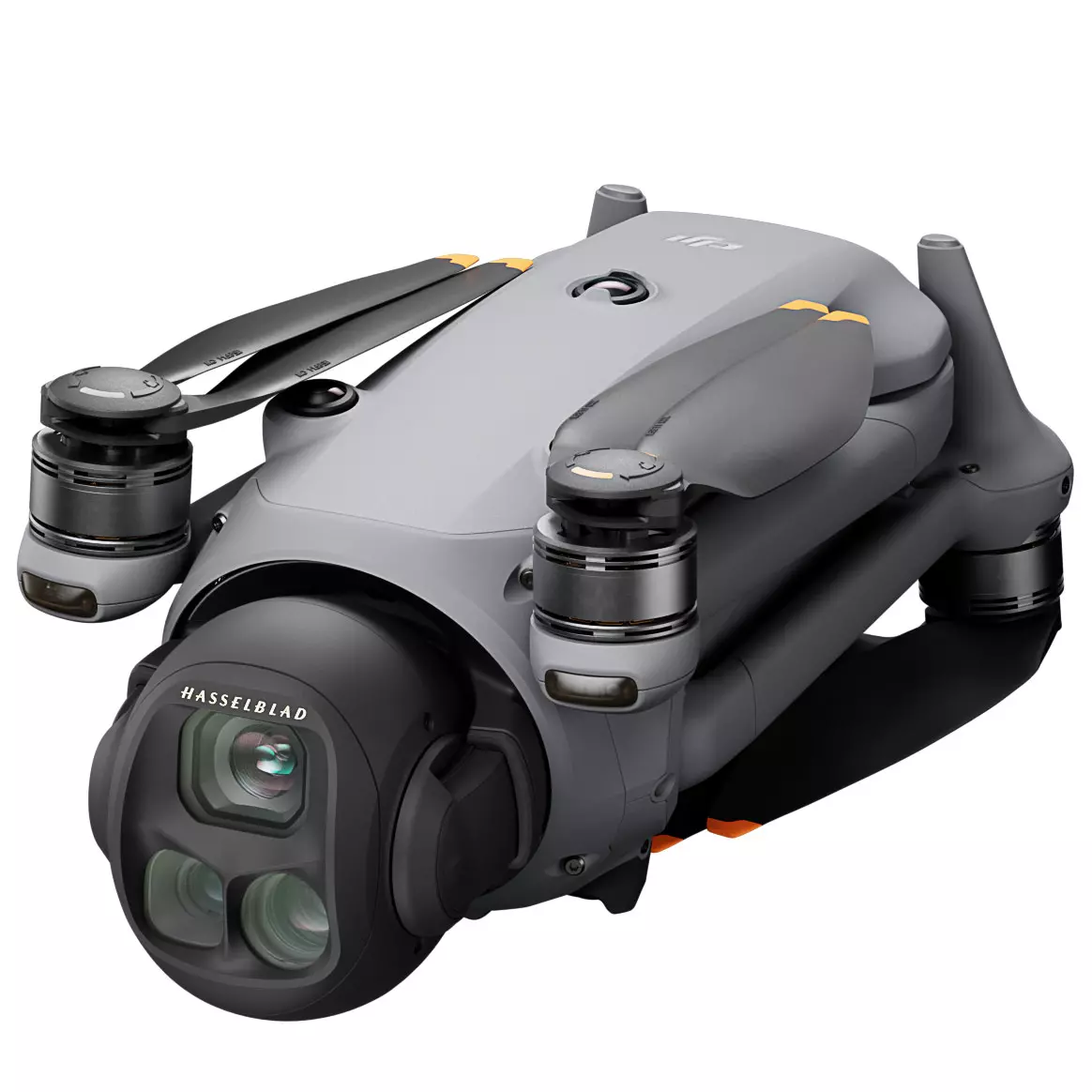
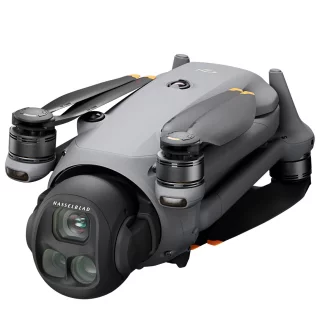
- Dimensions in transport size: 23.1 x 9.8 x 9.6 cm
- Dimensions when opened: 34.75 x 29.8 x 10.77 cm
- Operating temperature: -10° - 40° C
- Weight: 1063g
Main camera:
- Image sensor: 100Mp 4/3 CMOS sensor
- Focal length: 28mm film equivalent
- Aperture: f/2 - f/11
- Sensitivity range: 100-12800
- Electronic shutter speed 8-1/8000 s
- Maximum image size: 12288 x 8192
- 6K: 60fps
- 5K: 5120×2700@24/25/30/48/50p
- DCI 4K: 4096×2160@24/25/30/48/50/60/120fps
- 4K: 3840×2160@24/25/30/48/50/60/120*fps
- FHD: 1920×1080p@24/25/30/48/50/60/120*/200*fps
Second camera:
- Image sensor: 48Mpix 1/1.3' CMOS sensor
- Focal length: Lens 70mm cine equivalent (angle of view 35°)
- Aperture: f/2.8
- Sensitivity range: 100-12800
- Electronic shutter speed 2-1/8000 s
- Maximum image size 8064 x 6048 / 48mp
- 4K: 3840×2160@60
- FHD: 1920×1080@60
Third camera:
- Image sensor: 50Mpix 1/1.5' CMOS sensor
- Focal length: Lens 168mm cine equivalent (angle of view 15°)
- Aperture: f/2.8
- Sensitivity range: 100-12800
- Electronic shutter speed 2-1/8000 s
- Maximum image size 8192 x 6144
- 4K: 3840×2160@60
- FHD: 1920×1080@60
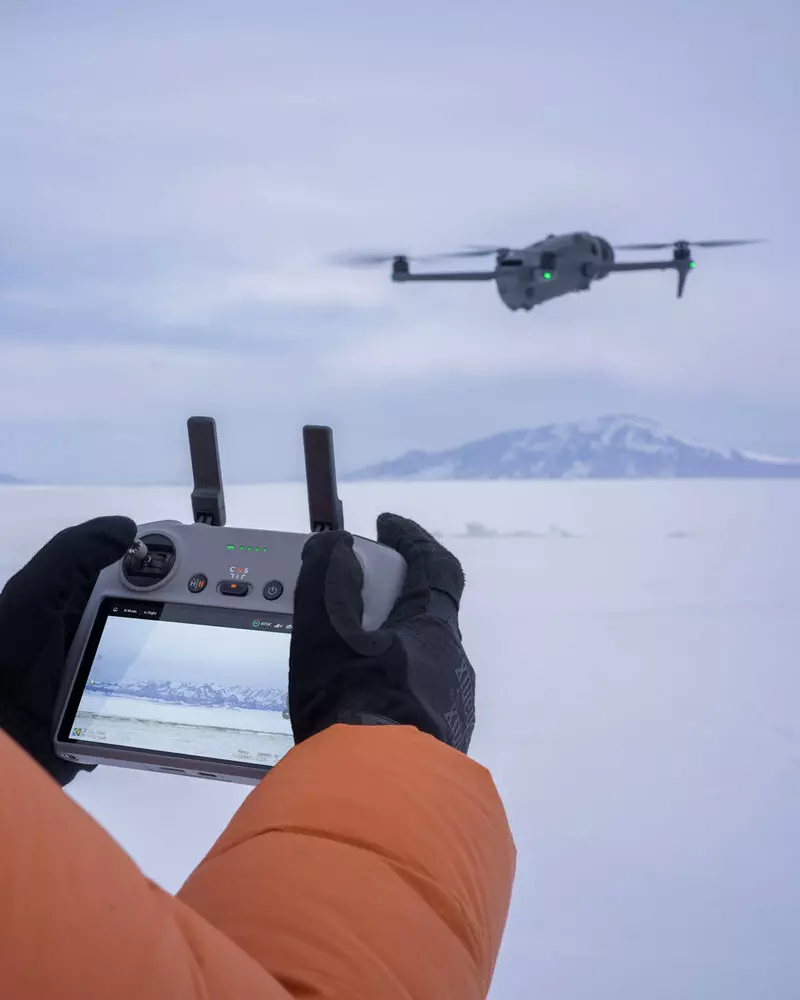
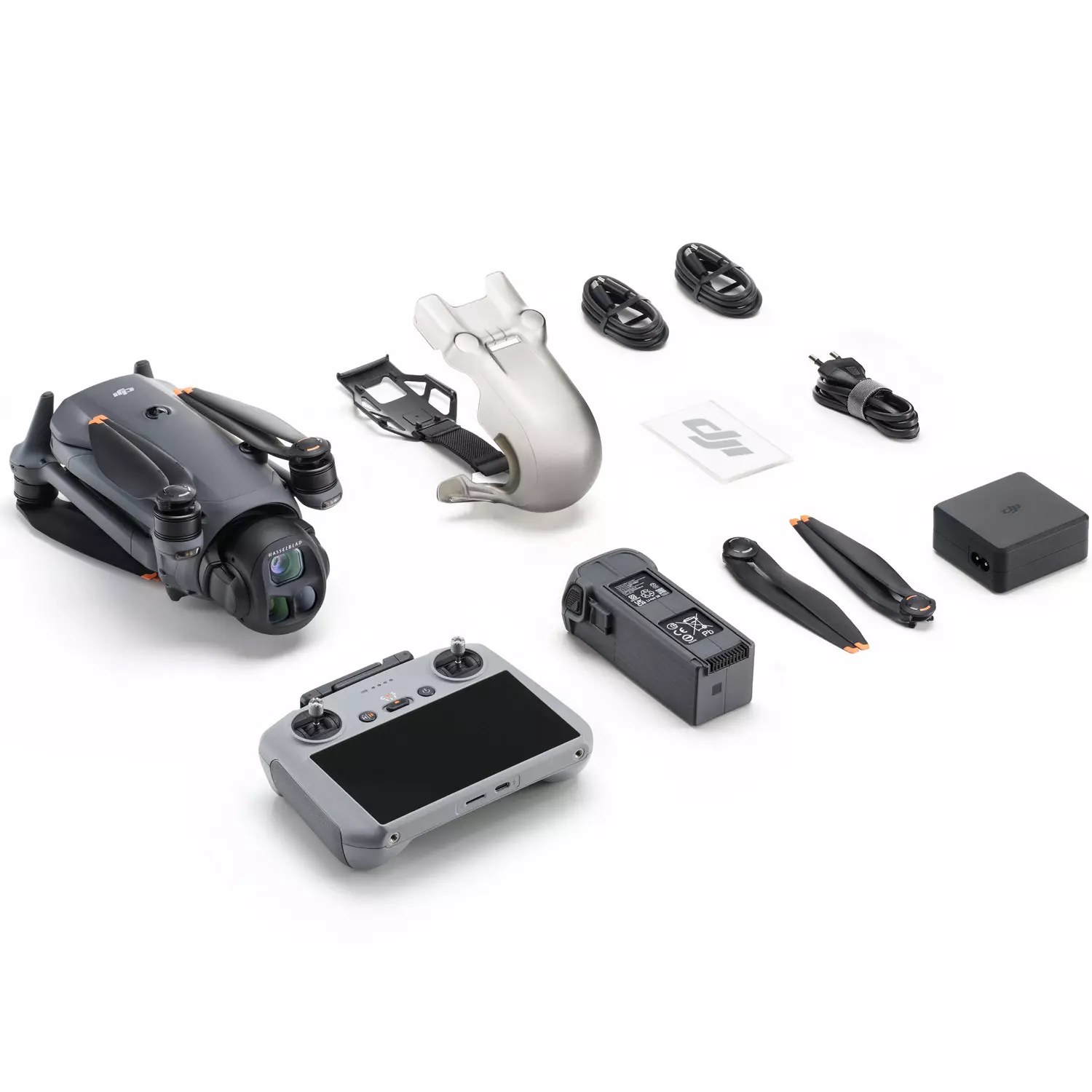
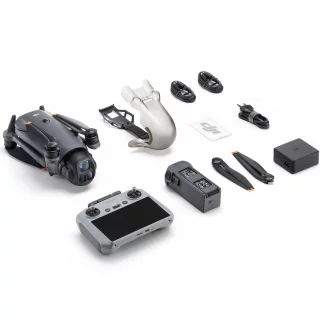
1 x DJI RC 2 ovens
1 x Ohjainticut
1 x Battery
2 x Pair Low-Noise Propellers
1 x 100W AC-Adapter
1 x 'Cunokoppa' Elevator Camera-/Gimbalizer
1 x USB-C 3.0 Cable
Featured
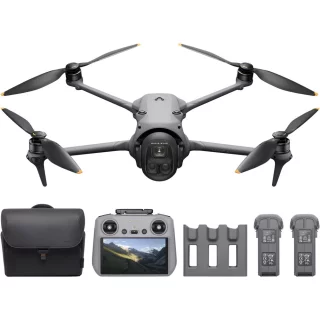
DJI Mavic 4 Pro Fly More Combo + DJI RC2 Controller -drone
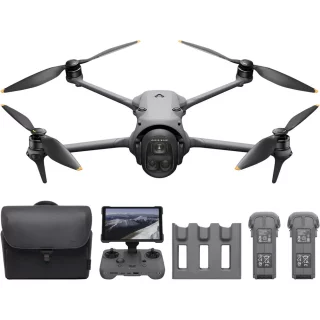
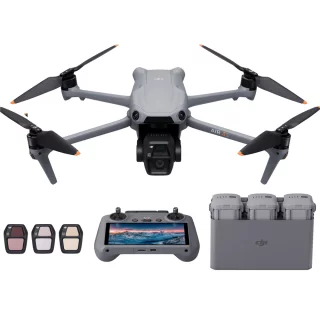
DJI Air 3S Fly More Combo - drone with accessories and on-screen controller
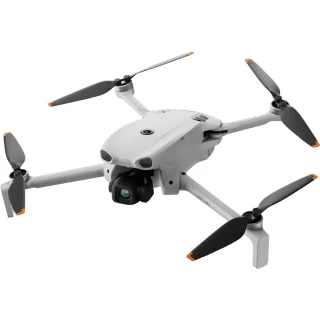
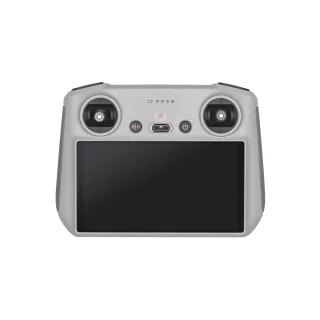
DJI RC Remote Controller for drones (Mini 3 Pro and Mavic 3)
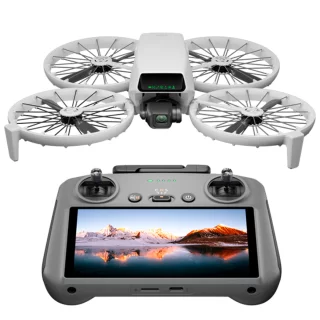
DJI Flip + DJI RC2 controller -drone with on-screen controller
Summary of reviews
Ask about product

Mon-Fri 9-17 and Sat 10-14
INFO