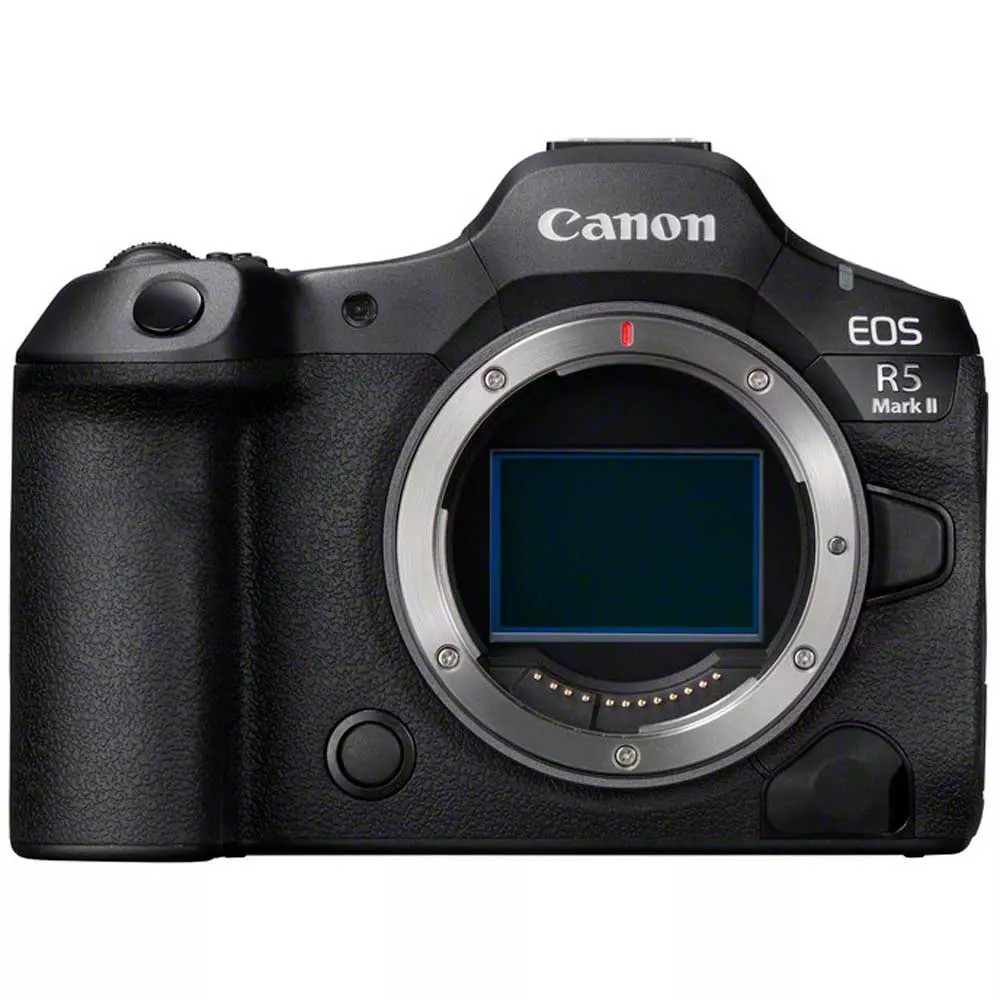
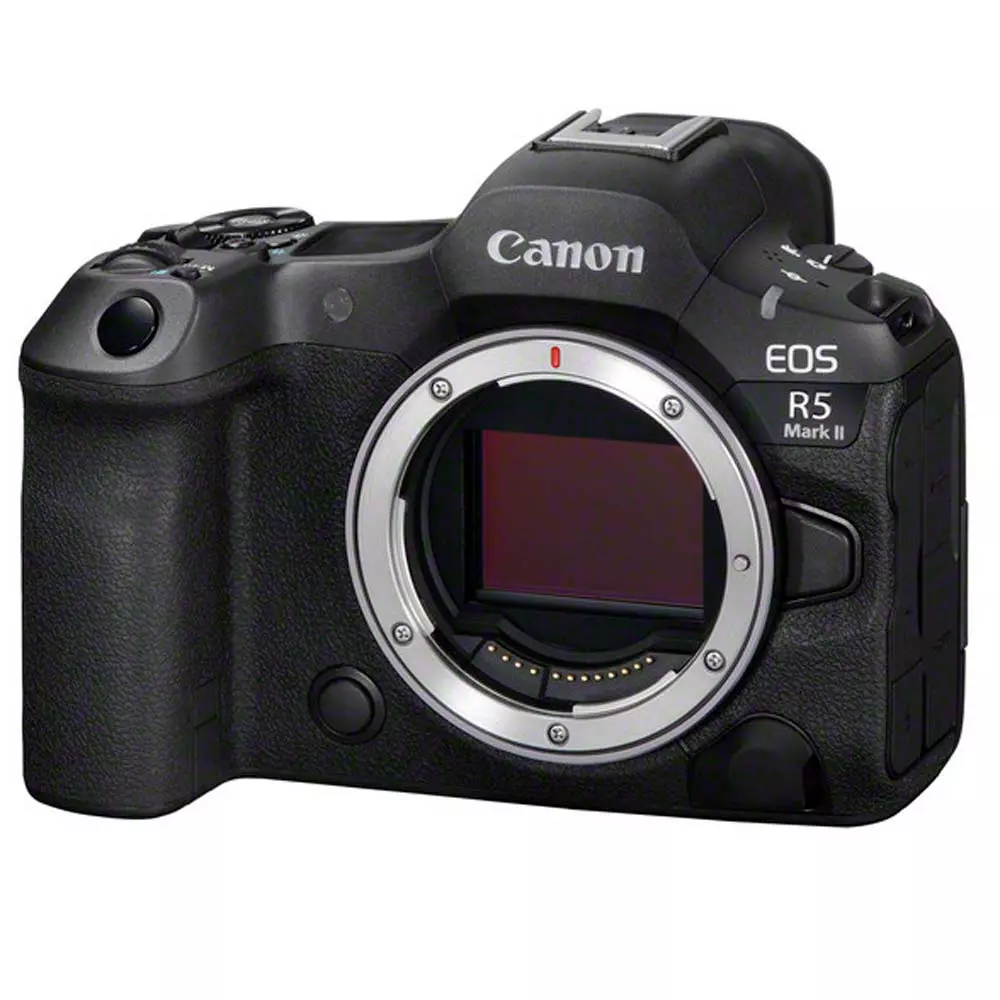
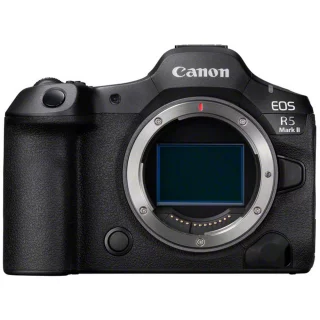
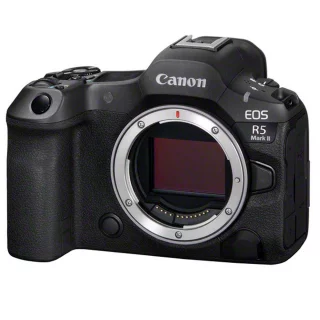
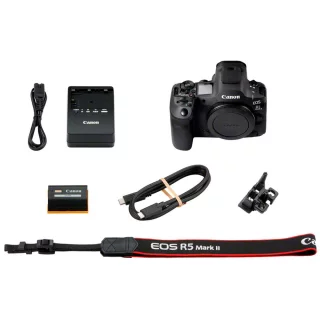
Canon EOS R5 Mark II body













Aktiiviset kampanjat

Pakettidiili
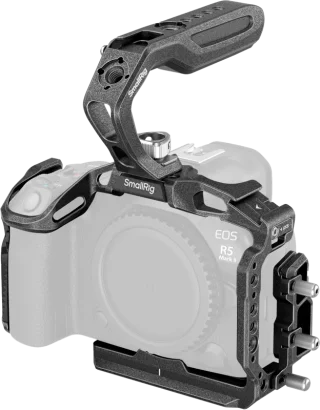
Canon EOS R5 Mark II body
Trade in a camera or lens and receive an extra €500 trade-in bonus from Canon!
Fill in the trade-in offer form on our website or contact us by email at asiakaspalvelu@kameraliike.fi
Claim the trade-in bonus from Canon here
More information about the campaign
The Canon EOS R5 Mark II continues the tradition of the 5 series beautifully. This is a versatile device for the demanding photographer, the same camera can handle landscapes, portraits, nature photography and video productions, so it is a true all-around device.

Also read the comprehensive first test and photos taken with the camera!
The camera was announced alongside the EOS R1 flagship camera, and these devices also surprisingly share a lot of the same technology. The sensor is a 45-megapixel version implemented with the so-called Stacked technology, the stabilizer is a new, more powerful one, and the completely redesigned autofocus also shares technology with the top model EOS R1. So there are features and capabilities here that will last a long time into the future.
Here is a brief summary of the new EOS R1 and R5 II cameras, as described at the Camera Shop presentation day:
- New 45MP Stacked sensor, improved dynamics and sensitivity
- New Accelerator co-processor speeds up focusing
- 8K Raw 60P and 4K 120P video recording
- AI-assisted noise reduction and 4X image magnification directly in the camera
- New Dual Pixel Intelligent AF focusing system - faster than the EOS R3 body!
- More effective IBIS sensor-moving image stabilization
- 30fps continuous shooting with electronic shutter and 12fps with mechanical shutter
- Burst shooting with 15 pre-recorded images, creating a single file for fast image review
- Wifi 6 - super fast wireless image transfer
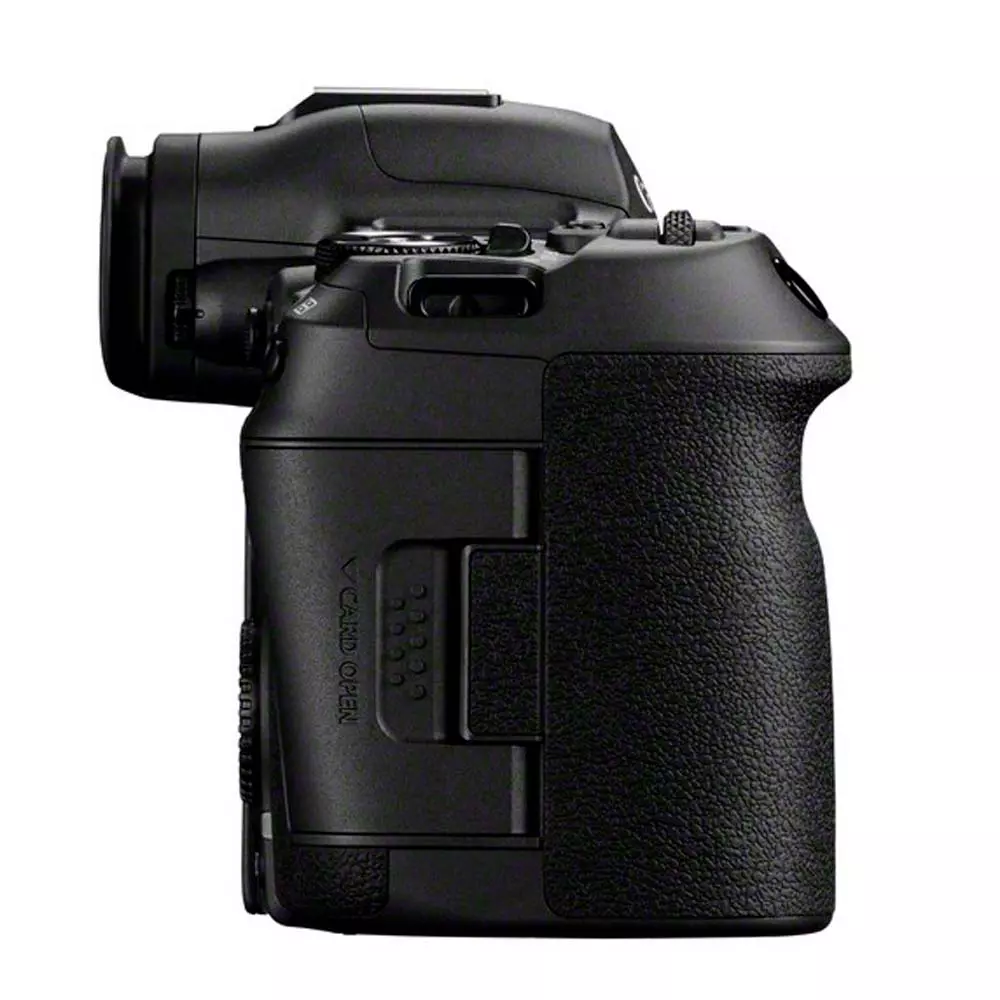
- 1x CFExpress and 1x SD UHS-II memory card slots
- High-resolution 5.69 million-dot viewfinder
- Magnesium extruded body, better weather protection and good thermal management
- New LP-E6P battery type, old batteries also work except for certain video features
New image sensor and additional processor
In addition to the Digix X series processor, the Canon EOS R5 Mark II includes a similar Accelerator co-processor to the EOS R1. This co-processor constantly studies what the sensor sees, meaning the camera receives a huge amount of data from photos and video, meaning that instead of a single focus point, the focus follows all movements and also works well in low light.
The sensor resolution is the same 45 megapixels as in the previous model, which has been a reason for many to choose this particular camera. However, the sensor has been updated to the familiar stacked technology from the EOS R3 (and Sony's top-of-the-line A1 model), where the electronics and wiring are underneath the sensor. Another new sensor technology is the global shutter launched by Sony, but Canon chose stacked because it offers better dynamics.
So what this means in practice: the pixel has a larger surface area, so it collects more light, resulting in better dynamic range and less noise. In addition, the read speed is better, meaning there is a smaller rolling shutter when shooting video and continuous shooting is possible with an electronic shutter without distortion.
As a side note, Canon states that the EOS R5 II's read speed is, for example, better than the Sony A9 II body, even though it has many more megapixels.
The combination of the cell and processors also enables these features:
AI-assisted noise reduction: Noise reduction taught with the help of AI works directly in the camera. Others require computer software or a cloud service. Now locally in the camera. According to Canon, an image taken at ISO 200000 will look like one taken at ISO 50000! The final product is a JPEG or 10Bit HEIF file.
AI-assisted upscale resolution enhancement : 4X image size enlargement, works surprisingly well thanks to new technologies. In practice, the R5 II creates a 180 megapixel equivalent image from a single file, now no need for a tripod or multiple exposures. The final product is JPG or 10Bit HEIF.
More accurate exposure and white balance: These are the things that you can't tell from the feature list! The camera analyzes the image data small areas at a time (previously 382 areas and now 6144 areas) and the image file gets more accurate white balance and exposure, for example, skin tones are recorded more realistically and the end product is a more finished and beautiful image!
Faster burst shooting with pre-recording and better image stabilization
- Continuous shooting with mechanical shutter 12 fps
- Continuous shooting with electronic shutter 30 fps
- Raw Burst 15FPS pre-recording for 0.3 or 0.5 seconds
- The viewfinder image is always visible on the screen, even during continuous shooting.
- Improved sensor read speed with electronic shutter
The Canon EOS R5 II, like its predecessor, features really solid burst shooting capabilities despite the higher resolution. Burst shooting is possible at 30 frames per second with the electronic shutter and 12 frames per second with the mechanical shutter. Now, with the sensor's readout speed being faster, using the electronic shutter is more reliable when shooting fast-moving subjects.
In addition, the camera has the burst shooting and pre-recording familiar from the EOS R6 II model. This means you can record 15 images even before you press the shutter button! This allows you to capture just the right moment: when a bird catches a fish or a sports performance at its peak.
Burst shooting creates a single image file that can be scrolled through frame by frame on the camera, similar to slow motion video, and individual files can be saved in RAW or JPEG format. This makes it easier to go through images when there is only one file from one situation.
The burst shooting speed is adjustable, meaning the number of image files is kept under control, and you can also program a so-called acceleration button for your index finger, allowing you to fully increase the burst shooting speed as needed without having to adjust the menu!
The IBIS image stabilization, or sensor-moving stabilization, is even better. Now the maximum stabilization effect is 8.5 f-stops, but especially at the edges of the image, for example when using wide-angle lenses, the stabilization works with minimized wobbling and is more effective.
The stabilizer works together with lens stabilizers, as well as with manual focus and specialty lenses, and the focal length for the lens can be selected from the body.
Autofocus: Dual Pixel Intelligent AF
- Eye-focus control, EOS R3-style but updated technology
- Action Priority - focus based on motion detection
- Updated object-aware focus, now including horses, trains, and airplanes
- Focus works even in very low light conditions down to -6.5EV
- Person-detection AF: can specify, for example, a bride and groom or a star player on the field as a prioritized subject for focus
Canon's autofocus is one of the best on the market and works very well, especially in difficult conditions. Now, with additional capabilities, the autofocus has been given a new name: Dual Pixel Intelligent AF.
The most visible change compared to the previous model is the eye-tracking focus control introduced in the EOS R3. This means you can select, for example, the subject you want to track or the focus point you want to activate by looking directly at it, without the need for a touchscreen or joystick. This technology already worked great with the EOS R3, but now it's more reliable and twice as fast.
There are more recognizable objects taught by artificial intelligence, so in addition to birds and pets, now also horses and trains.
A new feature is Action Priority, which allows the focus to monitor the content of the image in real time and automatically react to movement, for example in ball games.
The Canon EOS R5 II can be taught in advance which subjects are most important and which facial recognition will prioritize during focus. For example, before the ceremony begins, you can take reference photos of the wedding party or the person being documented, and the camera will find the right subjects even in group photos and in the middle of the action.
The focus works very well even in complex situations, i.e. if a face is covered or turned during the next focus, the camera can return to tracking the subject as soon as the subject turns its head towards the camera or emerges from behind an obstacle. And these features also work in video shooting, where reliable tracking is especially important.
When manually selecting focus points, 100% of the horizontal and 95% of the vertical area are used, and like Canon, all pixels focus.

Video shooting with the EOS R5 II body - suitable for production use
- 8K 59.90 and 50P RAW video recording
- 4K 120P slow motion videos with sound
- 4:2:2 10bit and 4:2:0 8bit color depth selectable for H.264 and HEVC H.265 recording
- Same recording codecs as Cinema EOS cameras and same picture profiles
- Support for LUT files
- Canon Log 2 (15 aperture value recording) and Canon Log 3 (14 aperture value recording)
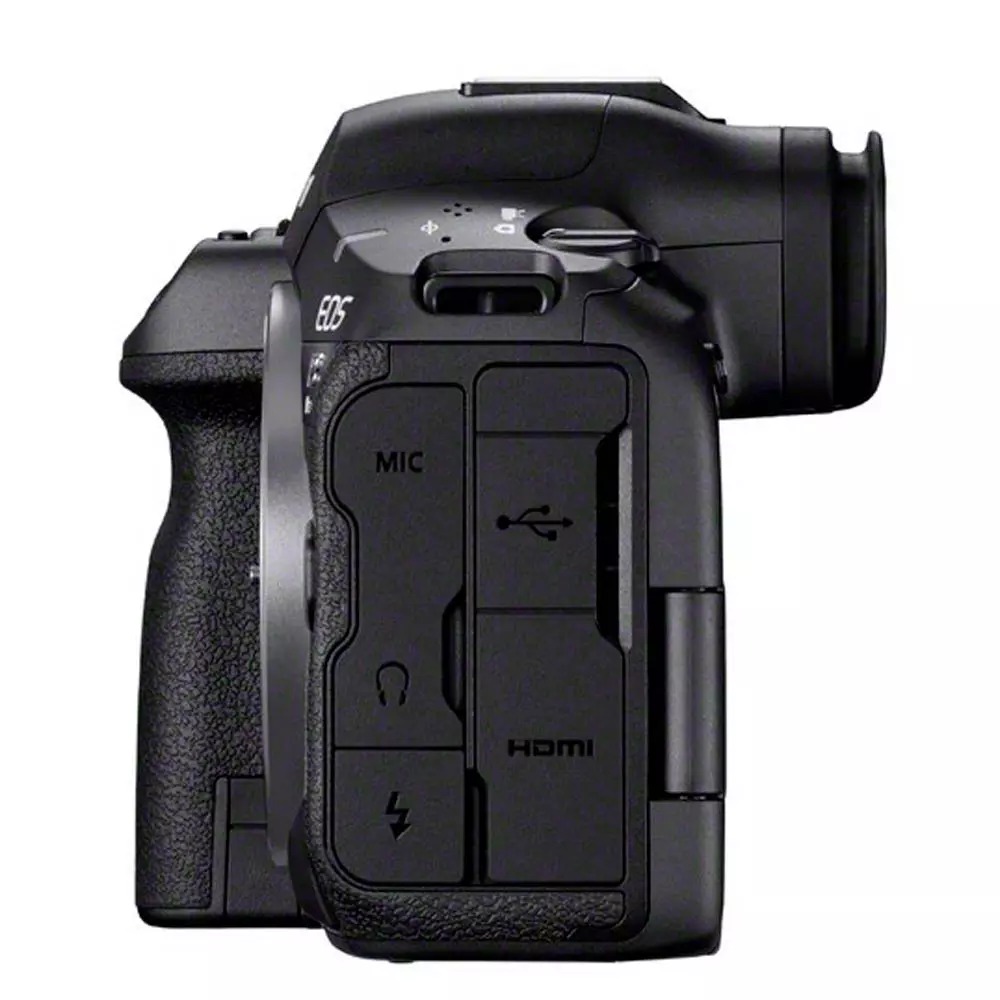
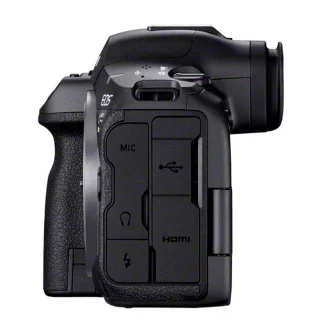
- Full-size HDMI Type A connector
- Waveform monitor for exposure monitoring, Zebra and False colour
- 4-channel, 24-bit audio recording (with Tascam accessory)
- Tally light
- Dual Shooting: recording still images while recording video (Max 2K video and JPG image recording)
- UVC streaming and RTMP/RTMPS support for live streaming
- Proxy recording, i.e. full resolution plus a smaller 2K file
The original EOS R5 made waves with its 8K Raw video recording. Now the Mark II takes this to the next level with 60P frame rate. In addition, 4K slow-motion video can now be recorded at 120P, even with audio.
In addition, thermal management has received special attention, meaning recording times are longer. In addition, the camera comes with an additional power handle that includes a fan! This makes the camera reliable even during longer shoots.
The recording codecs and image settings are the same as those of the Cinema EOS series of film cameras, so this is also suitable as a B-camera for very demanding productions.
The Canon EOS R5 II oversamples this 8K footage to 4K video on the memory card. This oversampling technique is used in several high-end models, improving the sharpness of the video file and reducing the importance of noise because the file is compiled from a larger amount of data.
Refined usability
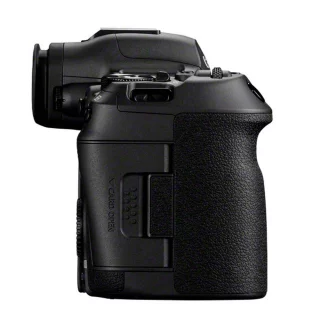
- New handle material - better grip even when wet
- AF-On button with half-press
- Customizable buttons and functions - adjustment also via smartphone app
- Settings can also be saved on a memory card - easy and portable
- Easy settings for different uses, different settings for every sport or shooting location
- Blur / Out of focus detection - feature tells you if the image is not completely sharp
- Also available with a larger eyecup
- Wifi 6
- New, more powerful battery type LP-E6P
How to make good even better? By focusing on the details! The camera has a breathtaking number of small updates and improvements that make everyday life easier. The new surface material provides a better and more comfortable grip every time and as soon as you pick up the camera. The strong magnesium body and advanced weather protection guarantee shooting trips even in harsh conditions - year after year.
In addition, programming menus and buttons is more flexible and easier than before.
Image transfer is very fast thanks to Wifi version 6. The technology is faster, but in addition to being new, the frequency range is also much better protected from congestion if you transfer images, for example, via the venue network or directly to your own device in a room with many other users.
The battery type has changed to the new LP-E6P version, but the EOS R5 II is also compatible with the old LP-E6NH batteries and the camera tells you, for example, which video features are not available with the old battery type. The promised shooting numbers are 340 images via the EVF and 630 images via the rear screen. These figures are in accordance with the CIPA standard, meaning that with so-called correct use, clearly larger image numbers are usually achieved.
Additional power can be supplied to the camera directly via the USB-C connector or with a battery adapter that replaces the battery.
The Canon EOS R5 II is weatherproof.
Specifications:
- Compatibility: Canon RF lenses
- Sensor 45 megapixels, sensitivity 100-51200
- Digic X processor and DIGIC Accelerator
- Internal 5-axis image stabilization, 8.5 stops in the center of the image and 8 stops on the sides, depending on the lens
- Electronic viewfinder, resolution 5.69 million dots
- 8CM swivel touch screen
- Dual Pixel Intelligent AF: animal, human, vehicle detection, action priority function and focusing on desired subjects
- 8K Raw 60/50P video recording, 4K 120P, 2k 240FPS
- Canon Log 2 and 3, as well as HDR PQ and Canon 709 recording
- 12FPS continuous shooting with mechanical shutter, 30FPS with electronic (adjustable from 30 to 1FPS
- 15-frame pre-recording before shooting. Cache holds 350 JPGs or 180 Raw images
- Two memory card slots: 1x CFExpress and 1x SD UHS-II
- HDMI Type A connector
- SuperSpeed USB 3.2 Gen 2 USB-C port
- Wifi 802.11 ax 2x2MIO 6GHz, 5GHz & 2.4GHz and Bluetooth 5.3, RJ45 Ethernet connection
- Battery type: LP-E6P
- 3.5mm microphone jack, headphone jack
- N3 remote release terminal and Flash Sync terminal
- Size: 135.8 x 97.5 x 88mm
- Weight: 738g (without battery and memory card 650g)
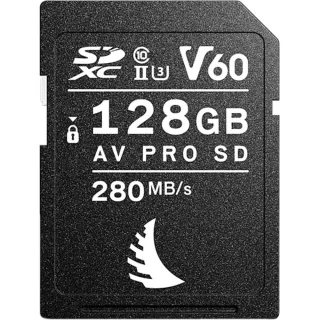
NOTE: The Canon R5 Mark II is currently a bit selective when it comes to memory cards. We recommend choosing an Angelbird memory card with your camera.
Arvostelujen yhteenveto
Janne H.
Kysy tuotteesta

ma-pe 9-17 ja la 10-14