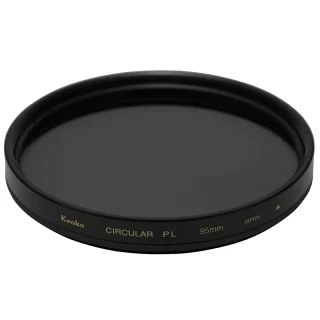
Kenko RealPRO C-PL Circular Polarizing Filter - 95mm



Varmasti yhteensopivat tarvikkeet
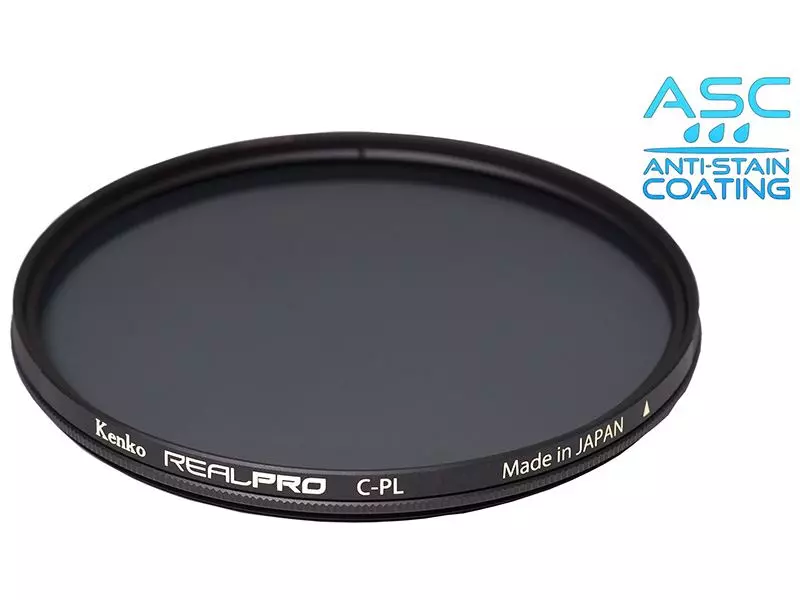
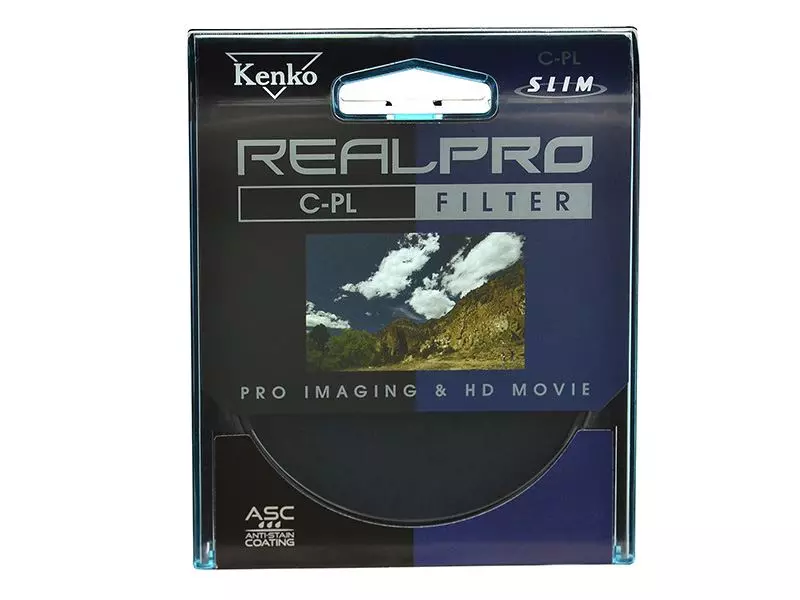
Kenko RealPRO C-PL 95mm Circular Polarizing Filter
The main purpose of a polarizing filter is to remove reflections from, for example, water, glass and other non-metallic surfaces. A polarizing filter also deepens the color tones of the image, e.g. green is greener and the blue of the sky is deeper, making clouds stand out whiter and clearer than usual. In landscape photography, for example, in addition to the reflection of the water surface, the filter can be used to reduce the halo caused by the reflection of water particles in the air. Halo, or sun haze, causes haze in the air. When shooting through a window, the rest of the landscape can easily be reflected disturbingly from the window glass. This problem can be avoided with a polarizing filter.

The working principle of a circular polarizing filter
The filter works on the basis that when light reflects off, for example, water or a glass surface, the light becomes polarized and the polarization can be filtered out of the light using the filter. A circular polarizing filter consists of two overlapping pieces of glass, the front of which can be rotated infinitely as needed. The filter's use is affected by the direction of the surface from which the light is reflected, and the power of the polarizing filter is adjusted by rotating the front piece of glass. The effect can be monitored live in the viewfinder. The effect is strongest when the sunlight is at a 90-degree angle to the camera, and the polarization is set to its strongest.

The edge thickness of the Kenko RealPRO filter is only about 5mm, which means that the risk of vignetting is generally very low, even with ultra-wide lenses.
- Edge thickness only 5mm
- High-quality optical glass
- 16-layer multi-film coating
- Excellent light transmission
- Antistatic coating
- Scratch-resistant
- Repel water and stains, making it easy to clean

When shooting through a display window, a polarizing filter prevents reflections from the window glass.
Osta myös
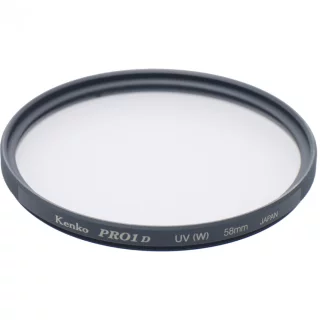
Kenko Pro1 Digital Protector 40.5mm UV protection filter
Arvostelujen yhteenveto
Kysy tuotteesta

ma-pe 9-17 ja la 10-14